
What Is a Level 2 Survey and When Do You Need One
A RICS Level 2 survey is a non-intrusive visual inspection of a conventional home's main elements, designed to flag serious or urgent defects using a traffic-light rating system. It's the practical middle option between a basic condition check and a more detailed Level 3 building survey.
You've had an offer accepted on a Victorian terrace in Lewisham, a flat in Bermondsey or a 1930s semi in Bromley. The estate agent wants the transaction moving. Your lender has arranged a mortgage valuation. You're now deciding whether to commission your own survey.
My advice is straightforward. Don't rely on the mortgage valuation. For a conventional property in reasonable condition, a Level 2 survey is usually the sensible choice. If the building is old, heavily altered, listed or showing signs of structural trouble, pay for a Level 3 instead.
Table of Contents
- Understanding the RICS Level 2 Survey
- What the Surveyor Actually Inspects
- Reading the Traffic-Light Condition Ratings
- Level 1 vs Level 2 vs Level 3 Surveys
- When a Level 2 Survey Is the Right Choice
- Using the Report to Renegotiate or Walk Away
- Common Questions About Level 2 Surveys
Understanding the RICS Level 2 Survey
A RICS Home Survey Level 2 is an intermediate inspection carried out by a qualified surveyor. It gives you a professional opinion on the general condition of the property's main elements. It isn't an invasive investigation and it isn't a repair specification.
RICS formalised the modern UK home-survey framework in 2021, publishing the Home Survey standard on 24 February and the Level 2 service descriptions on 2 March. This replaced the old HomeBuyer Report naming with the current Level 2 terminology. The RICS Home Survey standard sets out the service and its intended use.
The survey is aimed at conventional properties in reasonable condition. That usually means a house or flat built with common materials and methods, without unusual construction or obvious major defects.
Practical rule: Choose Level 2 when you need a clear view of visible risk, not a full diagnosis of every concealed building problem.
There are two versions:
- Survey-only: This reports on condition and defects without providing a valuation.
- Survey-plus-valuation: This adds a market value opinion and an insurance reinstatement figure.
The second version matters when you need an independent view of value, or when the property's condition raises questions about the agreed price. RICS defines market value as the estimated amount an asset should exchange for on the valuation date between a willing buyer and willing seller, after proper marketing and without compulsion. The reinstatement figure is used for rebuilding insurance, not for setting the sale price.
The Level 2 report is also useful for investors assessing the relationship between inspection cost and property risk. This guide to the ROI of building surveys for investors gives wider context, although a residential buyer still needs advice tied to the actual property.
For a plain explanation of the wider RICS framework, see what a RICS survey covers. The key point is simple. Level 2 exists to give buyers useful, standardised information without the depth and cost of a full building investigation.
What the Surveyor Actually Inspects
The surveyor carries out a non-intrusive visual inspection. They look at what can be seen and safely accessed at the time of inspection. They don't open up the building to expose hidden construction.
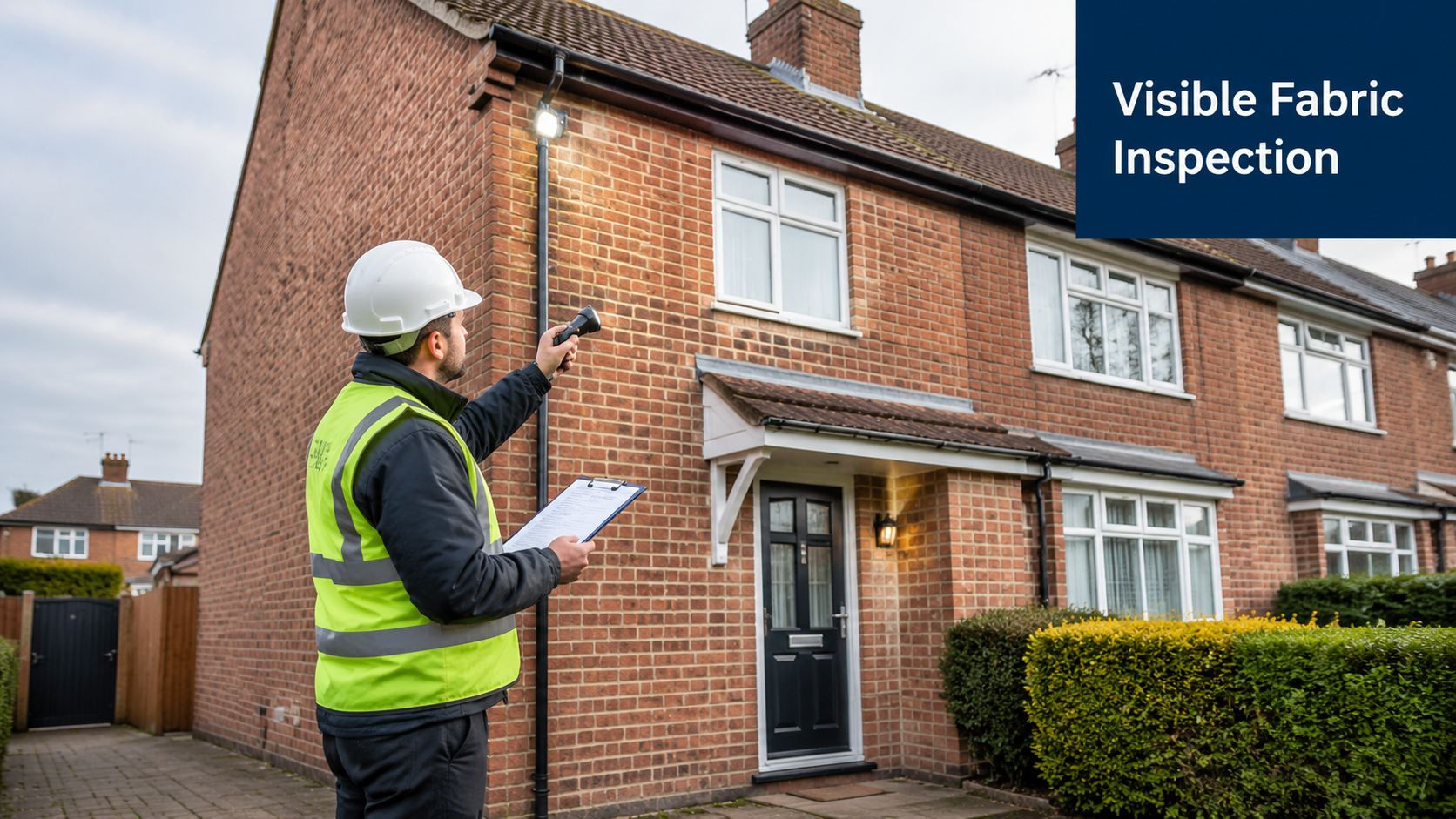
The inspection covers visible building fabric, services and grounds. Depending on access and safety, the surveyor may enter the roof space, inspect accessible windows and floors and use a heel-drop test on suspended floors.
That can reveal plenty. A surveyor may identify slipped roof coverings, damaged pointing, damp staining, defective rainwater goods, timber decay, poor ventilation or signs of movement. They can also report on visible services such as heating, plumbing and electrical installations, but they won't test them in the same way as a specialist contractor.
What non-intrusive means in practice
A Level 2 survey doesn't involve lifting floorboards, drilling walls, removing fixed panels or opening concealed areas. Heavy furniture and stored belongings can also restrict what the surveyor sees.
Consider a Victorian terrace in Forest Hill or Lewisham. Lath and plaster, chimney breasts, suspended timber floors and later alterations may all be present. A surveyor can assess visible cracking, staining, distortion and ventilation. They can't confirm the condition behind plaster or beneath floorboards without an intrusive investigation.
A 1930s semi in Bromley may offer better access and more conventional construction. Even then, a blocked roof-space area or fitted kitchen can hide defects. The report should state those limitations rather than pretend the surveyor has inspected what wasn't visible.
The inspection process should be systematic. Readers who manage larger buildings may find these thorough facility audit steps useful as general inspection context, but a Level 2 survey remains a residential service with its own RICS scope.
If a surveyor sees possible subsidence, concealed timber decay or movement around an alteration, the correct advice may be specialist investigation recommended. That isn't a failure to diagnose. It's an honest statement that the available evidence isn't enough for a safe conclusion.
Reading the Traffic-Light Condition Ratings
The condition ratings turn technical observations into a priority system. They help you distinguish a repair that can wait from a defect that could affect safety, value or your decision to proceed.
RICS uses three ratings in a Level 2 report:
| Rating | Meaning | Typical example |
|---|---|---|
| CR1 | No repair is currently needed | Minor hairline plaster cracking with no associated concern |
| CR2 | Repair or replacement is needed, but the defect isn't serious or urgent | Localised damp to a ground-floor wall requiring further repair |
| CR3 | Serious or urgent defect requiring immediate repair, replacement or specialist investigation | Significant structural movement or a major roof defect |
A green rating, CR1, doesn't mean the property is perfect. It means the surveyor hasn't identified a repair requirement for that item at the time of inspection.
CR2 is common in ordinary London housing. Defective pointing, tired joinery, leaking gutters and isolated damp may all fall into this category. These issues still matter. They should be recorded, understood and allowed for in your maintenance planning.
CR3 needs attention before you exchange contracts. Serious structural movement, unsafe electrical components, widespread roof failure or urgent specialist investigation can change the financial and practical risk of the purchase.
How to use the ratings
Start with every CR3 item. Read the surveyor's comments, limitations and recommendations. If specialist investigation is advised, get that advice before committing yourself further.
Next, review the CR2 items as a group. One minor repair may not change your decision. Several defects across the roof, drainage, damp protection and windows could indicate a wider maintenance burden.
A traffic-light rating is a priority tool, not a price list. The report identifies risk. Contractors and specialists establish the repair scope and cost.
Don't treat the colours mechanically. A CR2 item in a flat may involve leaseholder responsibility, while the same visible defect in a house may be yours alone. Ask your solicitor to check the lease, title and management arrangements alongside the survey.
Level 1 vs Level 2 vs Level 3 Surveys
The right survey depends on the building, not just on your budget. Paying for the wrong level can leave you with either too little information or a report that goes well beyond what the property needs.
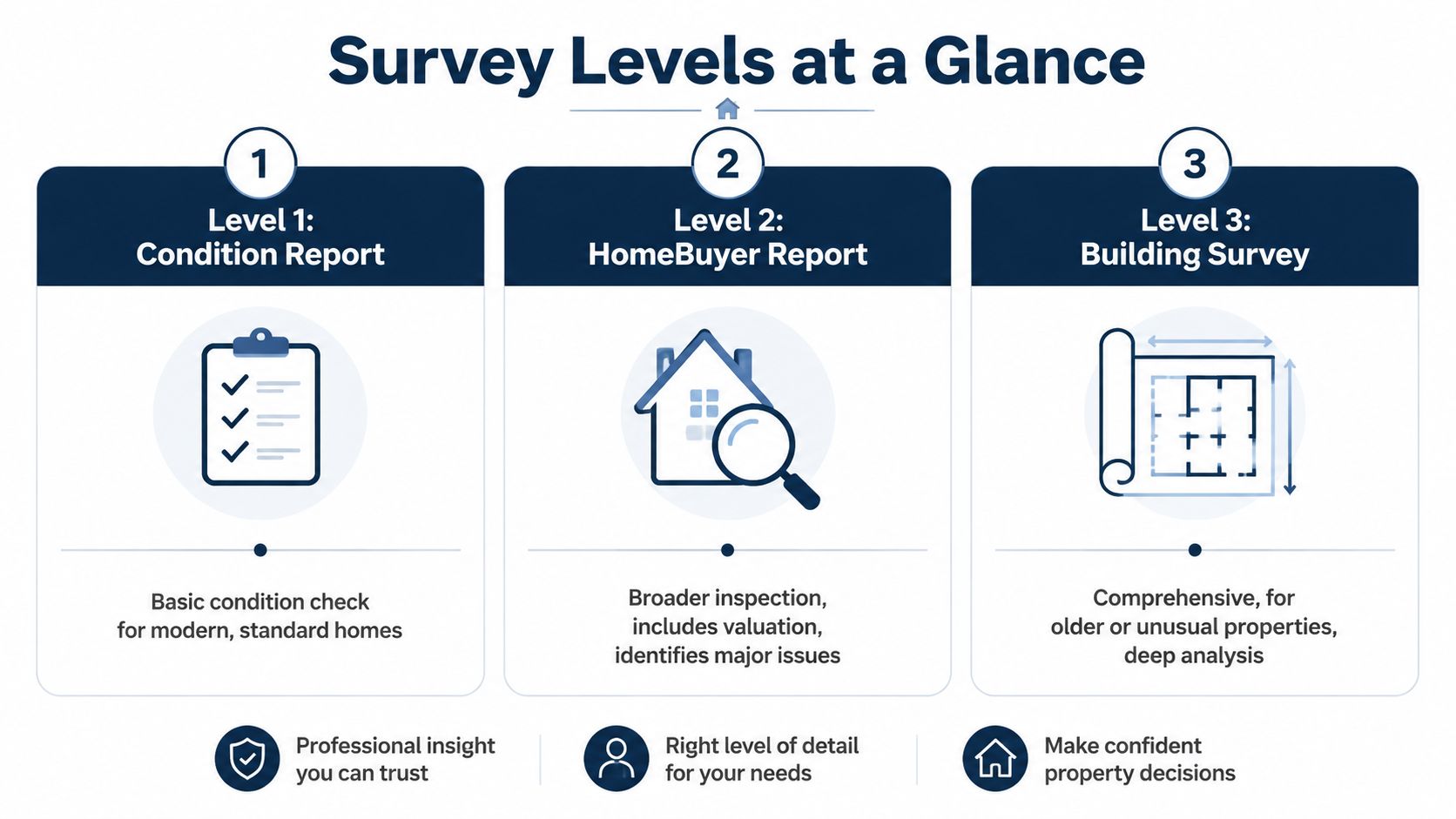
| Survey | Suitable property | Inspection depth | Typical use |
|---|---|---|---|
| Level 1 | Modern, standard homes in apparent good condition | Basic condition check | Straightforward purchases with limited visible risk |
| Level 2 | Conventional properties in reasonable condition | Broader visual inspection with condition ratings | Mainstream houses, flats and maisonettes |
| Level 3 | Older, altered, listed or non-standard properties | Detailed building investigation and analysis | Period homes, fixer-uppers and properties with structural concerns |
A RICS Home Condition Survey Level 1 is the most limited option. It can suit a modern home built using standard methods where there are no obvious concerns.
Level 2 adds inspection of visible building fabric, services and grounds, with a traffic-light assessment of defects. It's the usual choice for a conventional London property where you want practical information before committing.
Level 3 is the correct step for a listed house in Blackheath, a heavily altered period home in Dulwich or a property with visible cracking and distortion. It provides a deeper assessment and is better suited to understanding the implications of alterations, unusual construction and more complex defects. See what a Level 3 survey involves before deciding.
The choice is also affected by your plans. If you're buying a house in Croydon and intend to remove walls, excavate a basement or extend into the roof, Level 3 gives you more useful technical information. A Level 2 isn't a design report and shouldn't be treated as permission to start building work.
A mortgage valuation sits outside this comparison. It protects the lender's security. Your survey protects your decision.
When a Level 2 Survey Is the Right Choice
A Level 2 survey is right when the property is conventional, accessible and in reasonable condition. That describes many London purchases, including standard terraces, ordinary purpose-built flats and post-war houses without major alterations.
An ex-local-authority flat in Bermondsey may be suitable if the building and flat are conventional, accessible and free from obvious structural concerns. The surveyor can report on the flat's visible condition, while your solicitor checks the lease, service charge records, planned works and ownership responsibilities.
A converted period property in Dulwich needs more careful judgement. If the conversion is simple and the building appears sound, Level 2 may be enough for the visible condition. If walls have been removed, roof spaces converted, floors altered or damp and movement are already apparent, I'd recommend Level 3.
The same applies to a post-war home in Croydon. Standard construction doesn't remove risk. It makes Level 2 more likely to be appropriate when the property is well maintained and hasn't undergone complex work.
When I'd recommend Level 3
Step up to a RICS Building Survey Level 3 if you're buying:
- A listed or unusual building: Traditional materials and protected features need a more detailed approach.
- A heavily altered home: Extensions, loft conversions and removed chimney breasts can create concealed risks.
- A property in poor condition: Widespread damp, roof failure or structural movement needs deeper investigation.
- A renovation project: You need better technical guidance before budgeting for major work.
- A period property: Victorian and Edwardian buildings in Brockley, Sydenham and New Cross can contain layered alterations that a visual intermediate inspection won't fully explain.
There's no legal requirement to obtain a house survey before buying in England, Wales or Northern Ireland. RICS still strongly recommends one before purchase. Countrywide Surveying Services reported that only 10.6% of homebuyers instructed any home condition survey in Q2 2024 across England, Wales and Northern Ireland, while those who did commission a survey mostly selected Level 2 or Level 2 with Valuation. The figures appear in Countrywide's Q2 2024 survey report.
That behaviour makes sense, but don't let popularity decide for you. Match the survey to the property's risk.
Using the Report to Renegotiate or Walk Away
A survey doesn't automatically justify a price reduction. It gives you evidence for a sensible conversation.
Start by separating defects from recommendations. A CR3 item with specialist investigation recommended carries more weight than a cosmetic CR2 repair. Ask the surveyor to clarify what they observed, what remains uncertain and what action should happen before exchange.
Use this sequence:
- List the material findings. Focus on roof defects, damp, timber decay, movement and unsafe or defective services.
- Check the legal responsibility. For a flat in Rotherhithe or Bermondsey, the lease may place external walls, roofs and communal areas with the freeholder.
- Obtain specialist advice where recommended. A structural engineer, electrician, drainage specialist or roofing contractor may be needed.
- Make a written proposal. You can ask for a price reduction, repairs before exchange or a retention arrangement through your solicitor.
- Reassess the whole purchase. Include the repair burden, disruption, insurance position and your tolerance for uncertainty.
A CR2 item may support a request for repair, especially if the defect affects weather-tightness or has been concealed from view. A CR3 item can justify pausing the transaction until the risk is understood. If the seller refuses access for further investigation, you need to decide whether you're prepared to accept that uncertainty.
The survey-plus-valuation option adds a market value opinion and reinstatement cost figure. The market value can help you judge whether the agreed price remains defensible. The reinstatement figure supports buildings insurance, although it isn't the same as the property's market value.
Corinthian Surveyors London LTD is an independent firm with no ties to lenders, estate agents or developers. Clive Thompson holds RICS and CABE qualifications, and the firm is RICS regulated, a member of the RICS Valuers Registration Scheme and insured by Royal Sun Alliance. If you need a Level 2 survey in Forest Hill, Lewisham, Bromley or another London borough, call 0800 00 16 422 after checking the property details and access arrangements. You can also review how to negotiate a house price after a survey before speaking to the agent.
Common Questions About Level 2 Surveys
How long does a Level 2 inspection take?
The time depends on the property's size, access and condition. A standard flat is usually more straightforward than a large house with restricted roof-space access. Ask the surveyor what areas must be accessible before the appointment.
Is Level 2 suitable for a flat or maisonette?
Yes, if it's a conventional property in reasonable condition. The survey won't replace checks on the lease, service charge, planned major works or communal structure. Your solicitor must deal with those legal and management matters.
How is a Level 2 survey different from a mortgage valuation?
A mortgage valuation is for the lender's security and doesn't give you a proper condition assessment. A Level 2 survey reports visible defects and assigns RICS condition ratings for your decision-making.
What happens if further investigation is recommended?
Don't ignore it. Ask what specialist is required, arrange the inspection before exchange if possible and use the result to decide whether to renegotiate or proceed. If access is refused or the uncertainty remains material, walking away may be the sensible choice.
Corinthian Surveyors London LTD provides RICS Level 2 HomeBuyer Surveys for conventional houses, flats and maisonettes across Forest Hill, Lewisham, Bromley, South East London and the wider South of England. Visit Corinthian Surveyors London LTD to arrange a survey or discuss whether your property needs Level 2 or a deeper Level 3 inspection.