
What Causes Rising Damp: Expert Guide 2026
Rising damp is groundwater moving up through porous masonry by capillary action when the damp-proof course is missing, defective or bridged. True rising damp is far less common than most homeowners think, and in London it's often something else wearing the same mask.
Table of Contents
- Why Most Damp at Skirting Level Is Not Rising Damp
- The Physical Mechanism Behind Rising Damp
- How to Tell Rising Damp from Condensation and Penetrating Damp
- The Role of Drainage and Ground Levels in Damp Problems
- What a RICS Surveyor Does to Diagnose Damp
- Remediation Options That Match the Real Cause
- Preventing Damp and Knowing When to Call a Surveyor
Why Most Damp at Skirting Level Is Not Rising Damp
People love to call any damp patch near the floor rising damp. That's the lazy diagnosis, and it's usually wrong. UK evidence points the other way, true rising damp is a minority of damp investigations, with one published review finding it in only 5% of 510 cases in 1970–74, 4% of 518 cases in 1979–82 and 5% of 520 cases in 1987–89, which is about one in twenty investigations, and another UK housing figure puts damp conditions broadly at 1.3 million households in 2023–2024 without implying those are all rising damp cases (Building Defect Analysis). That gap matters.
A lot of what gets called rising damp in Lewisham, Greenwich, Bromley or Croydon is condensation, penetrating damp or a bridged DPC. The stain is low down, so people jump to the wrong conclusion. Then they pay for chemical injections, plaster hacking and redecoration when the actual problem was a leak, poor ventilation, a raised patio or cold, unheated rooms.
Practical rule: if the wall is damp low down but the property also has mould in corners, cold surfaces or a history of leaks, don't guess. Diagnose properly.
The cost of guessing is not just money. It can damage original lime plaster, period skirting and old brickwork, especially in Victorian terraces across Forest Hill, Peckham and Blackheath. A proper RICS survey starts by asking what is feeding the moisture, not which contractor system is being sold this week.
Corinthian Surveyors London LTD deals with this sort of thing in pre-purchase work all the time. A sensible HomeBuyer Report or Building Survey should separate a real rising damp mechanism from a much more ordinary maintenance problem, and that's the point of paying for independent advice in the first place.
The Physical Mechanism Behind Rising Damp
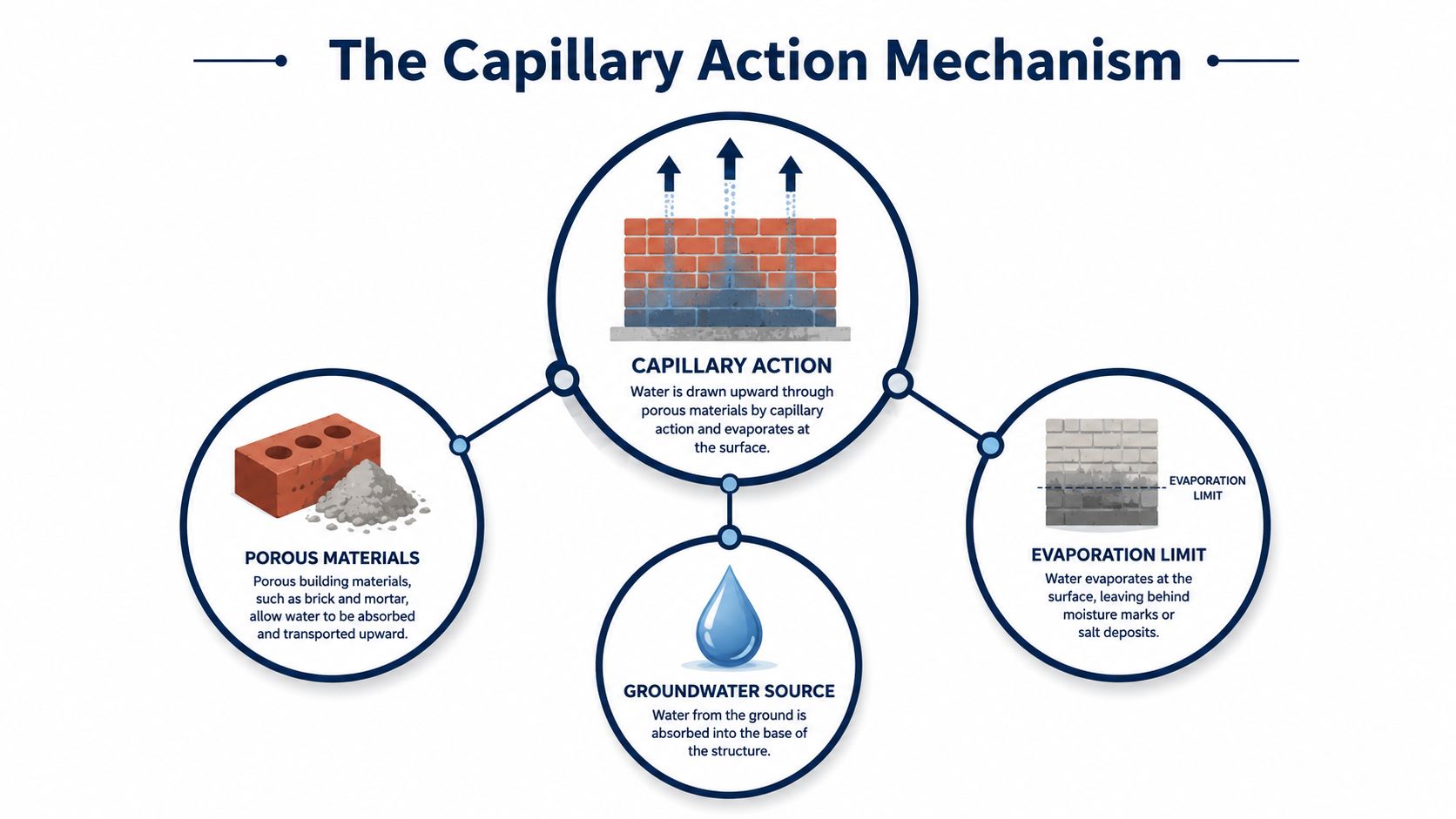
Think of a sponge standing in a shallow tray of water. The sponge pulls water upward through its pores. Masonry does the same thing when there's no effective barrier at the base of the wall.
That barrier is the damp-proof course (DPC) or damp-proof membrane (DPM). BRE says rising damp is normally linked to a missing or ineffective DPC or DPM, and can also happen when those defences are bridged by external ground works or other alterations (BRE Group). In practical terms, groundwater gets into porous brick, mortar, stone or earth-based materials and climbs upward. It is a structural moisture path, not a mood or a weather complaint.
Why older London houses are more exposed
Modern damp-proof courses became standard in the 20th century, so older London stock is more vulnerable where the original barrier is absent or has been altered. That's why pre-1919 terraces in places like Southwark, Lambeth and parts of Greenwich need a proper eye on the wall base, the external ground line and any later rendering. If a patio, render or internal finish bridges the barrier, the wall can behave as if there's no DPC at all.
Water rises where the wall stays cold and porous. It then evaporates near the surface and leaves salts behind.
Those salts matter. UK guidance notes that chlorides and nitrates concentrate as moisture evaporates, which worsens decay and can drive repeat staining. Height is not fixed either. It depends on wall porosity, pore size, salinity, temperature gradients, evaporation rate and how much moisture is available in the ground. That is why one wall in a Bermondsey conversion may show a low tide mark while another older solid wall behaves differently.
The practical takeaway is simple. Once the moisture feed is interrupted, the wall still needs time to dry. You do not fix that by plastering over the symptom and hoping for the best.
How to Tell Rising Damp from Condensation and Penetrating Damp
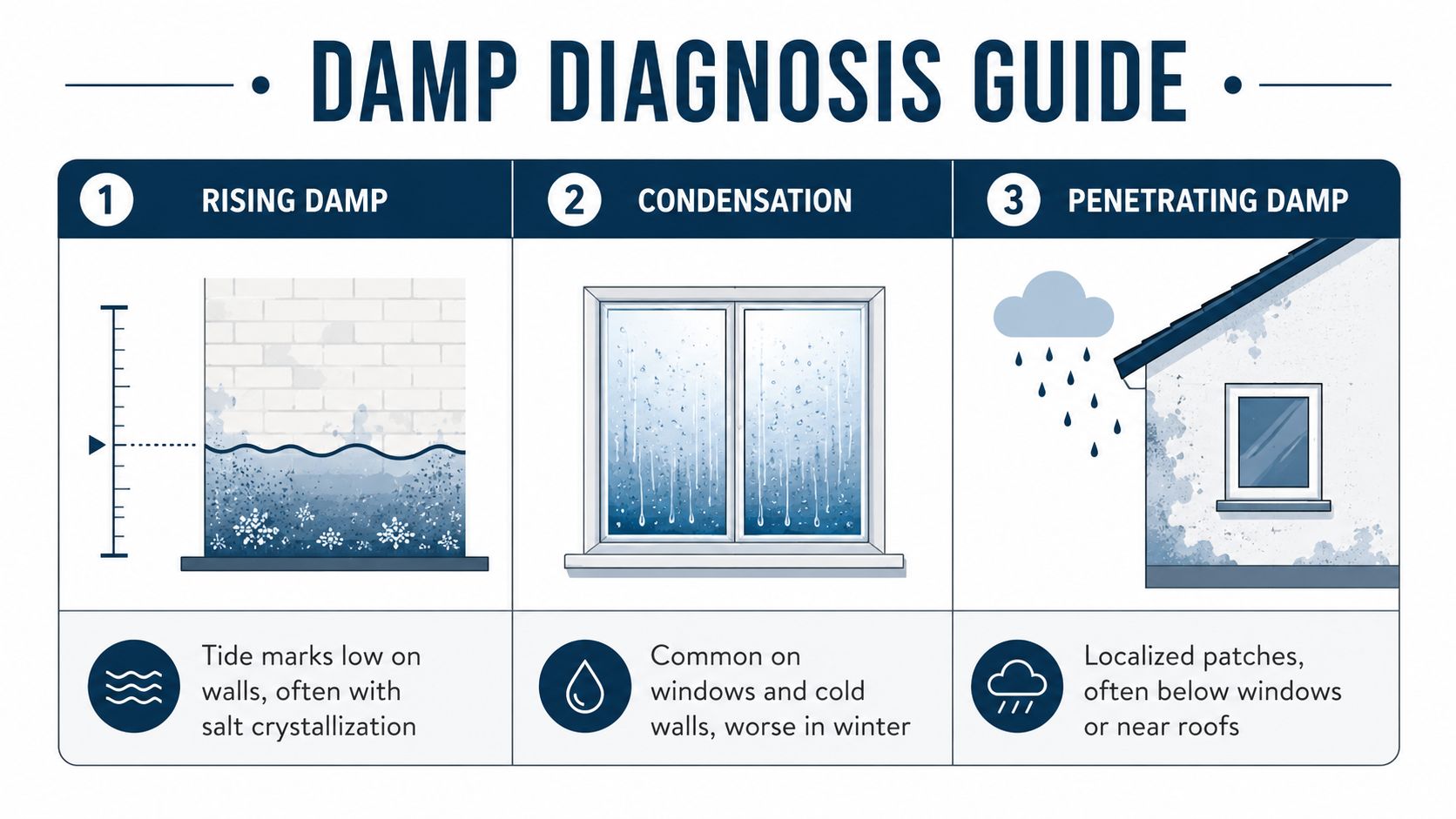
If the damp is on upper walls, around windows or higher up on chimney breasts, I would not start with rising damp. I'd look at condensation or penetrating damp first. RICS makes the same broad point, damp and mould can come from condensation, penetrating damp, leaks or building defects, so the source has to be checked properly (RICS consumer guide).
The patterns that matter
- Rising damp: low-level staining, crumbling skirtings, salt deposits and a band that begins near floor level.
- Condensation: black mould on windows, cold corners and behind furniture, worse in winter and in rooms with poor airflow.
- Penetrating damp: localised patches, often below windows, on weather-facing walls or near roof defects, and it usually tracks a source outside.
A damp patch beside a bay window in Dulwich is not the same as a tide mark on a ground-floor party wall in a 1930s semi in Bromley. A stain in a loft conversion in Peckham is not a rising damp problem. And if the wall is wet after heavy rain, I'd want to know about guttering, flashing, cracked render and even hidden leaks before anyone mentions injections.
For readers who want a decent buying checklist, the article on what to check when buying a house is worth a look, because damp never sits in isolation. You're looking at the whole building.
A useful extra resource on moisture faults is signs of hidden water leaks. Hidden leaks often get blamed on rising damp because the symptoms show up low down first. That is where people waste money.
The main point is this. Low-level damp is a clue, not a diagnosis. If you can see mould in corners, water tracking after rain or staining around windows, you're probably not looking at a failed DPC.
The Role of Drainage and Ground Levels in Damp Problems
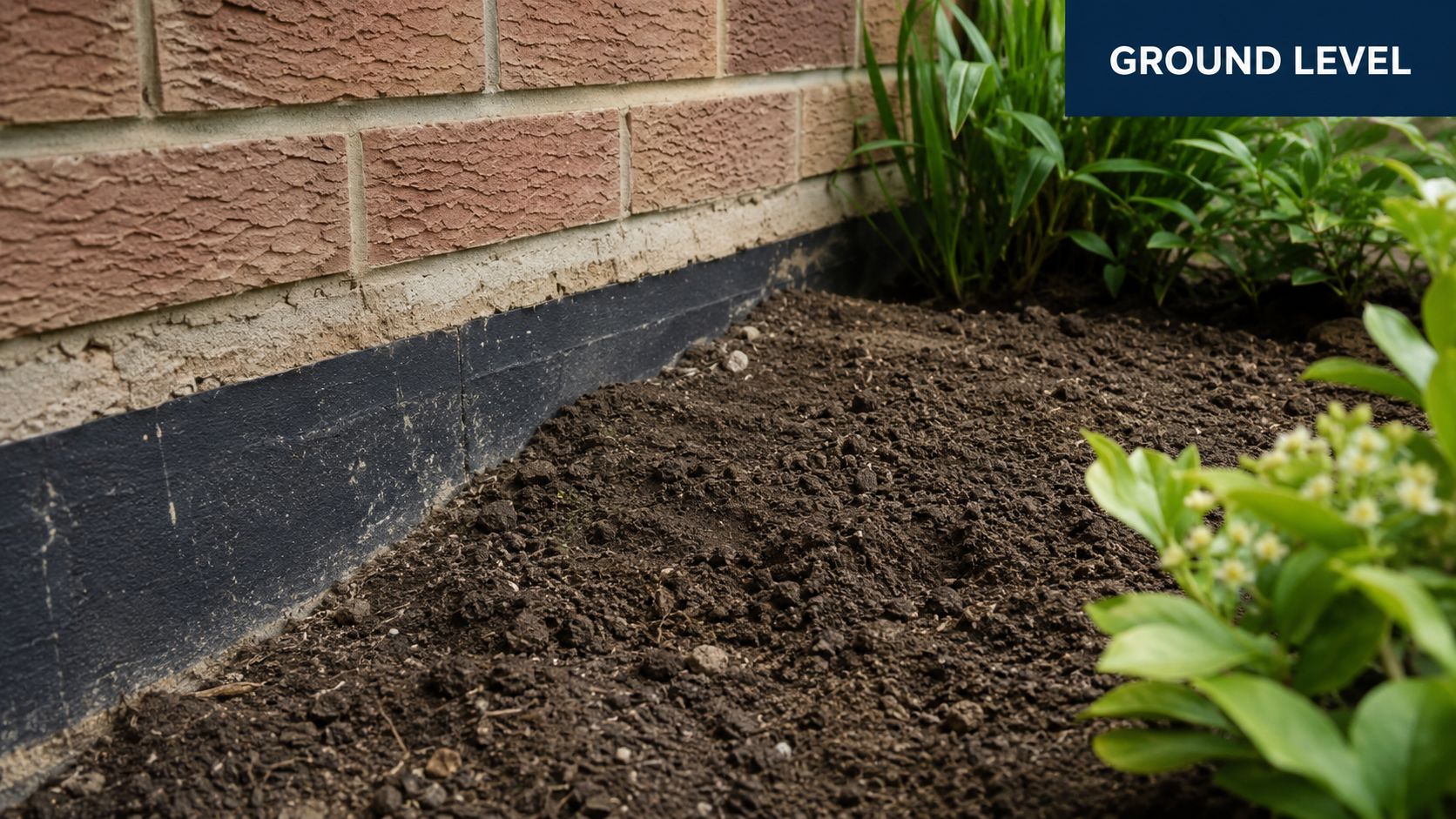
The most common moisture source at the base of walls is not some mysterious internal fault. It's poor ground and surface drainage, raised levels or changes to the outside of the property over time (Building Conservation). That is why so many London homes get misread. The wall looks like the problem, but the site is feeding it.
What actually bridges the DPC
Patios built too high, beds piled against the wall, render carried below the damp course and paths that sit above the original ground line all create a moisture bridge. So do raised garden beds in places like Greenwich or Catford where owners have improved the garden without thinking about the wall base. Once moisture sits there, the wall acts like a reservoir.
This is why I keep telling clients to ask a better question. It is not just, “Is the DPC broken?” It is, “What is feeding moisture into the base of the wall, and has the external environment changed?”
Good diagnosis starts outside.
Check gutters, paving, soil level and surface run-off before you start blaming the brickwork.
For homeowners wanting a practical view of drainage issues, the Lawn & Leaf Solutions drainage guide sets out the basic logic clearly. The principle is the same in London as anywhere else, water should move away from walls, not sit beside them.
In Victorian and Edwardian terraces across Lewisham, Southwark and Lambeth, I often find decades of paving and patchwork landscaping have lifted the ground line against the property. That can mimic rising damp perfectly. The fix is usually to remove the bridge, improve drainage and let the wall dry. If you skip that, the patch keeps coming back.
What a RICS Surveyor Does to Diagnose Damp
A proper surveyor does not just tap the wall and guess. They look at the building as a system. A RICS HomeBuyer Report is often enough for a typical flat or standard house, while a RICS Building Survey suits older or altered properties where damp may be tied to structure, finishes and maintenance history. You can read more about the difference in our guide to what is a building survey.
The inspection starts with visual clues, then moves to cause and effect. Surveyors check ground levels, bridging, ventilation, salt damage, internal heating patterns and the location of the stain. They'll also look for signs of leaks, defective rainwater goods, failed flashing and internal finishes that may be trapping moisture.
What the right survey includes
- Moisture profiling: to see whether readings rise from the base of the wall or stay localised.
- Salt evidence: to judge whether evaporation has left residues typical of long-term moisture movement.
- Bridging checks: to spot plaster, render or paving that has bypassed the DPC.
- Building context: to see whether the issue fits the age and type of the property.
A mortgage valuation is not enough. It's there for the lender's risk, not for your repair decision. If you're buying a Victorian terrace in Forest Hill or a flat conversion in Bermondsey, you need an independent surveyor who has no tie to a damp-proofing contractor, estate agent or lender panel incentive. That is where a firm like Corinthian Surveyors London LTD fits the brief, because the work is done from the defect outward, not from a treatment package inward.
The good surveyor also knows when not to overstate the problem. Some staining is old. Some plaster is contaminated but dry. Some walls need breathability more than they need drilling. That judgement saves money and avoids unnecessary disruption.
Remediation Options That Match the Real Cause
If the cause is drainage, fix drainage. If the cause is a bridge, remove the bridge. If the DPC has failed, deal with the failed barrier. That sounds obvious, but too many contractors jump straight to chemical treatment because it sounds neat and sells well.
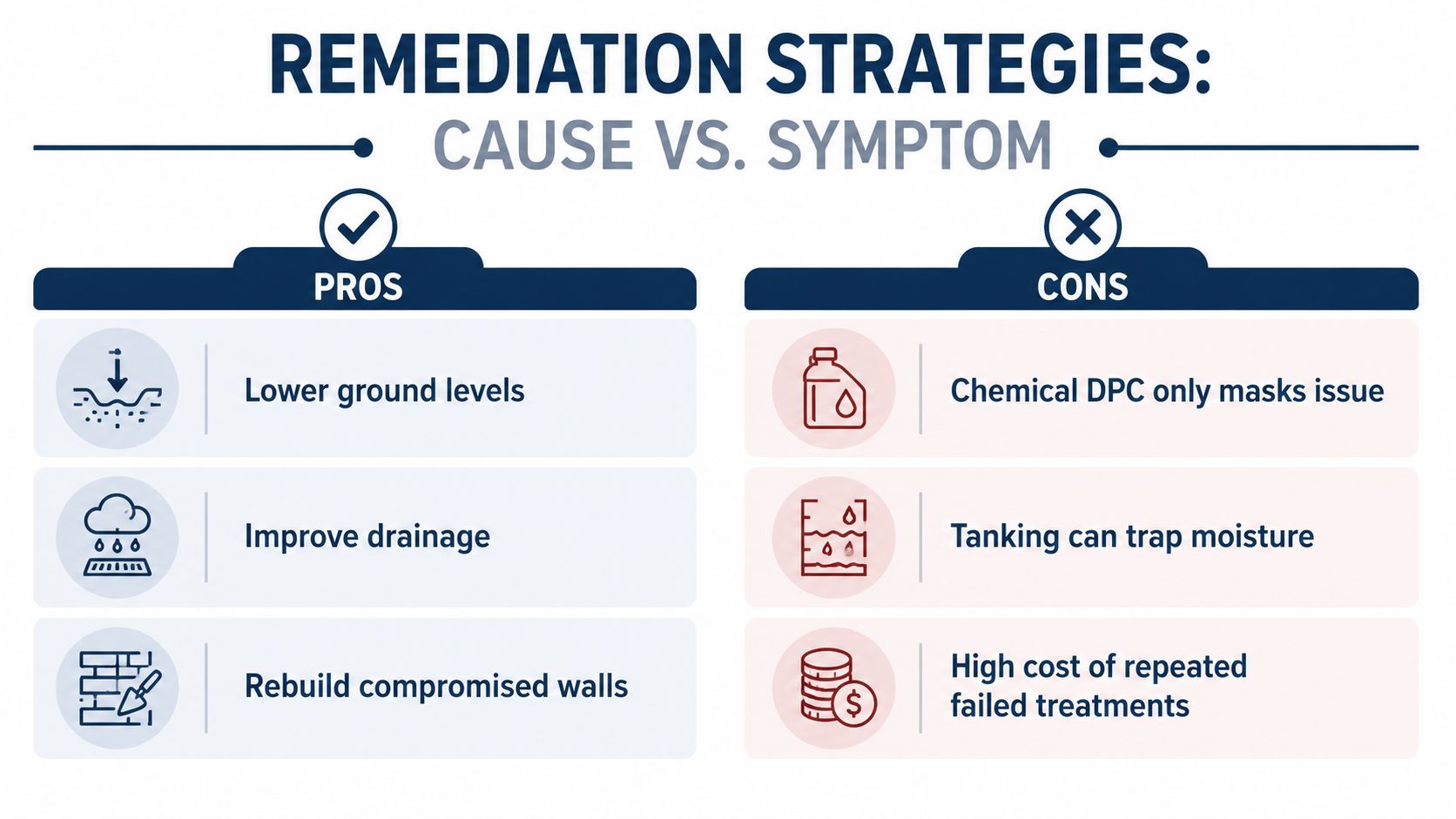
Victorian and Edwardian homes in Lewisham, Greenwich and Dulwich often need breathable finishes after the moisture source is removed. Cement render and dense paints can trap moisture in solid walls. Lime-based plaster and breathable decoration are usually more sensible on older masonry once the wall is drying properly.
What fixes the root cause
- Lower external ground levels: expose the damp course and break the bridge.
- Improve drainage: move water away from the wall base.
- Repair or replace a failed DPC: if the barrier is defective.
- Remove salt-contaminated plaster: so the wall can dry and stop re-wetting the finish.
Tanking is not a cure for rising damp in a solid wall. It can trap moisture inside the structure and move the problem somewhere else.
That is why the treatment has to match the property type. A modern cavity wall in Croydon is not the same as a solid brick terrace in Southwark. A badly chosen coating might hide symptoms for a bit, but it does not change the moisture source. Once the capillary feed is interrupted, the wall then needs drying time and sensible redecoration.
If you need formal advice rather than guesswork, this is the point where an independent survey pays for itself. Corinthian Surveyors London LTD handles residential defect analysis as part of its surveying work, and the important bit is independence. No contractor push. No borrowed diagnosis. Just the defect and the evidence.
Preventing Damp and Knowing When to Call a Surveyor
Keep the ground line below the damp course. Keep gutters clear. Keep rooms ventilated and heated, especially in period properties where solid walls and cold corners can invite condensation. Those are basic habits, but they save a lot of trouble.
If the wall has a recurring stain, if skirting boards are breaking down, or if the property is old and the source isn't obvious, stop relying on a quick quote from a damp company. Ask for an independent survey instead. A proper report will tell you whether you need a Level 2 HomeBuyer Report or a Level 3 Building Survey, and that choice matters far more than most sellers admit.
For a clearer idea of what a condition report looks at, our page on property condition reports is a useful starting point. It gives you the right frame before money starts being spent on guesswork.
Corinthian Surveyors London LTD is based in Forest Hill, covers all London boroughs and the Home Counties, and the work is carried out by Clive Thompson, a RICS and CABE qualified surveyor. If you want a straight answer on damp, not a sales pitch, call 0800 00 16 422 and book the right survey for the property.
If you're dealing with damp in a London house or flat, start with an independent inspection and make the cause prove itself. Corinthian Surveyors London LTD can assess the defect, explain whether it's rising damp, condensation or penetrating damp, and tell you what needs fixing before you spend a penny on treatment.