
Property Condition Reports Explained for London Buyers
You've had the offer accepted. The mortgage is moving. Now the question lands, which survey should you commission, and what exactly are you buying if you skip it. That is the point where a property condition report stops being paperwork and becomes the thing that tells you whether the asking price matches the actual building in front of you.
For London buyers, this is not a box-ticking exercise. A report can turn a Catford terrace with hidden damp, a Bromley semi with a tired roof or a Bermondsey conversion with awkward alterations into a properly understood risk. The Royal Institution of Chartered Surveyors' Home Survey Standard was introduced on 2 March 2021 to standardise how surveyors assess and present residential condition findings, so buyers can compare risks more reliably across properties (Example Condition Report).
If you are letting rather than buying, the same discipline matters. A dated condition record gives you a baseline for later disputes, which is why landlords who also need practical upkeep often pair surveying with maintenance help for landlords so the record and the repair plan match up properly.
Table of Contents
- Why Property Condition Reports Matter Before You Exchange
- What a Property Condition Report Is
- How a Condition Report Differs from a HomeBuyer Report and Building Survey
- What Goes Inside a Property Condition Report
- Common Defects a Condition Report Flags in London Homes
- How to Use the Report After It Arrives
- Commissioning a Property Condition Report with Corinthian Surveyors
- Next Steps and Common Questions for London Buyers and Owners
Why Property Condition Reports Matter Before You Exchange
The offer is accepted, the solicitor is sorting searches, and the temptation is to move fast. That is exactly when a property condition report earns its keep. It turns the building from a postcode and a floorplan into a physical asset with defects, access limits and maintenance liabilities.
Treat the report as a decision tool
Do not think of it as a formality. Think of it as the document that tells you whether the deal still works once the actual condition of the house, flat or conversion is known. In Lewisham and Catford, that can mean damp in a Victorian terrace. In Bromley, it can be a roof edge that looks fine from the street but needs work once a surveyor gets closer.
Practical rule: if you would not buy a used car without looking at the service history, do not buy a property without understanding its condition record.
A proper report is also the line between guesswork and negotiation. If the survey shows a serious defect, you can ask for a price reduction, request a repair or walk away before exchange. That is far cheaper than discovering the issue after completion, when the seller is gone and the keys are in your hand.
Keep the building in view, not the brochure
A brochure sells a room count and an address. A report tells you what those rooms need. That matters in older London stock, especially where plaster, roofs, chimney breasts and original timber have all been altered over time.
For landlords and buyers who need a clear maintenance mindset, a written condition record is also the start of a repair plan, not the end of the conversation. If the findings point to ongoing upkeep, you need people who can make the next step sensible, not theoretical. That is why survey and maintenance thinking should sit together, not in separate boxes.
What a Property Condition Report Is
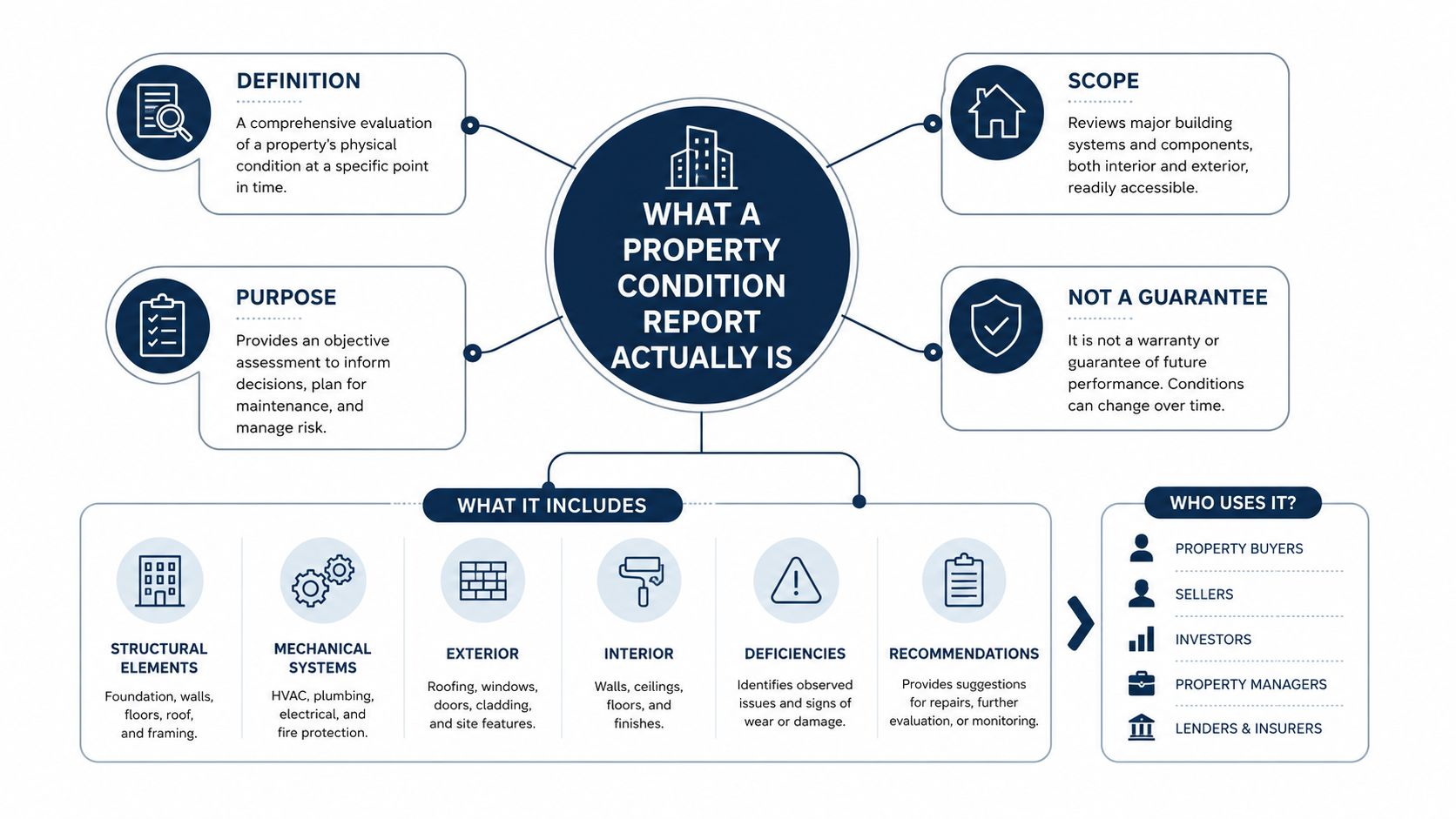
A property condition report is a written record of a building's physical state, room by room, with photographs, observations and condition ratings. It shows what is sound, what needs attention, and what needs a closer look before you commit. Used properly, it is evidence, not opinion dressed up as certainty.
The plain-English version
A house comes with a service record. A buyer who skips that record is buying blind.
That is the right way to read a property condition report. It is a defined survey product, usually the lightest formal option in the RICS framework, and it gives you a basic but useful condition picture. It is not a vague label for any inspection note, and it is not the same thing as a seller's reassurance.
A mortgage valuation is different, and so is an estate agent's description. A lender's valuation is there to support the loan decision. It does not give you the condition evidence you need to challenge hidden costs, ask for a price cut, or decide whether the asking price still stacks up.
What you should expect to receive
The report should tell you three things. What the surveyor saw. How serious each issue appears. What the limits of the inspection were.
That last point is where weak reports fall apart. If the surveyor could not inspect behind fitted furniture, into concealed voids, or under finished surfaces, the report should say so plainly. A report without clear limits is not stronger, it is weaker, because it invites false certainty.
The consumer standard introduced by RICS in 2021 was meant to make this kind of reporting more consistent across properties. For a first-time buyer, that consistency is the point. You should be able to compare one property with another without having to decode a different format each time, and you should be able to use the traffic-light ratings to press the seller on price, repairs or both. See the RICS Home Condition Survey versus a full building survey if you need to judge whether this lighter report is enough for the property in front of you.
The official Example Condition Report shows the structure you should expect, including the way defects, limitations and ratings are set out.
How a Condition Report Differs from a HomeBuyer Report and Building Survey
Here is the simple rule. Match the survey to the property, not to your mood on the day. A flat in reasonable order does not need the same depth of inspection as a Victorian terrace with movement, altered roofs or hidden structural changes.
| Level | RICS Name | Format | Best For |
|---|---|---|---|
| Level 1 | Home Condition Survey | Short, traffic-light summary | Newer, conventionally built homes in reasonable condition |
| Level 2 | HomeBuyer Report | More detailed summary with repair advice | Standard flats, 1930s semis and ordinary houses |
| Level 3 | Building Survey | Detailed defect analysis | Older, larger, altered or non-standard property |
Level 1, Level 2 and Level 3 in practice
The Level 1 report is the lightest option. It suits newer homes that are straightforward in construction and not throwing up obvious concern. You get a concise condition picture, not a forensic diagnosis.
The Level 2 HomeBuyer Report goes further. It includes repair and maintenance advice, so it is the normal choice for many London flats and 1930s semis in places like Bromley or Wandsworth. That extra detail matters when you need to understand not just what is wrong, but what you are likely to do about it next.
The Level 3 Building Survey is the one for older, larger or more complicated stock. In Forest Hill, Dulwich and Bermondsey, that often means Victorian terraces, listed buildings, conversions and properties that have been opened up, altered or patched over time. If a property shows movement, decay or substantial alteration, you want the deeper report.
Don't confuse surveys with valuations
A mortgage valuation is not a survey. It is there for the lender, not for your repair decisions. The valuation may satisfy the bank, but it does not protect you from hidden costs or tell you whether a cracked ceiling is cosmetic or structural.
If you are comparing report types and still unsure, the practical distinction is set out well in this guide to HomeBuyer reports versus Building Surveys. Use that as a starting point, then match the final choice to the property's age, alterations and visible condition.
Rule of thumb: if the property has been heavily altered, is older than the standard estate stock around it or already shows defects, move up a level.
What Goes Inside a Property Condition Report
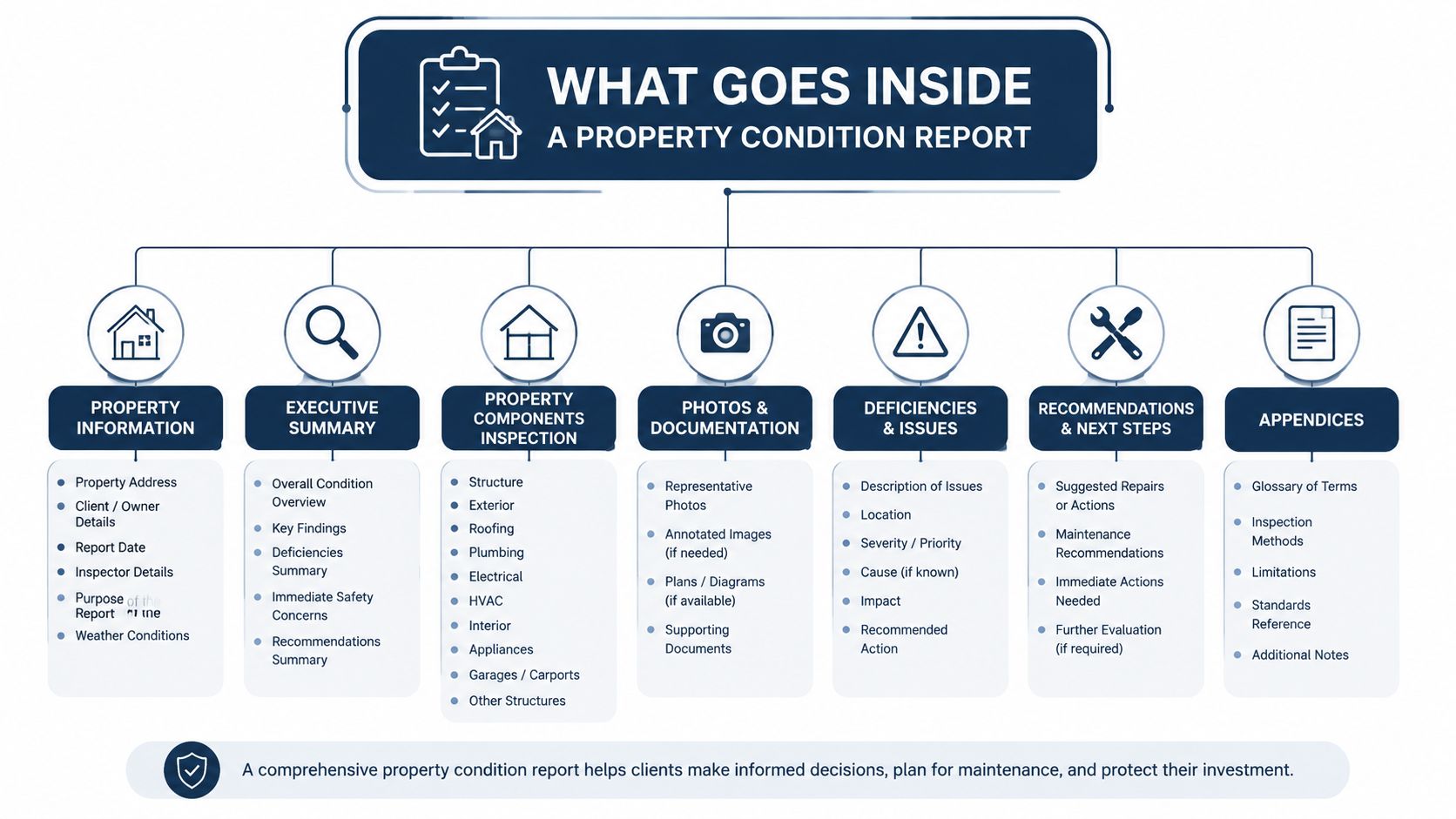
A decent report follows a proper structure. If the pages are organised well, you can read them fast and make decisions without getting lost in jargon. If they are sloppy, you will miss the one paragraph that matters.
Read the condition ratings first
The first thing to look at is the rating system. Condition 1 means the issue needs no immediate action. Condition 2 means repair is needed, but it is not urgent. Condition 3 means serious defect, urgent attention or further investigation.
That traffic-light language is blunt for a reason. It tells you where the risk sits without forcing you to interpret a wall of prose. The important bit is that a Condition 2 item is not harmless. A roof leak, damp patch or cracked render can hide specialist checks and access costs that are nowhere near as small as the label makes them sound.
A rating is a starting point. It is not the final bill.
Know the limits of the inspection
The limitations section matters just as much as the ratings. It tells you what the surveyor could not see. That may include loft spaces, voids, areas behind furniture, concealed timber ends, parts hidden by decoration or finishes and anything blocked by access constraints.
A careful buyer slows down. If the report says an area was not inspected, do not read that as reassurance. Read it as an instruction to ask what sits behind the gap.
Use the photographs as evidence
A solid report should tie each observation to clear, time-stamped photographs and captions. That is what turns an opinion into a record. It makes later negotiation, repair planning or dispute handling much easier because everyone can see what was visible on the day.
For a plain explanation of the inspection format, what is a RICS survey is a useful companion read. The point is simple. When the report lands, you are not looking for a neat summary only. You are looking for evidence that can stand up when someone later says, “That wasn't there.”
Common Defects a Condition Report Flags in London Homes
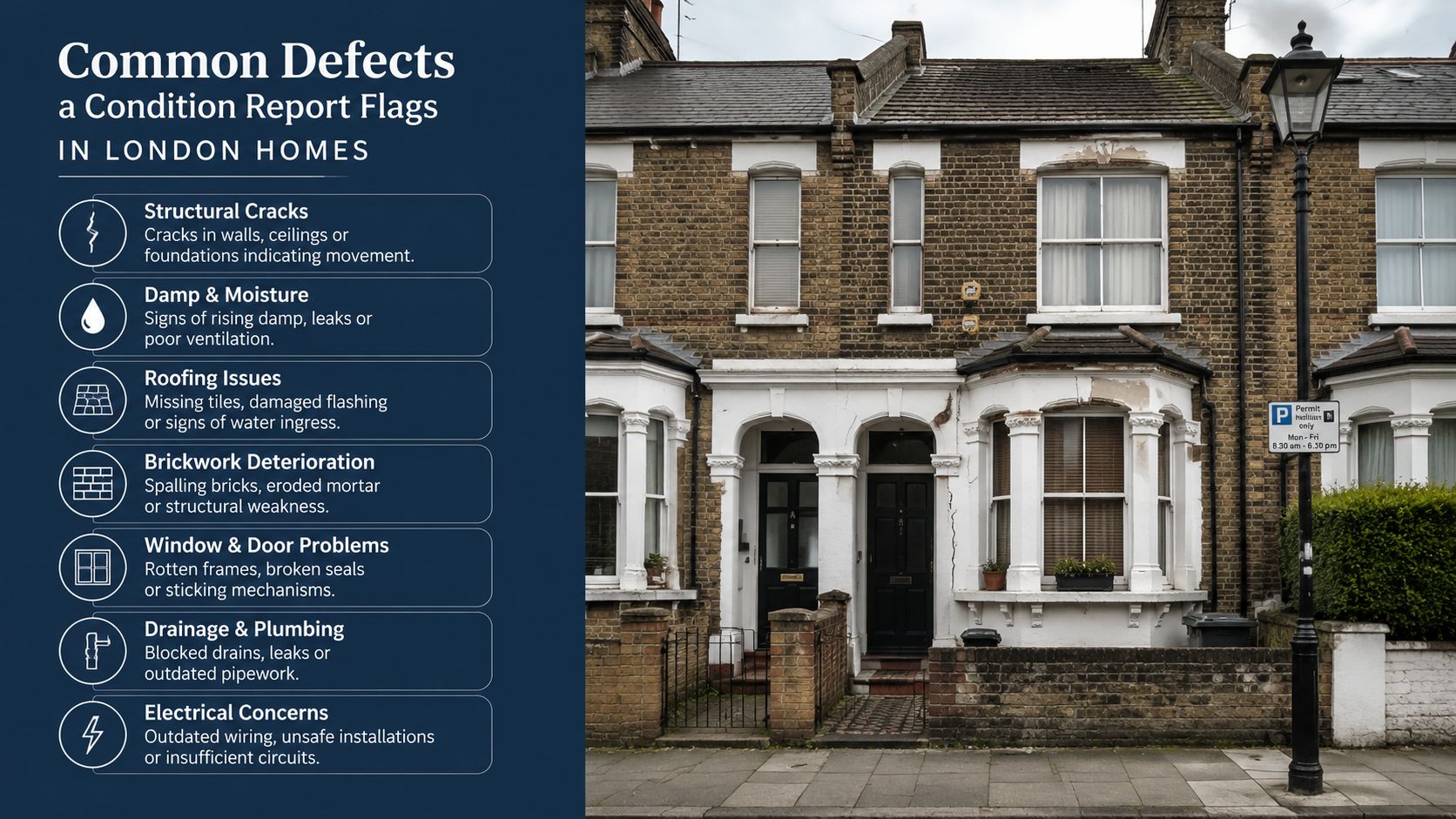
London property has its own habits. Victorian terraces, 1930s semis and converted flats each fail in different ways, and the report needs to name those failures plainly. The defect is one thing. The knock-on work is where the true cost sits.
Damp, roofs and altered structures
In Lewisham, Peckham and Brixton, the usual problem in Victorian terraces is rising or penetrating damp. Original lime plaster, older walls and missing damp-proof details make treatment tricky if someone starts by chasing symptoms instead of the cause. The sensible next step is a proper damp and timber inspection, not blind patching.
In Beckenham and Croydon, 1930s semis often throw up roof problems. Worn coverings, failed flashings and tired valley linings can look minor from the ground and still mean proper roofing work later. A good report should push you towards a quote or a specialist opinion where the roof is already suspect.
Chimney breasts, timber and movement
Across Bermondsey, Camberwell and Battersea, you still see older chimney breast removals in flats and conversions. That is not automatically a problem, but it needs checking because the load path above a neighbouring flat matters. If the removal was done badly, you may need a structural engineer or further investigation before you proceed.
Timber decay is another common one. Suspended floors, bay windows and hidden ends of joists can suffer from damp-related deterioration. Cracked plaster around window heads or soft timber at floor level is not decorative trivia. It is the sort of thing that leads to joinery, damp treatment and possibly more.
Read the defect, then read the consequence
The issue is not just “there is a defect”. The issue is what that defect leads to. A roof fault can mean access and scaffolding. Damp can mean investigation before treatment. Movement can mean structural checks before anyone starts cosmetic repairs.
For a practical owner's view of concealed timber pests and what they can do to a structure, the Vanish Canada termite guide is a useful reference, even though the London context is different. The general lesson still stands, look for the cause, not just the symptom.
How to Use the Report After It Arrives
The report is not something to file away and forget. Open it properly, read it in the right order and use it to make a decision. That is how the document pays for itself.
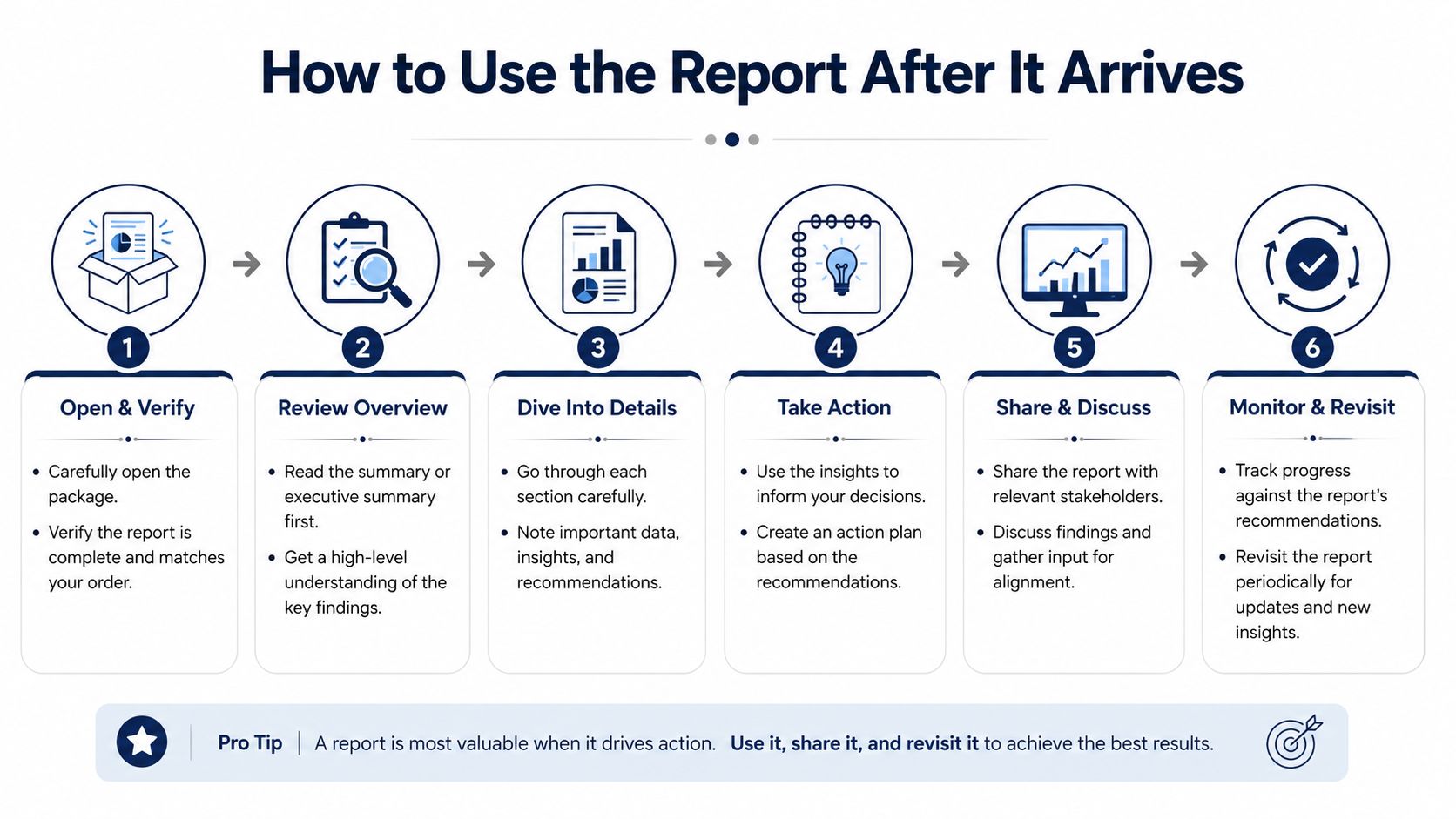
Start with the summary, then go straight to the red items
Read the executive summary first. Then go straight to the Condition 3 items. Those are the defects that matter most because they may require urgent action or further investigation.
After that, move to the Condition 2 items. Buyers often get caught out here. A “repair required” note may sound routine, but if it points to specialist damp checks, roof access or hidden timber work, the cost is not routine at all.
Use the report to direct the next inspection
If the surveyor recommends a specialist, take that seriously. A damp and timber specialist, structural engineer or roofing contractor should come in when the report says the issue sits outside ordinary inspection. A Level 2 or Level 3 report that suggests follow-on investigation is not being dramatic. It is telling you where the risk sits.
Practical rule: never argue with the report by guesswork. If the survey says “further investigation”, ask for it.
Negotiate with evidence, not emotion
You can use the findings to ask for a price reduction or request that the seller completes specific works. Sellers are not obliged to agree, but a clear report gives you a stronger position than a vague complaint. The condition record becomes commercial evidence.
Keep the report on file after completion. It becomes the baseline for the property's condition at purchase, which helps later if you sell, insure or face a dispute over pre-existing defects. That is the bit too many guides ignore. The report's value does not end on exchange day.
Commissioning a Property Condition Report with Corinthian Surveyors
If you want the process handled properly, start with a phone call and give the basics straight away. Address, property type, approximate age, any visible defects and the survey level you think you need. That is enough to get a sensible quote and avoid nonsense back and forth.
Corinthian Surveyors London LTD is independent, regulated by RICS and run by Clive Thompson, who holds both RICS and CABE qualifications. The firm is based in Forest Hill, serves all London boroughs plus the Home Counties and the South of England, and works without ties to lenders, estate agents or developers. That independence matters when you want the survey to speak for you, not for the transaction.
The usual process is straightforward. Instruction is confirmed, access is arranged with the seller or agent, the inspection is carried out and the report is then issued. If you need a wider property review or a more detailed level of survey, the same firm can also advise on the right RICS format, whether that is Level 1, Level 2 or Level 3.
For a direct enquiry, use the contact page at Corinthian Surveyors contact details. Have the address ready, note any extension, loft conversion or visible cracking, and say whether you are buying a flat, terrace, semi or conversion. That gives the surveyor enough to tell you what matters and what does not.
Next Steps and Common Questions for London Buyers and Owners
Match the survey level to the property type, commission it before exchange and keep the report on file. That is the rule for buyers, sellers and landlords alike. If you want the next step handled by an independent RICS and CABE-qualified surveyor in South East London or further afield, call 0800 00 16 422 and ask for the survey that fits the building, not the brochure.
FAQ
Does a mortgage valuation count as a survey? No. It is for the lender and does not replace a proper condition report.
What if the seller refuses to act on the findings? Use the report to renegotiate or decide whether to proceed. The seller is not obliged to repair anything.
Is a Level 1 report enough for a Victorian flat? Usually not. Older and altered stock generally needs more detail, often Level 2 or Level 3.
How long should I keep the report? Keep it with your purchase papers. It is your baseline record for future sale, insurance questions and later dispute work.
Corinthian Surveyors London LTD handles residential surveys, valuations and defect advice across London with the sort of clear reporting first-time buyers need. If you want a property condition report that tells you what matters before you exchange, visit Corinthian Surveyors London LTD and choose the survey level that matches the building, not the sale pitch.