
What Do House Surveyors Look for Inside Every Home
You're waiting for the survey report after offering on a house in Forest Hill, Lewisham or Bromley. The estate agent has said the property is in good condition. The mortgage lender has arranged a valuation. You're still wondering what a house surveyor looks for, and whether a few cracks or a patch of staining should worry you.
A house survey isn't a cosmetic check. It's a visual, non-invasive inspection of the accessible parts of the building, designed to identify defects, risks and possible future costs. The surveyor looks at how the property has been built, how its parts are performing and whether something that looks minor could point to a more serious problem.
A mortgage valuation answers a different question. It helps the lender decide whether the property provides suitable security for the loan. It isn't a detailed inspection for your benefit, and it shouldn't be treated as a substitute for an RICS survey.
RICS Home Surveys are structured to identify defects, risks and potential legal issues in a clear format. They also separate urgent problems from routine maintenance by using condition ratings, so you can see what needs attention first. You can also use a simple resource such as these printable inspection checklists to record your own observations, but a checklist won't replace professional judgement.
Corinthian Surveyors London LTD is an independent RICS practice in Forest Hill. Clive Thompson holds RICS and CABE qualifications and has over 30 years' experience in the built environment. The important point isn't the length of the report. It's understanding what the surveyor has found, what may happen if it's ignored and what you should do next.
Table of Contents
- Introduction What a House Survey Really Checks
- Understanding RICS Survey Levels and When to Use Each
- Outside and Structure What Surveyors Check First
- Inside the Home Damp Timber Services and Hidden Risks
- How Surveyors Rate Defects and What the Traffic Lights Mean
- London Homes Why Local Knowledge Changes the Inspection
- Practical Advice for Buyers and Sellers After the Survey
Introduction What a House Survey Really Checks
A buyer may expect a surveyor to walk through the house, spot a broken tile and say whether the property is worth buying. The surveyor's job is more useful than that. They examine the building element by element, then explain which defects are routine maintenance, which need repair and which call for urgent investigation.
The inspection looks for evidence of structural movement, dampness, roof failure, timber decay and unsafe conditions. It also considers how the property's age, materials and alterations affect its behaviour. A Victorian terrace in Catford will not be assessed in exactly the same way as a 1930s semi in Beckenham or a converted flat in Bermondsey.
The practical point: a survey is a risk assessment for the building, not a beauty inspection.
What the inspection can tell you
The surveyor may identify diagonal or stepped cracks, bulging walls, a leaning chimney or sagging roof members. They may also find damp staining, poor ventilation, failed flashings, or signs that moisture has affected plaster and timber. Damp patterns can vary by room. Staining near a bathroom may suggest a different source from moisture at a ground-floor external wall, so the location and surrounding materials matter.
Visible services such as the boiler, fuse box, drainage and heating installations may be noted. A standard survey is not a specialist gas or electrical test, however. The survey type also affects how closely different parts of the property are examined, so the report should be read alongside the level of inspection selected.
The inspection is normally visual and non-invasive. A surveyor does not usually open walls, lift every floor covering or dismantle services. If visible evidence points to concealed damage, the report should explain that limitation and recommend suitable specialist investigation. You can find printable inspection checklists to record your own observations, but a checklist cannot replace professional judgement.
Why urgency matters
RICS uses a three-level condition rating system in Level 2 and Level 3 reports. Condition Rating 3 is reserved for defects that are serious or need urgent repair, replacement or investigation because they may create safety risks or severe long-term damage. That classification helps you decide whether to pause, renegotiate or budget for work.
Corinthian Surveyors London LTD is an independent RICS practice in Forest Hill. Clive Thompson holds RICS and CABE qualifications and has over 30 years' experience in the built environment. The report's value lies in understanding what the surveyor found, what may happen if it is ignored and what you should do next, whether you are buying or preparing a property for sale.
Understanding RICS Survey Levels and When to Use Each
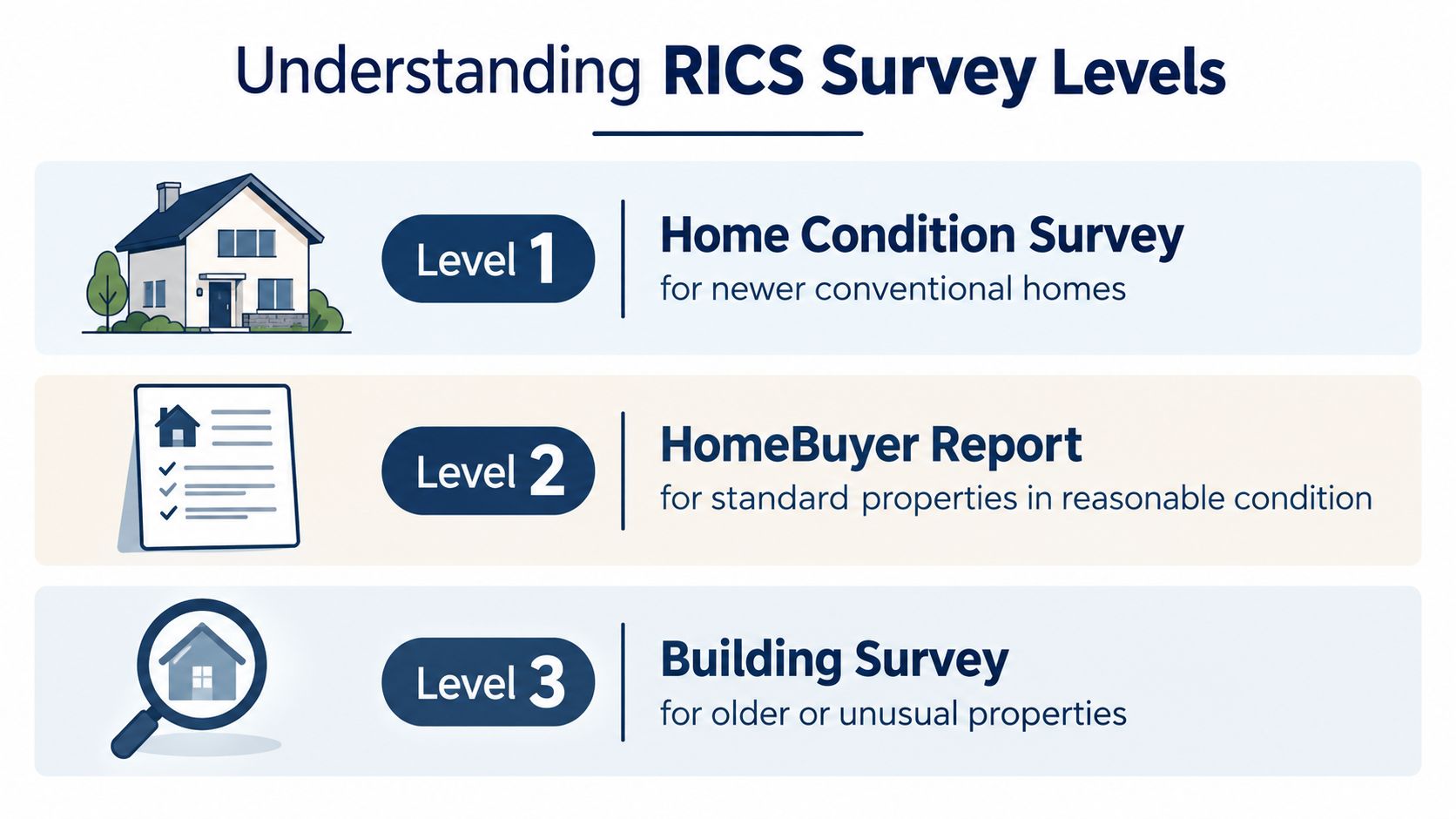
The right survey depends on the building, not on the buyer's budget. RICS states that Level 1 is aimed at conventional properties and newer homes, while Level 3 is the most detailed option and was previously known as a Building Survey. Level 2 sits between them and is intended for many standard properties in reasonable condition.
| Survey Level | Best For | Inspection Depth | Report Detail |
|---|---|---|---|
| Level 1 Home Condition Survey | Newer, conventional homes | Basic visual inspection of accessible areas | Clear summary of condition and notable defects |
| Level 2 HomeBuyer Report | Standard properties in reasonable condition | More detailed visual inspection, including the roof space and damp checks where suspected | Condition ratings, risks and repair advice |
| Level 3 Building Survey | Older, larger, altered or unusual properties | Detailed inspection suited to more complex construction and defects | Fuller explanation of materials, defects, causes and recommended follow-up |
A Level 1 survey can suit a conventional newer home where there are no obvious signs of unusual construction or significant alteration. It isn't designed to provide the depth needed for a run-down period property, a substantial extension or a building with suspected movement.
A Level 2 survey is often appropriate for a standard house or flat in reasonable condition. The surveyor enters the roof space where access allows and visually inspects the roof structure. Damp testing is included where damp is suspected, and walls are tested for damp as part of the inspection.
When Level 3 is the sensible choice
A Level 3 survey is appropriate for a large, old, run-down, unusual or altered property. It's also the safer choice where the construction is non-standard, the roof structure has been changed or previous building work appears significant. RICS guidance says the surveyor should record the form of construction and materials used in each part of the building, because those details affect how defects are interpreted.
In a Level 3 inspection, the surveyor may lift small corners of insulation in the roof space to identify its thickness and type and to understand the ceiling beneath. The survey also examines existing damp-proofing in more detail. It still isn't an unlimited intrusive investigation, so concealed defects may require further testing.
Before choosing, describe the property. Tell the surveyor about a loft conversion, basement excavation, extension, flat conversion, listed status or known cracking. Corinthian's explanation of what an RICS survey involves can help you understand the distinction before you instruct anyone.
Outside and Structure What Surveyors Check First
A surveyor normally starts outside because the exterior shows how the building deals with weather, movement and water. The inspection follows a practical sequence, from the roof down to the ground, then around the walls, openings and boundaries.
Start at the roof
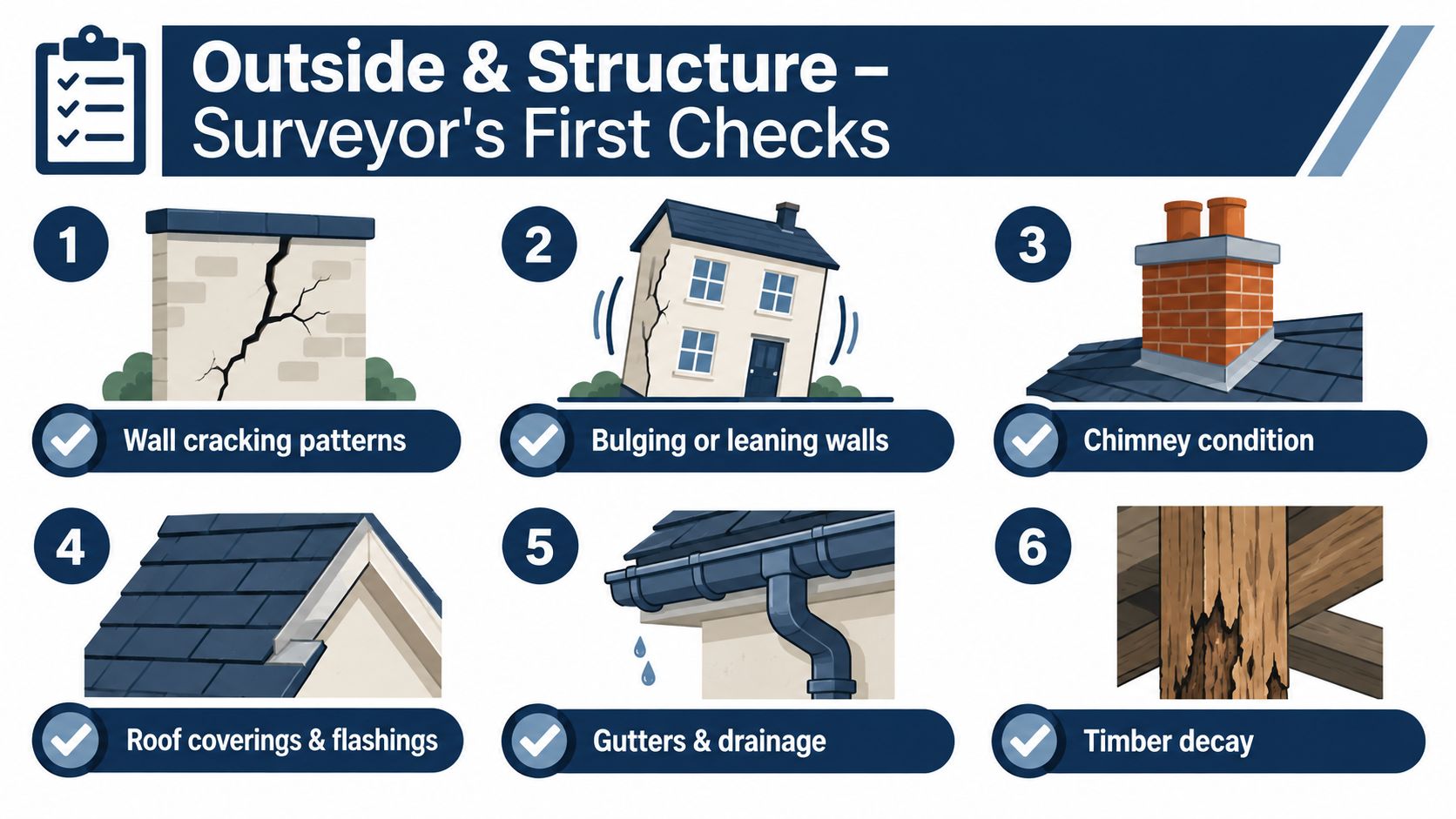
The surveyor checks roof coverings for slipped, cracked or missing tiles and looks at ridges, valleys and junctions. Flashings around chimneys, roof abutments and extensions matter because failed flashing can let rain into the roof structure and upper rooms.
Sagging roof members may indicate movement, overloading, decay or a poorly executed alteration. Gutters and downpipes are checked for leaks, blockages and discharge against the walls. Water repeatedly falling beside the foundations can contribute to damp and damage.
Read the walls, not just the cracks
A fine, stable hairline crack may be cosmetic. A diagonal or stepped crack, particularly near a window or door opening, deserves closer attention. Wider or progressive cracking can indicate differential movement and may justify structural engineer input.
The surveyor also looks for bulging brickwork, leaning walls, failed pointing and areas where cement repairs have trapped moisture in older masonry. A Victorian terrace in Lewisham or Forest Hill may need a different interpretation from a cavity-wall 1930s semi in Bromley. The materials and construction method change the likely causes.
Look down to ground level
Ground levels, paving, drainage and air bricks can explain moisture inside the building. A surveyor checks whether external surfaces sit too high against the wall, whether vents are blocked and whether rainwater is being directed away from the property.
Windows, doors, sills, parapets and boundary walls are also part of the external assessment. Large trees close to a building may need consideration, particularly where roots, drainage or ground conditions could contribute to movement. For a more detailed explanation of the inspection process, see this guide to a full structural survey.
A short visual introduction to common structural observations can be useful before an inspection:
The surveyor isn't trying to diagnose every defect from the pavement. They're identifying patterns, recording evidence and deciding whether the next step is routine repair, targeted testing or specialist advice.
Inside the Home Damp Timber Services and Hidden Risks
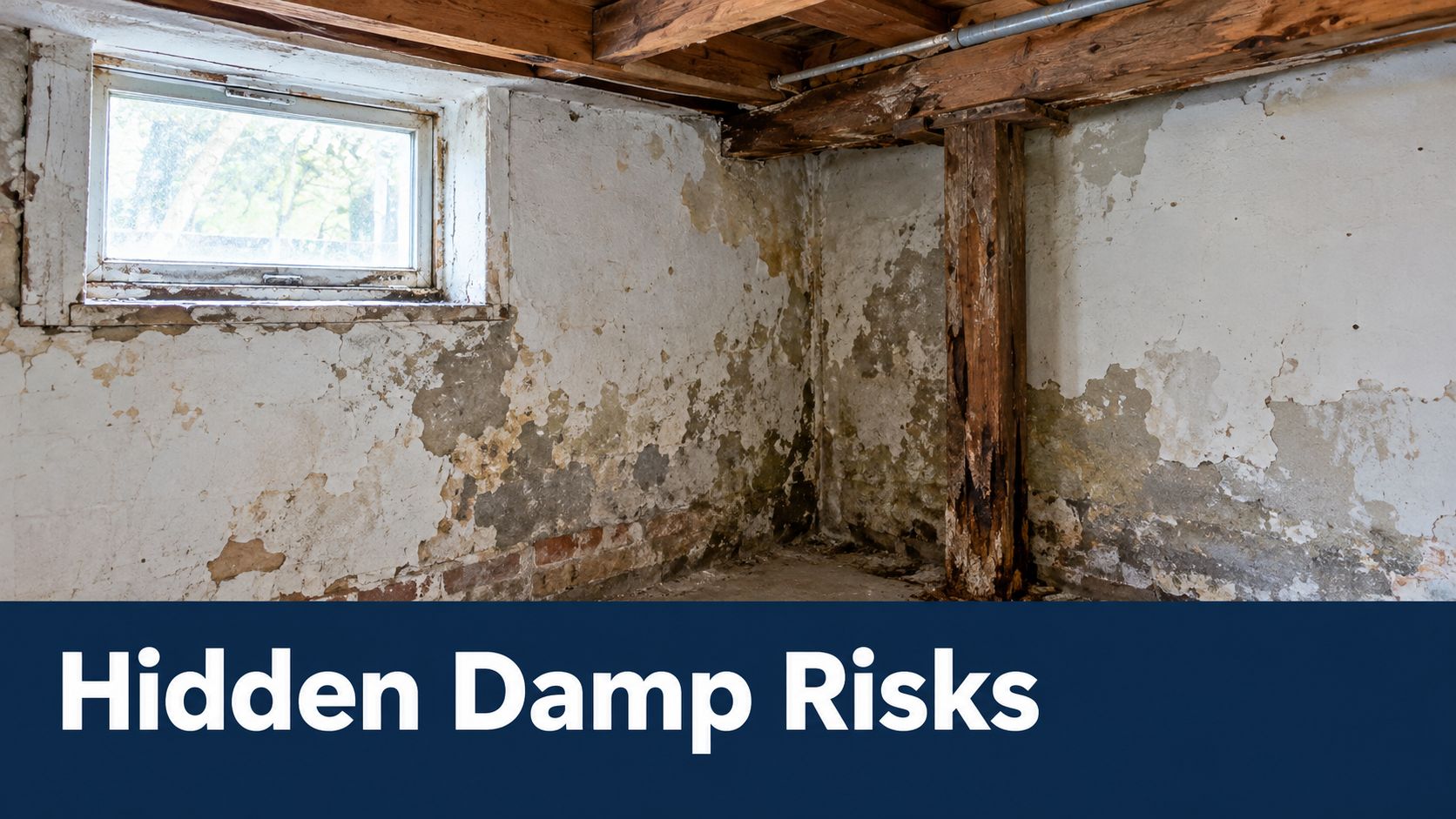
Inside, the surveyor follows the evidence. Damp staining near a chimney breast, mould around a bedroom window or a musty basement smell can each point to different causes. The question isn't “is there damp?” It's where is it, what pattern does it form and what may be causing it?
The English Housing Survey 2023 to 2024 found that 1.4 million dwellings in England had a damp problem in 2024. It also found that damp was more likely in bathrooms, bedrooms and living rooms than in kitchens or circulation spaces. That room pattern matters because surveyors need to distinguish condensation from penetrating damp, rising damp or a plumbing leak. The government housing quality findings provide the wider context, but the property itself still needs individual assessment.
Room-by-room clues
Bathrooms are checked for poor extraction, failed sealant, staining and moisture around sanitary fittings. Bedrooms and living rooms may show condensation at cold corners, behind furniture or around window reveals. A surveyor uses a moisture meter where visible evidence suggests damp, but a meter reading alone doesn't prove the cause.
In a basement or lower-ground room, the surveyor looks at walls, floors, timber supports and ventilation. Peeling paint may be the result of moisture movement through masonry, but it can also follow a leak or defective drainage. Timber decay becomes a concern where moisture has remained present for a prolonged period.
You can read a plain-language explanation of what causes rising damp before deciding whether a specialist damp investigation is needed. Don't assume that every dark patch is rising damp, and don't accept a chemical treatment recommendation without understanding the source of the moisture.
Roof space and concealed structure
In a Level 2 inspection, the surveyor enters the roof space where accessible and visually examines the roof structure. In Level 3, they may lift small corners of insulation to identify its thickness, type and the ceiling condition beneath. They're looking for decay, damaged timbers, poor ventilation, condensation and signs of water entry.
The rest of the interior inspection includes floors, ceilings, stairs, joinery and internal walls. Uneven floors may reflect age, settlement or structural movement. Bowed ceilings, damaged plaster and distorted doors can be clues, but they need to be read alongside the external evidence.
Services and finishes
Visible plumbing, heating, electrics and ventilation are noted, but a surveyor doesn't provide a full service installation test. The report may recommend an electrician, Gas Safe engineer, drainage contractor, timber specialist or structural engineer where the accessible evidence isn't enough.
That limitation protects the accuracy of the advice. A surveyor should say what was visible, what couldn't be inspected and what further investigation would answer the question.
How Surveyors Rate Defects and What the Traffic Lights Mean
A survey report becomes useful when it ranks defects by consequence. RICS Level 2 and Level 3 reports use three condition ratings, applied to the main parts of the property. The system turns a long list of observations into a priority order.
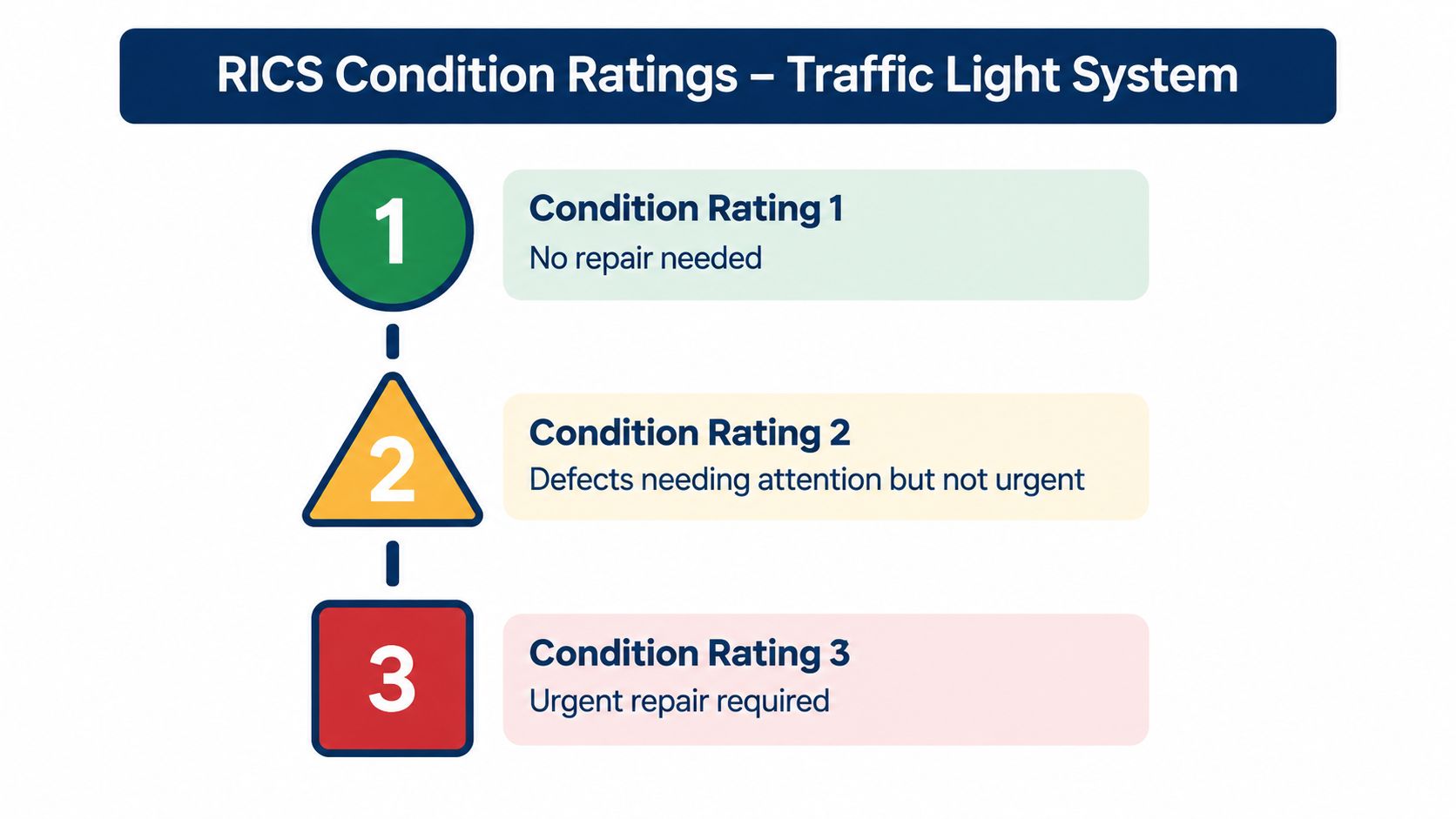
| Rating | Meaning | Sensible response |
|---|---|---|
| Condition Rating 1 | No repair is currently needed | Keep the element under normal maintenance |
| Condition Rating 2 | Repair or replacement is needed, but the defect isn't serious or urgent | Obtain advice and budget for the work |
| Condition Rating 3 | Serious defect or urgent repair, replacement or investigation required | Investigate promptly before committing to the purchase |
A Rating 2 roof defect might involve worn coverings that need planned repair. A Rating 3 roof defect could involve serious movement, active water penetration or a condition that creates a safety concern. The label depends on urgency and likely consequence, not on how dramatic the defect looks in a photograph.
Read the report this way: Condition Rating 3 is a reason to investigate, not an automatic instruction to walk away.
The report may also include items that aren't given a condition rating because they need specialist assessment or relate to matters outside the standard inspection. Read the comments beside the rating. They should explain the evidence, the limitation and the recommended next action.
For a buyer, Rating 2 items can support a repair budget or a sensible price discussion. Rating 3 items may require a structural engineer, timber specialist or damp investigation before you decide how to proceed. Don't negotiate from the colour alone. Use the surveyor's explanation to understand the work and its likely significance.
London Homes Why Local Knowledge Changes the Inspection
London housing stock changes quickly from street to street. A Victorian terrace in Forest Hill, Brockley or Lewisham may have solid masonry walls, lime-based materials, original chimney breasts and later rear extensions. A 1930s semi in Bromley or Beckenham may have different wall construction, roof detailing and alteration history.
That history affects the inspection. Cement pointing can behave badly with older masonry if it restricts the movement of moisture. Lath and plaster ceilings can show age-related distortion. Original lead pipework may remain concealed behind modern fittings. A removed chimney breast may have been properly supported, or it may need documentary and structural questions raised with the solicitor.
Flats and conversions
Converted flats in Peckham, Bermondsey, Deptford and Camberwell need more than an inspection of the individual room. The surveyor considers the parts of the building that affect the flat, including the roof, external walls, communal areas where accessible and signs of alteration. Lease terms, repair responsibilities and works to the wider building should be checked with the conveyancer.
A warehouse conversion in Bermondsey can present different concerns from a converted Victorian maisonette in Greenwich. Suspended floors, unusual materials, exposed structure and previous fire or acoustic upgrades all change what deserves attention. A Level 3 survey is often more suitable when the construction is unusual or the alteration history is substantial.
Period and protected properties
Listed buildings and homes in conservation areas may have restrictions affecting repairs and alterations. A surveyor won't replace the planning or legal advice provided by your solicitor and the local authority, but the report can flag construction details that need careful treatment.
RICS Level 3 guidance requires the surveyor to note the form of construction and materials used for each part of the building. That matters in London because the same symptom can have a different cause in lime mortar, modern cement render, timber framing or an altered roof structure. The building's materials guide the judgement.
Damp deserves particular care. As noted earlier, damp is more likely to be found in bathrooms, bedrooms and living rooms than in kitchens or circulation spaces. A surveyor therefore studies room position, ventilation, external exposure and moisture pattern rather than treating every stain as the same defect.
Practical Advice for Buyers and Sellers After the Survey
Give the surveyor clear access before the appointment. Open loft hatches, open outbuildings, move items away from likely inspection areas and tell the surveyor about extensions, loft conversions, basement works and known leaks. A blocked hatch can turn an accessible roof space into an inspection limitation.
Read the report by priority. Start with Condition Rating 3 items, then review Rating 2 defects and any recommendations for specialist investigation. Ask what evidence supports the concern, what the surveyor couldn't inspect and which professional should answer the remaining question.
Sellers can reduce avoidable uncertainty by repairing active leaks, clearing gutters and keeping guarantees, planning documents and certificates together. Be open about alterations. Concealing a chimney breast removal or conversion rarely helps once the buyer's surveyor finds evidence of it.
A property checklist can help organise documents and questions. If you're comparing requirements across countries, this checklist for French property buyers is a useful example of how buyers can keep practical information together, although UK survey and conveyancing requirements are different.
Corinthian Surveyors London LTD provides Level 1, Level 2 and Level 3 RICS surveys, defect analysis and residential valuation advice across London, the Home Counties and the South of England. The firm is independent, regulated by RICS, a member of the RICS Valuers Registration Scheme and insured by Royal Sun Alliance. It has no ties to lenders, estate agents or developers.
Frequently asked questions
Does a house survey check the electrics and gas?
A surveyor records visible service installations and obvious concerns, but a standard house survey isn't a full gas or electrical safety test. If the report raises a concern, arrange the relevant specialist inspection.
Can a surveyor confirm the cause of damp?
A surveyor can identify visible damp evidence, use a moisture meter where appropriate and assess the likely pattern. The cause may still require a specialist damp, drainage or building investigation, particularly where finishes conceal the source.
Should I choose Level 3 for a Victorian terrace?
Not automatically, but age, alteration, condition and construction matter. A Victorian terrace with extensions, cracking, roof movement or unusual materials may justify Level 3, while a conventional property in reasonable condition may suit Level 2. Discuss the building rather than choosing by age alone.
Can I use the report to renegotiate?
You can use significant Rating 2 or Rating 3 findings as evidence for a price discussion, subject to the contract and advice from your conveyancer. Obtain specialist information where the surveyor recommends it, so the discussion is based on the defect and the likely work rather than an unsupported estimate.
If you're buying, selling or dealing with a residential property in London, Corinthian Surveyors London LTD can provide an independent RICS Home Condition Survey, HomeBuyer Report or Building Survey matched to the property's construction and risk. Call 0800 00 16 422 to discuss the building and request a quote before you commit.