
What Is Homebuyers Survey

A homebuyers survey is usually a RICS Home Survey Level 2. It is a visual inspection of a conventional property in reasonable condition, and it flags visible defects so you can make a proper buying decision.
You're usually at the point where the offer's accepted, the excitement's worn off a bit, and the big question lands. Do you trust the lender's valuation and hope for the best, or do you pay for a proper look at the roof, walls, damp and the rest of the property before you commit.
Table of Contents
- What a Homebuyers Survey Actually Is
- Choosing Between Level 1, Level 2 and Level 3 Surveys
- What the Surveyor Inspects and What They Miss
- Common Defects Found in London Homes
- Costs, Timings and How to Instruct a Surveyor
- Reading the Report and Using It to Negotiate
- Homebuyers Survey Questions Answered
What a Homebuyers Survey Actually Is
A homebuyer usually wants two things at this stage, reassurance and negotiating power. A RICS Home Survey Level 2 gives both, because it is designed for conventional UK properties in reasonable condition and it gives you a structured view of the visible condition before you exchange contracts, not after.
That matters. A mortgage valuation only tells the lender whether the property looks suitable security for the loan. It is not there to protect you, and it will not dig into the practical issues that affect your decision to proceed, renegotiate or walk away.
Practical rule: if the property is a normal house or flat and it is broadly sound, start with Level 2. If it has major age, non-standard construction or obvious complexity, you move up a level.
RICS describes Level 2 as an in-depth visual inspection. It does not involve invasive opening-up, so nobody is ripping back floors or pulling apart walls. That is why it suits buyers who want a proper warning system without commissioning a full structural investigation.
If you want a plain-English guide to the same point, see what a RICS survey is. And if the property sits in a block, shared structure or conversion, it is also worth understanding protect your investment with block management, because the building around your flat can matter just as much as the flat itself.
A good survey does one job very well. It tells you what you can see, what that means in practice and where you need a specialist next. That is why a proper survey is a risk filter, not paperwork for the sake of it.
Choosing Between Level 1, Level 2 and Level 3 Surveys
The right survey depends on the property, not on habit. Too many buyers choose by price alone and then act surprised when the report is either too thin or too detailed for the job.
A Level 1 is for very straightforward properties in decent order. A Level 2 is the standard choice for most conventional homes. A Level 3 is for older, altered, larger or more complex buildings where the surveyor needs to give deeper diagnostic commentary.
London makes the choice easier if you know the stock. A Victorian terrace in Lewisham, Forest Hill or Brockley often needs more than a basic check because of age, past repairs and hidden alterations. A 1930s semi in Bromley or Beckenham may be perfectly suitable for Level 2 if it's been maintained. A converted warehouse flat in Bermondsey or Rotherhithe can push you towards Level 3 if the structure, access or common parts look complicated.
Which RICS Survey Suits Your Property
| Property type | Typical age | Recommended survey |
|---|---|---|
| Modern flat or house in sound condition | Recent or relatively modern | Level 1 or Level 2 depending on condition |
| Conventional house or flat with routine wear | Common modern or period stock | Level 2 |
| Older terrace, converted building or non-standard layout | Period or altered property | Level 3 |
| Complex or heavily altered property | Any age, but with unusual construction or defects | Level 3 |
The useful internal comparison is homebuyer report vs building survey. The point is simple, Level 2 is for property you can read from the outside with a strong visual inspection, Level 3 is for property that needs a deeper explanation.
Don't overbuy a survey. If the property is plain and conventional, Level 3 can be wasted money and time. Don't underbuy either, because a weak report on a complex property leaves you exposed.
My rule is blunt. If the building has age, movement, damp history, big alterations, a flat conversion or a question mark over the structure, step up. If it is a standard home in reasonable condition, Level 2 is usually the sensible move.
What the Surveyor Inspects and What They Miss
A Level 2 survey is a visual check of what can be seen and reached safely. That means the surveyor looks at roofs, walls, floors, loft space, joinery, damp indicators and other accessible components. The aim is to spot the sort of thing that changes a buyer's mind, such as cracked tiles, rotten timber, stained ceilings, distorted floors or movement in visible masonry.
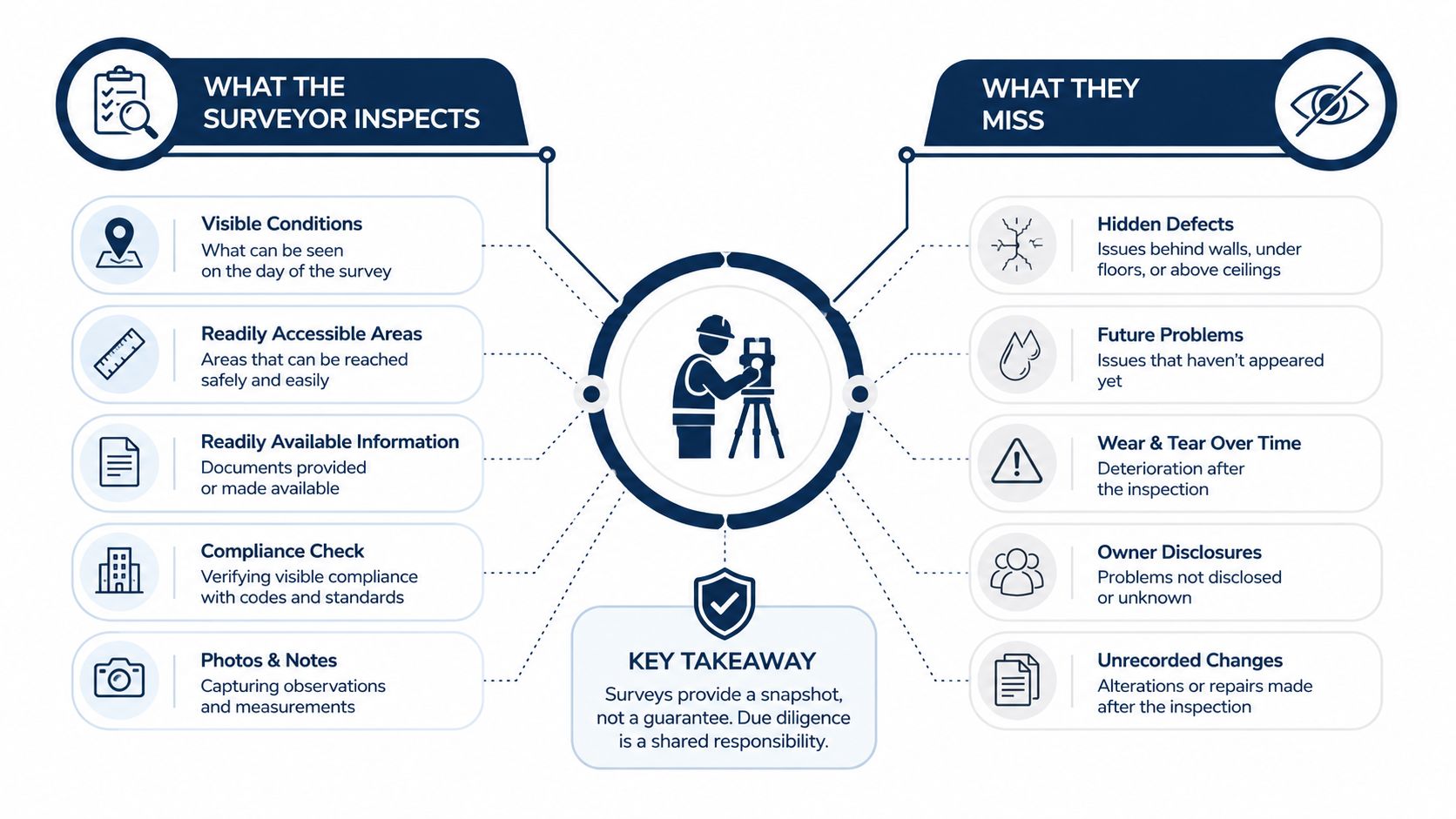
The report then grades condition using the familiar traffic light approach. Red means serious defects or risks that need urgent attention. Amber means a matter needs repair, further investigation or close watching. Green means no visible problem at the time of inspection, but it is still only a visual opinion on that day.
There are hard limits. A Level 2 does not involve invasive opening-up. It does not test services in the way a specialist electrician or plumber would. It also depends on access, so a packed loft, a locked room or a busy occupied home can hide things. That is normal. It is still useful, but it is not magic.
A proper surveyor does not guess. If the chimney stack is leaning, the damp meter shows signs of moisture or the rear wall has stepped cracking, the report should say so plainly and tell you whether you need a builder, a roof specialist or a structural engineer.
Buyers often go wrong. They expect the survey to confirm perfection. It won't. It is there to expose visible trouble before it becomes your problem after completion. Used properly, it narrows uncertainty and sends you to the right specialist only when you need one.
Common Defects Found in London Homes
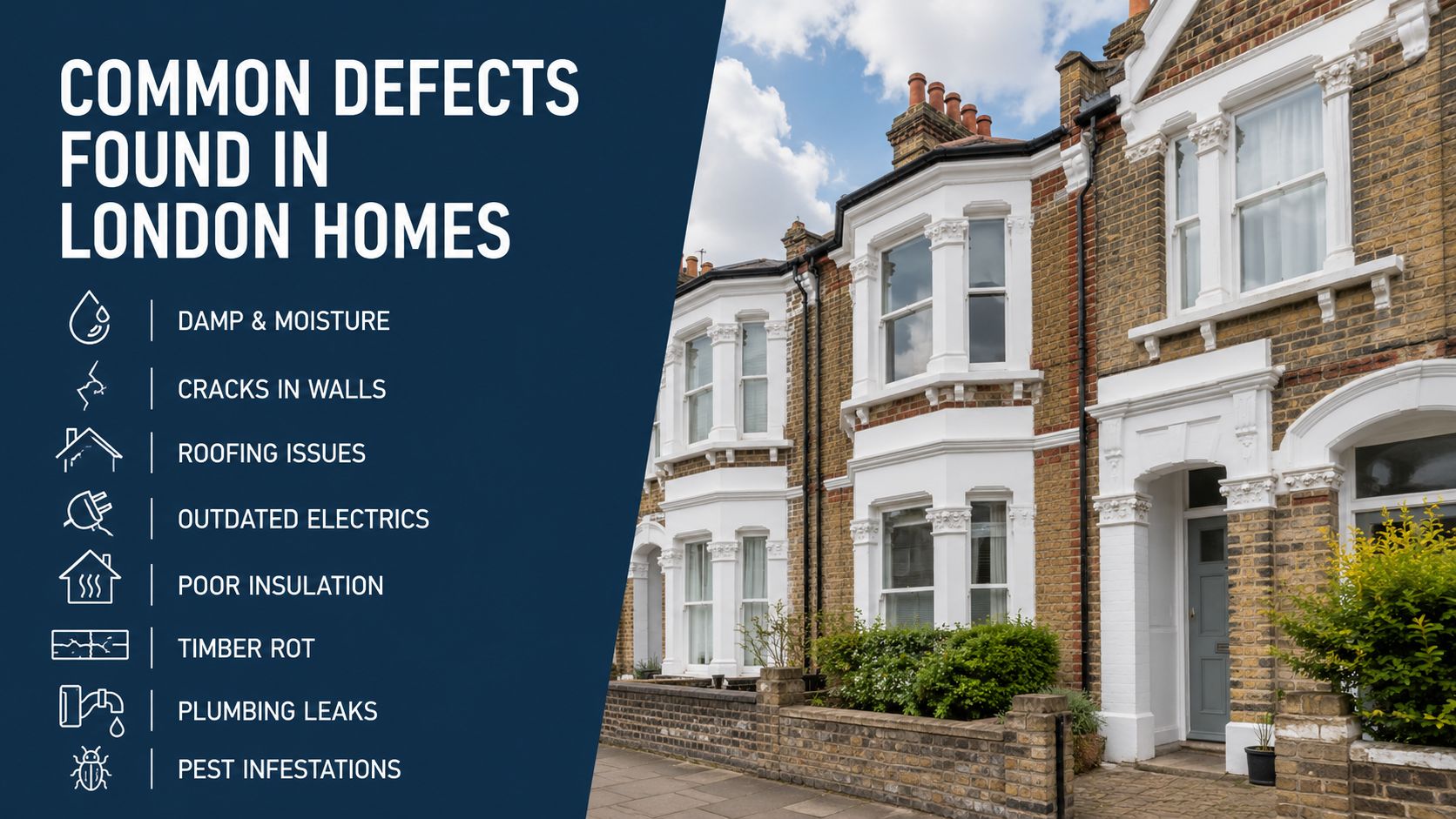
London property has patterns. Once you've seen enough Victorian terraces in Southwark, Lewisham or Lambeth, you start spotting the same problems in different streets. The names change, the defects don't.
Period houses and terraces
Victorian and Edwardian houses often show damp, decayed joinery, old patch repairs and movement around chimney breasts and bay windows. Original lime mortar, old roof coverings and tired flashings can all let water in. Timber floors can also give the impression of subsidence when the underlying issue is long-term decay or inadequate support.
1930s semis and interwar stock
A 1930s semi in Bromley, Eltham or Sidcup may look straightforward, but the roof often tells the story. Missing ridge repairs, slipped tiles, poor guttering and aged felt can all create leaks that run down into ceilings and wall heads. That is the sort of thing a homebuyers survey catches early enough to matter.
Conversions and flats
Flat conversions in Bermondsey, Peckham and Deptford often come with their own quirks. Removed chimney breasts, cut-through walls, lath and plaster ceilings and awkward loft access can make a property look finished when the structure underneath is not as tidy. You also want to know whether any alterations look old and sensible, or recent and questionable.
Local knowledge matters because these defects rarely arrive in isolation. A cracked rear wall, stained ceiling and soft floorboards may all point back to one problem, and you want a surveyor who can read that pattern properly. That is the value of using someone who knows London stock instead of someone who only gives a generic tick-box view.
A decent survey turns vague worries into named issues. Damp, roof defects, structural movement, timber decay. Those are the words that let you act.
Costs, Timings and How to Instruct a Surveyor
Typical UK guidance puts homebuyer fees around £400 to £1,000 depending on property size and location, which is why the quote should be tied to the actual building, not a flat promise for every job. The inspection itself is often finished in about two hours to a full day depending on size and complexity, and the fee should reflect that work rather than a sales pitch (HomeOwners Alliance guidance on homebuyer survey fees, RICS consumer guide on survey types and costs).
A proper instruction is straightforward. You give the address, the property type, what you already know about it and any concerns, then the surveyor tells you which level fits. If the flat is above a shop, the terrace has been altered or the seller has mentioned subsidence, say so early. Don't wait for the report to guess the problem.
Look for RICS and, where relevant, CABE qualifications. Check that the surveyor is independent and not tied to the lender, an estate agent or a developer. That independence matters because the survey should work for you, not for the transaction machine around you.
Corinthian Surveyors London LTD is an independent firm of RICS Chartered Surveyors and Valuers in Forest Hill, and it works across London, the Home Counties and the South of England. If you want a level-headed residential survey from someone who knows the local stock, start with home buyers survey near me, then ask direct questions about access, turnaround and what the report will cover.
Ask three things before you book. What level do you recommend and why. What will you inspect on this property. What might you need specialist follow-up for if you find movement, damp or roof failure. If the answers are vague, walk away.
For direct advice on a specific property, call 0800 00 16 422. A good surveyor should give you clarity before you spend, not after.
Reading the Report and Using It to Negotiate
A homebuyers report is not a trophy. It is a negotiating tool. Read the red and amber sections first, because those are the parts that affect your money, your timetable and your nerve.
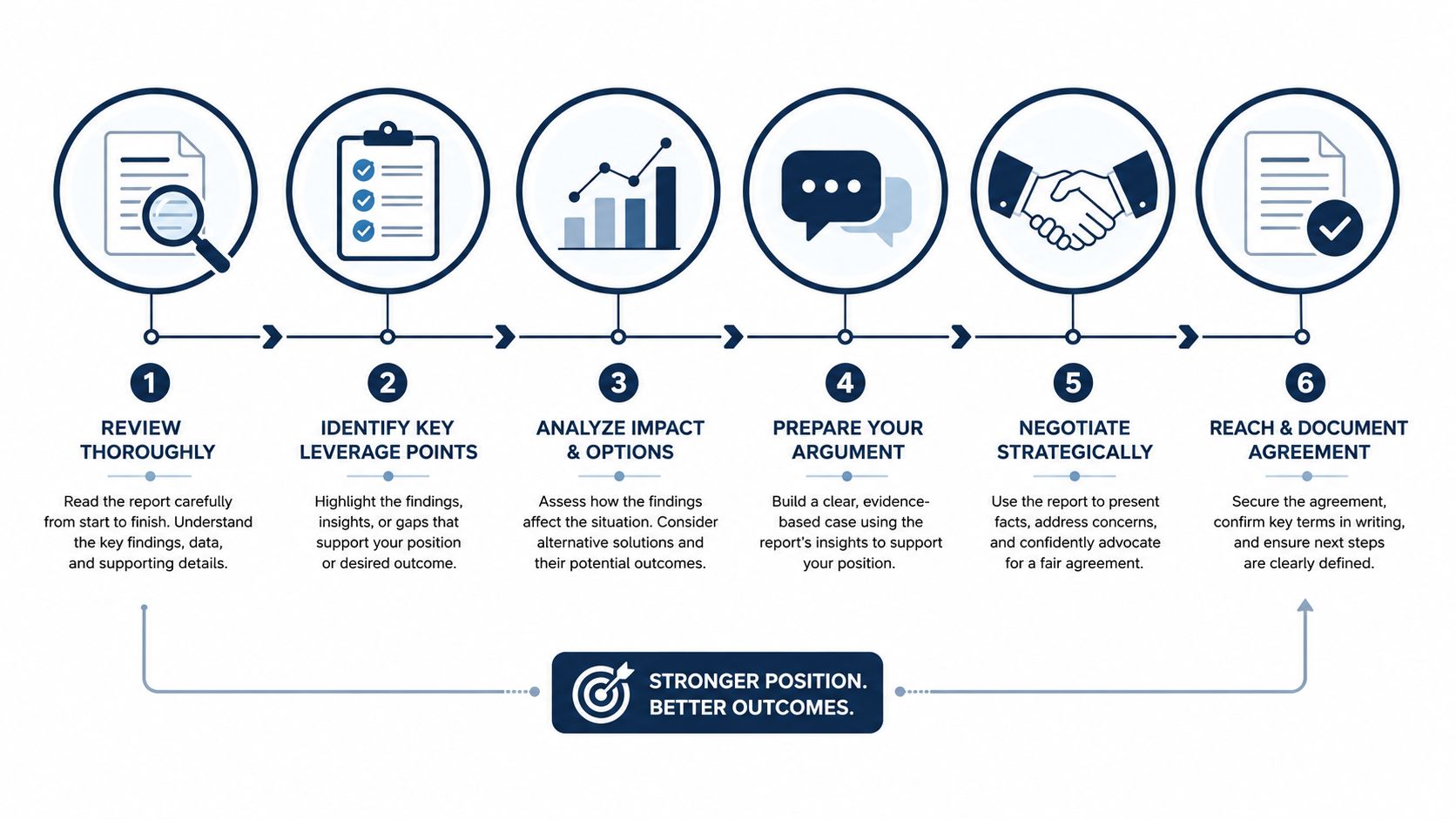
Start with the defects that affect structure, weatherproofing and safety. Roof leaks, damp in walls, rotten timbers, cracked masonry and visible movement carry more weight than scuffed decorations or tired kitchen units. Then look at whether the surveyor recommends further investigation, because that usually means the issue needs a specialist before you exchange.
You've then got three sensible options.
- Renegotiate the price: Use the report to reflect the cost and risk of the work.
- Ask for repairs before exchange: Useful where the defect is clear and the seller is willing to deal.
- Walk away: The right call if the building looks too compromised or the seller dismisses serious findings.
A buyer who uses the report properly doesn't overreact to minor wear and tear. They focus on the defects that can cost money or delay completion.
Calm beats emotion. An amber note on old decoration does not mean disaster. A red warning on damp, structural movement or a failing roof does deserve hard thinking. If you need a market view to support a price conversation, a valuation can sit alongside the survey, but don't confuse the two.
When buyers in London use the report well, they stop arguing about the asking price in the abstract and start talking about specific defects. That's where the power is. You are no longer guessing, you are negotiating from evidence.
Homebuyers Survey Questions Answered
Is a homebuyers survey legally required. No, but skipping one to save money is poor judgement. You're buying the condition risk as well as the bricks and mortar, so you need facts before you exchange.
What's the difference between a homebuyers survey and a snagging list on a new build. A snagging list is about finishing defects on a new or very recent property. A Level 2 survey is broader, because it looks for visible defects in the structure and fabric, not just cosmetic faults. If you're buying new build, you still need to know what a snagging list can't tell you.
What if the surveyor misses a defect. A regulated surveyor carries professional indemnity insurance, and that matters. It doesn't mean perfection, because no visual survey can see inside closed-up parts of a building, but it does mean the work is done under professional standards with accountability behind it.
What should you ask before instructing one. If you want a strong checklist, the questions for your home inspector piece is a decent prompt, but the key is simple. Ask what they will inspect, what they won't, and what kind of follow-up they commonly recommend on properties like yours.
Corinthian Surveyors London LTD handles residential surveying only, and it's independent, with no ties to lenders or estate agents. If you want a straight answer on whether a Level 2 is enough for your property, or whether you need a building survey instead, that's exactly the sort of question worth asking before you commit.
A CTA for Corinthian Surveyors London LTD.