
Removal of Chimney Breast Party Wall: 2026 Guide
If the chimney breast sits on a party wall, the Party Wall etc. Act 1996 controls the work and the adjoining owner must be given at least two months' written notice before anything starts. If the neighbour dissents or does not reply, surveyors step in and a Party Wall Award has to be in place before the builder touches the brickwork.
You are not dealing with a cosmetic knock-through here. On a Victorian terrace in Lewisham, a 1930s semi in Bromley or a conversion in Southwark, chimney breast removal is a regulated structural alteration with legal timing built in, and that timing drives the whole job.
Table of Contents
- Why Chimney Breast Removal Is a Regulated Project
- Serving Notice and Working With the Adjoining Owner
- Structural Design, Propping and the Neighbour's Existing Removal
- Realistic Costs and Timelines in the UK
- Party Wall Awards and Building Regulations Beyond Structure
- When Removing the Breast Is Still a Bad Idea
- Frequently Asked Questions
Why Chimney Breast Removal Is a Regulated Project
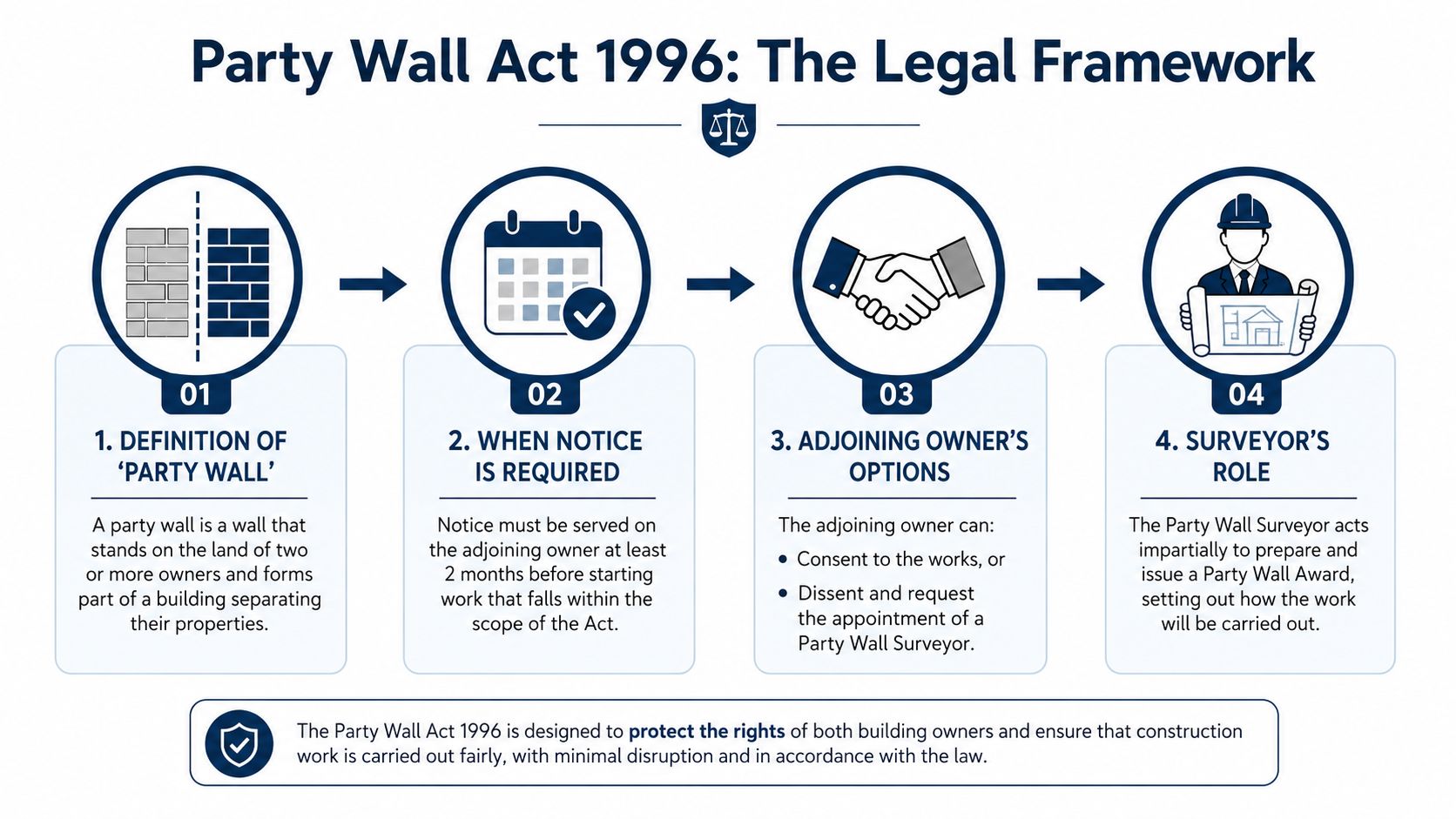
If the chimney breast forms part of, or is attached to, a party wall, this is a Party Wall etc. Act 1996 job first and a building job second. The practical reality is simple, the Act puts a legal notice period into the schedule, and you do not start work until that process is dealt with properly. Independent legal guidance on removing chimney breasts on party walls makes the same point, the neighbour must be served with at least two months' written notice before work begins, and if they consent that should be recorded in writing, while dissent usually leads to surveyors and an award Charrette Law.
What actually counts as a party wall chimney
In terrace and semi-detached housing, the chimney breast is often bonded into the shared wall rather than sitting neatly on one owner's side. That is why the work gets pulled into party wall law so often. The wall is shared, the support is shared, and the risk sits on both sides if the job is done badly.
Practical rule: if the chimney breast touches the dividing wall, assume the Party Wall Act is in play until a surveyor proves otherwise.
A lot of homeowners go wrong here. They hear “internal alteration” and assume it is just another builder's job. It isn't. A removal of chimney breast party wall work changes the structural behaviour of the wall and can affect the neighbour's property too.
For a plain explanation of the Act itself, my advice is to read a proper party wall overview rather than rely on forum chatter. Corinthian Surveyors keeps a clear guide on what a Party Wall Agreement means in the UK, which is the right place to start if you want the legal framework in plain English.
The other point people miss is timing. Two months' notice means you plan backwards from the actual start date, not from the day the builder is available. If your project depends on quick decisions, you will be disappointed. The law does not bend to your contractor's diary.
If you want a broader comparison of permit-style approvals, the Trademaster Construction permit guide is a useful reminder that regulated building work always has a paper trail before tools come out. The principle is the same here, the paperwork comes first.
Serving Notice and Working With the Adjoining Owner
Serve the notice on the adjoining owner in writing. A casual mention over the fence, or a text message, does not count. The notice should identify the property, describe the works and be served in a way you can prove later if the matter turns formal.
The neighbour's response matters
The response process is simple, but people still get it wrong. The neighbour can consent, dissent or ignore the notice, and a friendly conversation does not replace the legal steps if the Act applies. If you want a clear walk-through of the response stages and what follows after service, read the party wall agreement process before you start paperwork.
If the neighbour consents, keep that consent in writing and proceed with care. If they do not respond, the law treats that as dissent and the matter moves to surveyors. If they actively dissent, the same process applies, just without wasting time waiting for silence to become a problem.
Early engagement still matters, but keep it practical. Tell the neighbour what is changing, when the work starts and why the support design is being handled properly. If the room has to be cleared, or you need to protect furniture and floors, deal with storage and protection before the builder turns up. A straightforward guide to renovation storage solutions is useful because it forces you to think about the disruption, not just the notice letter.
A neighbour who feels informed is far less likely to turn a routine notice into a formal dispute.
Who should actually handle it
Use an independent surveyor. The wording, the timing and the response all need to be handled properly, and this is not the place for guesswork. Corinthian Surveyors London LTD, which is RICS regulated and uses CABE-qualified expertise as well as RICS standards, handles party wall advice for residential clients who need the notice reviewed, the response managed and the paperwork kept clean.
The sensible sequence is plain. Serve the notice, wait for the response, and if there is no consent then move to surveyors before any demolition starts. Do not let the builder improvise the legal side. Builders build. Surveyors protect the process.
Structural Design, Propping and the Neighbour's Existing Removal
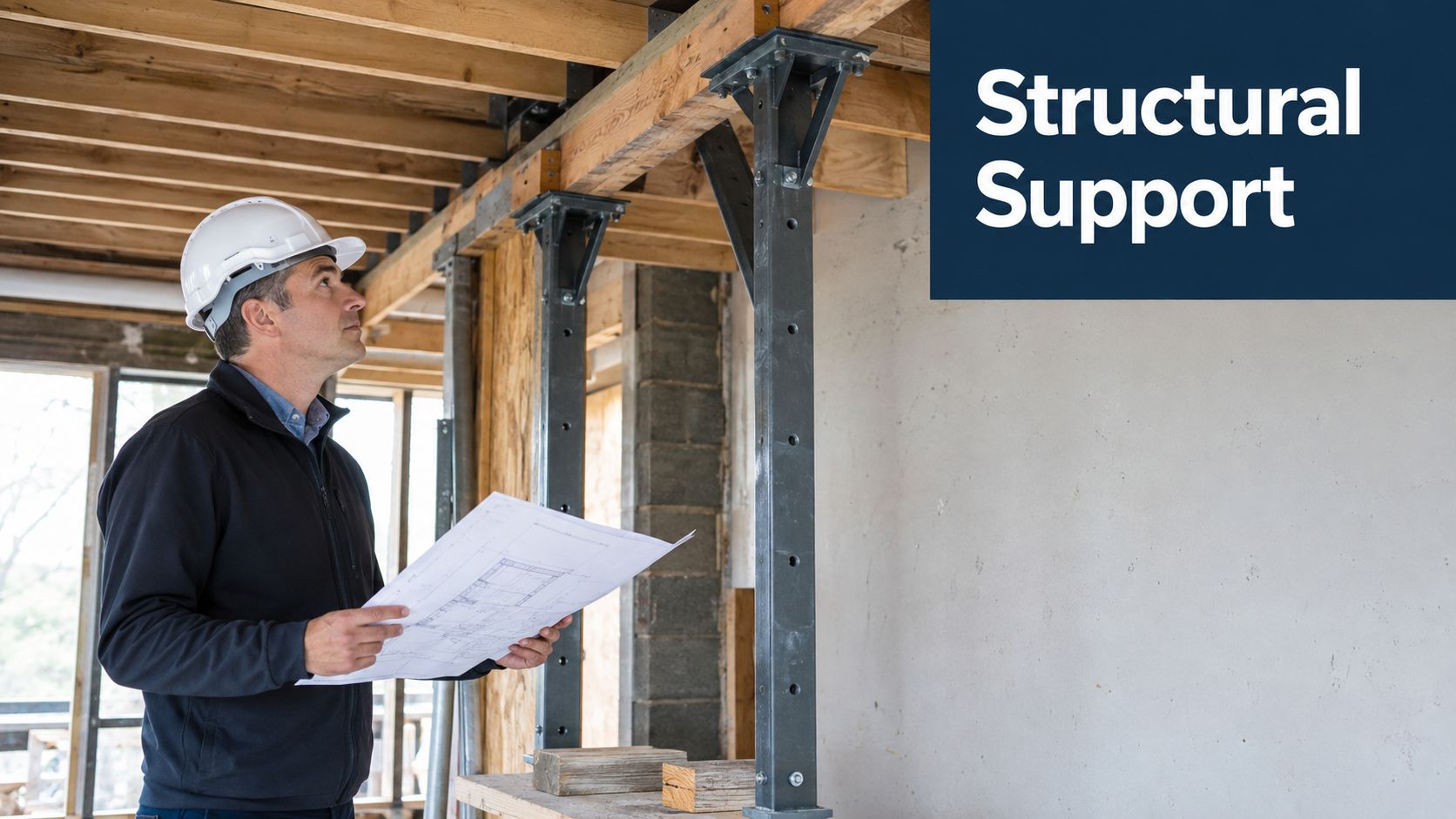
The structure should be designed before a single brick is removed. For party wall chimney breast removal, East Suffolk Council says you need a structural engineer's calculations, party wall notice, consent or an award, then temporary propping with Acrow props and strongboys before work begins, with the permanent support either a structural steel beam or an approved gallows bracket arrangement depending on the wall and loading East Suffolk Council. That is the sequence. Not an estimate, not an informal arrangement, the sequence.
Gallows brackets, beams and temporary works
A builder may talk loosely about “just putting in a bracket”, but that is not good enough. The support choice depends on the actual wall, the loading path and the condition of the masonry. Building Control wants the design, because if the load is wrong the failure is not cosmetic, it is structural.
Temporary works matter just as much as the final support. Acrow props and strongboys hold the weight while the chimney breast is taken apart. Skip that stage and you risk movement before the permanent support is even in place.
The neighbour has already removed their side
This is the twist many guides miss. If the neighbour's chimney breast has already been removed, the remaining party wall still has to be checked for thickness and sound brickwork, and local guidance warns that gallows brackets may be inadequate in that situation Waltham Forest Council%20chimney%20breast%20doc.pdf). That is because the load path is no longer what the old drawings suggest, and the wall may need a different structural solution.
The same guidance says the party wall should be at least 215mm thick and in sound condition. If it is not, a structural engineer has to decide whether a beam or another support is needed. Do not let anyone guess this on site.
If you want to know how to spot wider structural concerns in a property before you buy or before work starts, the topic overlaps with the sort of checks covered in signs of foundation trouble. Cracks around a chimney breast are not always about the chimney itself. Sometimes they are a sign the building has deeper movement and the breast removal is only exposing it.
Realistic Costs and Timelines in the UK
A chimney breast removal is a regulated structural project, and the price reflects that. For a standard single-floor removal, published UK guides put the work at roughly £1,500 to £3,500, or £2,000 to £3,500 in London. A two-storey removal is commonly £3,500 to £6,000, while a full internal-plus-stack removal can rise to £5,000 to £6,500+ Kent Plasterers. Those figures are a reminder that you are paying for demolition, temporary support, structural design, legal compliance and making good, not just for breaking out brickwork.
The timetable is equally blunt. Guidance cited by the Federation of Master Builders gives around 2 days for a ground-floor breast removal, 4 to 5 days for a two-storey job and 7+ days when the stack is included. Even the smallest version runs over several days, because the sequence has to allow for propping, removal, inspection and reinstatement.
| Indicative chimney breast removal costs and timeframes | UK cost range | London cost range | Typical timeframe |
|---|---|---|---|
| Single-floor removal | £1,500 to £3,500 | £2,000 to £3,500 | About 2 days |
| Two-storey removal | £3,500 to £6,000 | Not separately stated in the data | About 4 to 5 days |
| Full internal-plus-stack removal | £5,000 to £6,500+ | Not separately stated in the data | 7+ days |
Do not forget the party wall side of the budget. Surveyor involvement can add a further layer of cost, especially where the neighbour dissents and each side appoints its own surveyor. That is part of the legal route once consent is not given, and it often matters as much as the build cost itself.
How to think about the budget
The common mistake is to price this like a plastering job. It is structural alteration work first, and finishing work second. In a proper budget you allow for demolition, temporary works, engineering input, party wall paperwork, Building Control, and making good afterwards. If the scheme is in a London terrace or semi, expect more coordination, because shared chimney structures and tight site access tend to expose problems at the same time.
If you want the regulatory side set out properly before work starts, see Building Regulations for chimney breast removal. That is the right frame for this project. Anything else leads to under-budgeting and arguments once the walls are open.
Party Wall Awards and Building Regulations Beyond Structure
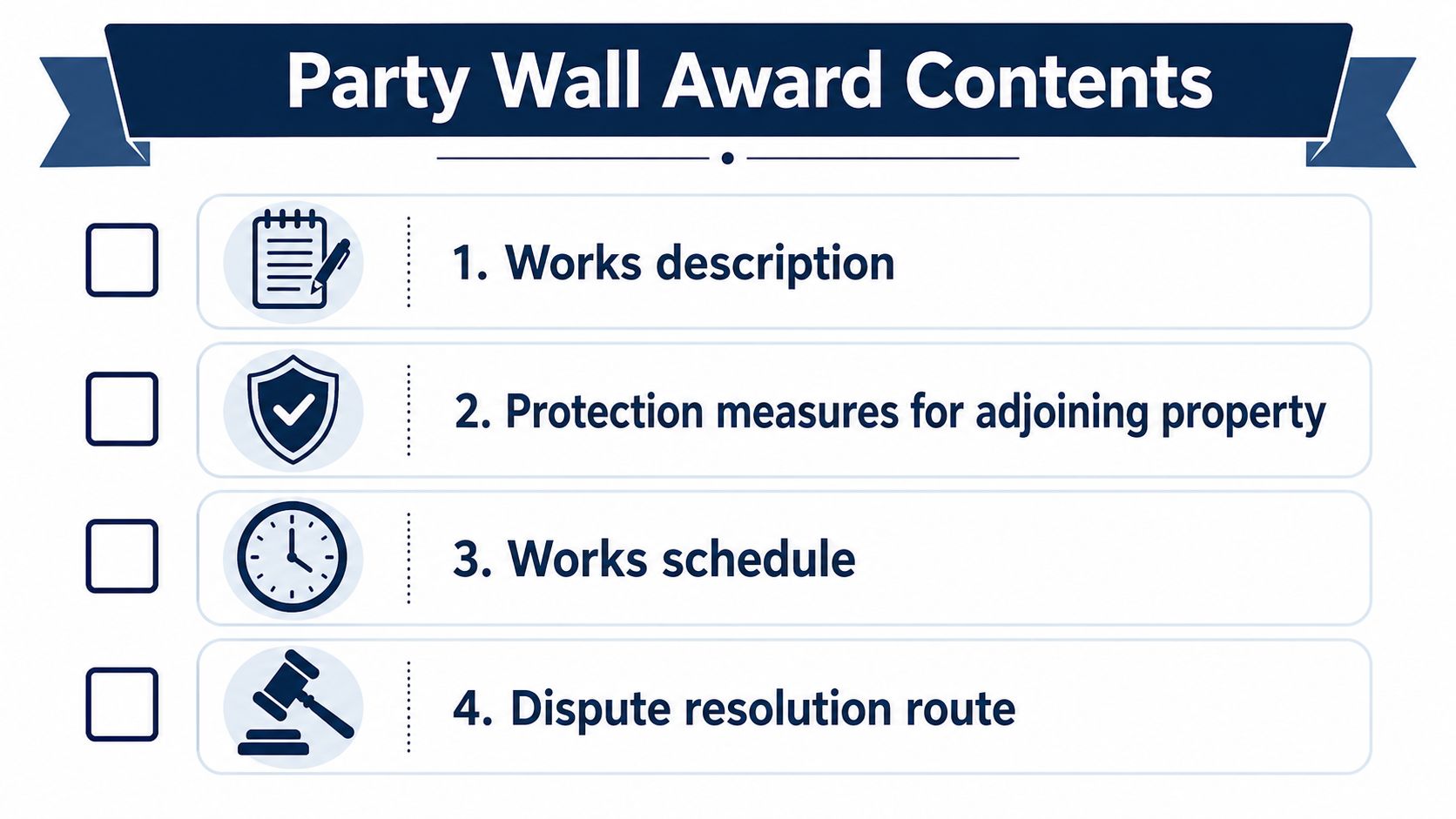
A Party Wall Award is not permission in the planning sense. It is the document that records what works can happen, how they are to be carried out, what protection is needed for the adjoining owner's property, and how disputes or damage are handled. That is why it matters, it turns a disputed or risky proposal into a controlled process.
The award is not the same as Building Control
People often confuse the two. The Party Wall Award deals with neighbour protection and procedure. Building Regulations deal with the technical acceptability of the work itself. Richmond Council's guidance on chimney stack removal makes the wider point plainly, because once the breast comes out, the scheme still has to address fire safety, sound insulation, damp prevention, ventilation and the maintenance of the neighbour's chimney as separate regulatory issues Richmond Council.
That is where a lot of “it's fine, we've got an RSJ” advice falls apart. A beam may solve the structural question and still leave you with a poor overall scheme. The wall may still transmit sound badly. The space may lose practical fire separation. The retained stack may need ongoing care.
Good compliance is not the same as good design. If the room works badly after the breast is gone, the paperwork has only solved half the problem.
How the award protects both sides
The award should spell out the method, the timing and the protective measures. It should also set the route for resolving a crack claim or access issue if something goes wrong later. For that reason, a good surveyor does more than rubber-stamp a builder's method statement, they check whether the proposal is sensible for the building next door.
For readers wanting the Building Regulations side in more detail, Corinthian Surveyors has a specific guide to building regulations for chimney breast removal. That is the right place to separate legal process from technical approval.
A short video overview is sometimes useful for clients who like seeing the sequence, not just reading it.
When Removing the Breast Is Still a Bad Idea
A compliant scheme can still be the wrong scheme. That is the part homeowners do not always want to hear. If the house is a period terrace in Southwark, Peckham or Greenwich, the original chimney breast may carry more than brick and plaster. It can hold the line of the room, the proportions of the wall and the old detailing that gives the property its value.
The trade-offs that never show up in the first quote
You lose fire compartmentation when the breast comes out, unless the design properly replaces that function. You can also weaken sound insulation through the remaining wall, which is especially noticeable in semis and terraces where the neighbour's living habits are close enough to hear. Decorative cornices and plasterwork can be damaged as the room is opened up, and once those features are gone, matching them later is expensive and often imperfect.
The retained stack above roof level is another hidden issue. If only part of the chimney is removed, somebody still has to maintain the portion that remains. That is not dramatic work, but it is long-term responsibility, and many owners do not factor it into their decision.
Redbridge Council also makes a blunt point about shared-wall chimney breasts, the Party Wall Act will most likely apply, and where the neighbour's chimney breast has not already been removed, the whole chimney above roof level should be removed and the roof made good, or a steel beam should be used instead, and planning permission may be required in some cases Redbridge Council. That tells you the issue is not only structural, it can also be about how the whole roofline and supporting arrangement are treated.
When I would slow a homeowner down
I would slow someone down if the property still has intact period finishes, if the neighbour is already hostile about the works or if the retained stack looks awkward and hard to maintain. I would also slow them down if they have bought a London terrace and think removing the chimney breast is the default improvement. It often isn't.
Corinthian Surveyors London LTD is the sort of independent RICS and CABE-qualified practice that fits into this stage of the job when you need a straight answer on a retained breast, next-door damage or whether a proposal is worth the disruption at all. Because the firm is independent, with no ties to lenders, estate agents or developers, the advice stays focused on the building and the risk, not on keeping a transaction moving.
Pre-works checklist
- Serve notice properly, and do it in writing.
- Get the structural design first, not after the builder is booked.
- Check the temporary works, especially Acrow props and strongboys.
- Ask whether the neighbour's breast is already gone, because that changes the support logic.
- Keep Building Regulations separate from party wall consent, both matter.
- Tell your insurer, especially if the works affect a shared structure.
- Choose a contractor who has done this before, not just a general decorator with a demolition quote.
If you want an independent opinion before the work starts, or if the neighbour has already appointed their own surveyor, speak to a residential chartered surveyor who understands shared chimney structures, defect analysis and party wall procedure. Corinthian Surveyors London LTD can be reached on 0800 00 16 422.
Frequently Asked Questions
What happens if my neighbour ignores the party wall notice?
If they do not reply, that is treated as dissent and the process moves to surveyors and a Party Wall Award before work begins. Do not start early because the notice period expired and you have heard nothing. Silence is not consent.
Do I need a Party Wall Award for a single-storey chimney breast removal?
If the chimney breast is part of, or attached to, a party wall, yes, the Act can still apply even where only one floor is being altered. The size of the job does not remove the shared-structure issue. The deciding point is whether the party wall or its support is affected.
Who pays the surveyors' fees?
In most chimney breast removal cases, the building owner who wants the work done ends up covering the reasonable party wall surveyor costs. That is the normal commercial reality of the process. If the neighbour appoints their own surveyor because they dissent, expect the cost to rise.
What should I do if cracks appear in the neighbour's property after the works?
Act quickly and do not argue first. Check the award, the schedule of condition and the builder's method statement, then get an independent surveyor to inspect the damage and decide whether it is related to the works. If there is any doubt, a residential building surveyor or party wall surveyor should review it before positions harden.
Do I need Building Control if the Party Wall Award is in place?
Yes, because the award does not replace Building Regulations approval. The award deals with neighbour protection and procedure, while Building Control deals with the technical acceptability of the structure and related safety issues. You need both where the work affects a shared chimney structure.
If you are weighing up a chimney breast removal in a terrace or semi, the right next step is not a builder's quote, it's proper advice on the wall, the notices and the support design. Corinthian Surveyors London LTD handles party wall advice, building surveys and defect analysis for residential property, so if you want a straight answer on what your wall can take, visit Corinthian Surveyors London LTD and use the firm's residential surveying expertise before the first brick comes out.