
Probate Valuations London: What Executors Need
A London probate valuation is the open-market value immediately before death, not the estate agent's asking price or the price the home later sells for. The executor needs a figure supported by evidence from that date, not an optimistic estimate of what the family hopes to achieve.
The familiar advice to “get an estate agent round” leaves out the important part. You must explain the purpose, fix the valuation date and establish exactly what the deceased owned. Otherwise, you can end up with a perfectly reasonable selling recommendation that answers the wrong question.
Table of Contents
- What a Probate Valuation Is For
- Open Market Rules Executors Must Apply
- How the Valuation Fits the Probate Timetable
- London Homes That Change the Figure
- How to Choose a Probate Valuer
- When a Later Sale Disagrees With Probate
- Questions to Settle Before You Instruct
What a Probate Valuation Is For
A probate valuation puts a defensible property figure into the deceased's estate accounts. It isn't a marketing exercise, and it shouldn't start with the price advertised for a neighbour's refurbished house.
Say you're administering an estate containing a terrace in Forest Hill. The kitchen is dated, there's staining below a roof valley and the family intends to renovate before selling. Your instruction concerns the house as it stood at death, not the improved home you might eventually advertise.
GOV.UK's guidance on valuing an estate allows an estate agent or chartered surveyor to value property. The relevant assessment is its open-market value at death. The professional's job is to support that assessment with appropriate evidence.
What the figure represents
Think of a hypothetical buyer inspecting the property at the relevant date. What would that buyer have paid, knowing its condition, legal interest and material limitations?
That means distinguishing between:
- An asking price, which is a marketing position and may leave room for negotiation.
- A previous purchase price, which reflects a different transaction and potentially different circumstances.
- An automated estimate, which may not recognise a short lease, structural alteration or substantial disrepair.
- A probate valuation, which addresses the specified date and the property owned.
The useful figure isn't the highest or lowest opinion. It's the one whose reasoning can be checked.
The house is only part of the estate
Keep the property assessment separate from the executor's wider accounting work. Bank balances, investments, possessions and other relevant assets need their own treatment. The valuer's report doesn't establish the entire estate's tax position.
Nor should uncertainty about tax become a reason to choose a convenient property number. Give the solicitor or tax adviser a properly supported valuation. Let them apply the estate's allowances, liabilities and exemptions.
For the executor, the practical question is straightforward: could someone unfamiliar with the family follow how this figure was reached? A bare number without a valuation date, tenure or supporting explanation won't answer that question.
Open Market Rules Executors Must Apply
| Situation | Figure to use | Do not |
|---|---|---|
| Sole owner at death | Open-market value immediately before death | Deduct agent fees or use today's asking price |
| Joint tenants with a spouse or civil partner | One half of the open-market value | Take a further discount intended for other joint ownership |
| Joint tenants with someone other than a spouse or civil partner | Divide by the number of owners, then deduct 10 per cent from that share | Treat the whole property as the deceased's asset |
| Estate under £325,000 or left to a spouse, charity or qualifying club | Still use a defensible property figure | Skip valuation because no tax looks due |
| Sold after death | Date-of-death value, with market movement analysed | Treat the sale price as automatic proof |
The joint-ownership rules in HMRC's guidance on jointly owned assets generally use one half for joint tenants who were spouses or civil partners, while other joint tenants' shares are divided by the number of owners before a 10 per cent deduction. Don't apply that arithmetic until the ownership arrangement has been confirmed.
The commonly quoted threshold is £325,000, but GOV.UK's estate-estimation guidance also explains exemptions for transfers to a spouse, civil partner, charity or community amateur sports club. “Club” doesn't mean any private members' club, and the threshold isn't a substitute for calculating the estate properly.
Read the title before calculating the share
Obtain the Land Registry title and any documents establishing beneficial ownership. Joint tenants and tenants in common aren't interchangeable descriptions. Don't assume that the names on the register settle every question about the deceased's interest.
For a leasehold property, obtain the lease as well. The title may identify the flat, but the lease explains what belongs to it and what rights and obligations attach to it.
Check these documents before the report is finalised:
- Ownership evidence, including any declaration of trust or recorded proportions.
- Tenure documents, covering the freehold or leasehold interest being valued.
- Restrictions, including anything affecting occupation, transfer or sale.
- Lease information, including the unexpired term and relevant financial obligations.
Ask the solicitor to resolve unclear ownership. A valuer shouldn't disguise a legal uncertainty as a valuation assumption without making it explicit.
Keep selling costs out of the property figure
HMRC's open-market valuation rule doesn't permit estate-agent fees to be deducted from the gross property value. Nor should the value be reduced merely because the estate's assets are being marketed together.
The evidence file should instead explain what a purchaser would have considered: condition, tenure, lease length, service charges, planning constraints and material defects. Completed transactions are more useful than unsupported asking prices.
Collect the death date, title documents and invoices for any subsequent works before commissioning the assessment. That gives the valuer a basis for separating the property at death from anything that happened afterwards.
How the Valuation Fits the Probate Timetable
Arrange the valuation as part of estate administration, not as an afterthought when the house is ready to sell. Access problems, missing leases and uncertain ownership are easier to resolve before the application is being prepared.
The broad sequence is simple.
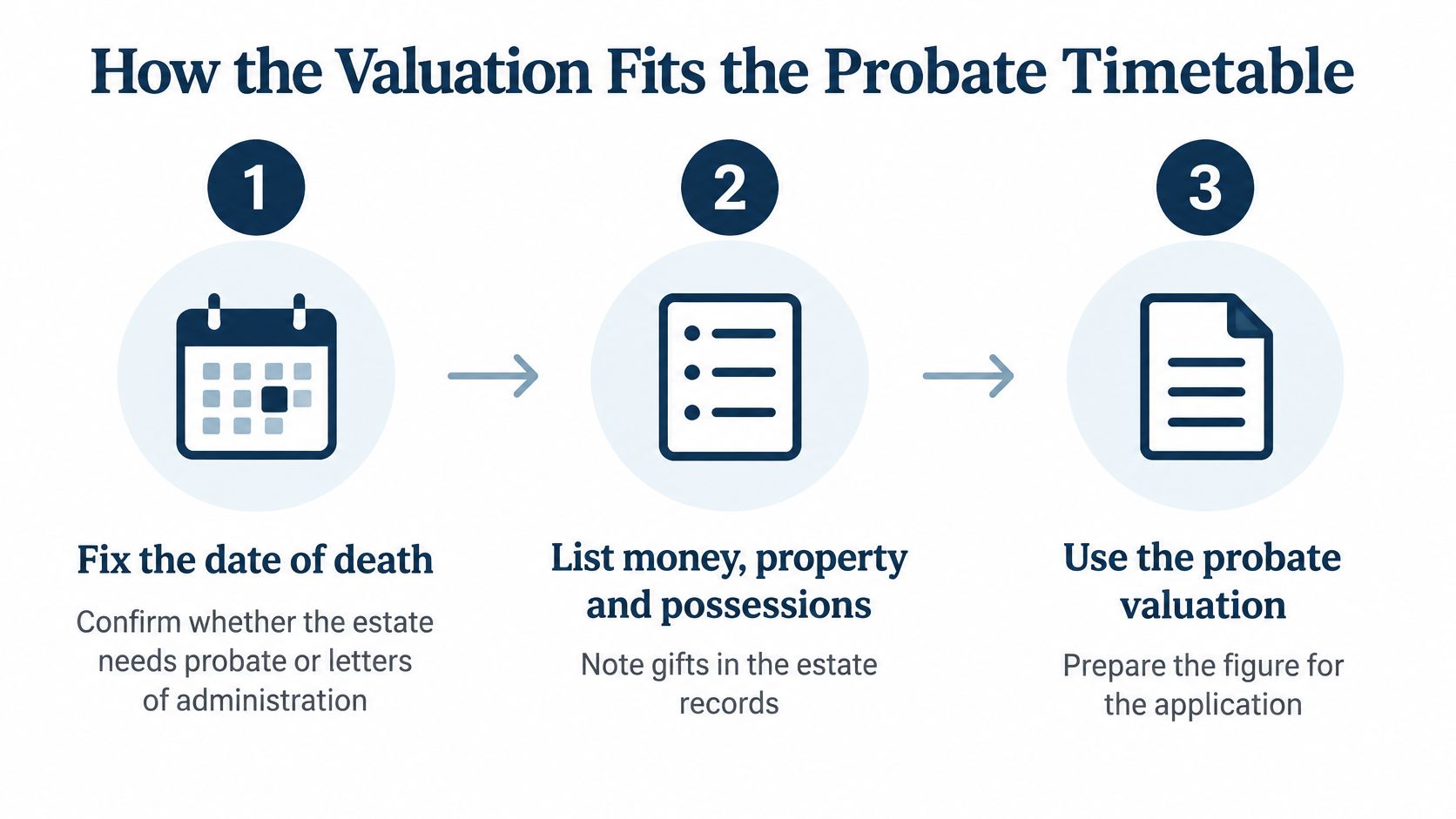
Follow the administrative order
Fix the date of death and the application route. Confirm with the solicitor whether probate or letters of administration are needed. Give the valuer the exact date rather than an approximate month.
List the estate's money, property and possessions. Include information about relevant lifetime gifts and trusts for the adviser handling the estate. Keep supporting statements and ownership documents together.
Commission the property assessment. Specify a retrospective open-market valuation for estate administration. Explain any changes since death before the inspection, including clearance, water damage or repairs.
Separate the property line from the estate totals. Gross and net Inheritance Tax values aren't interchangeable with gross and net probate values. Let the person preparing the application reconcile those totals rather than copying a property figure into every box.
Complete the tax reporting where required. Where Inheritance Tax is due, GOV.UK's probate guidance requires form IHT400 within 12 months of death, before applying for probate. That reporting deadline isn't a reason to postpone obtaining the valuation.
Prepare the grant application once the estate value is ready. Check that the report's address, ownership interest and valuation date match the estate records. Correct discrepancies before submission.
Retain the evidence through administration. Keep the signed report with photographs, title documents and comparable-sale evidence. Add later marketing records and completion documents when they become available.
Make access and records somebody's responsibility
Nominate someone who can arrange entry and explain the building's history. A relative may know when a leak occurred or when a wall was removed, but recollection needs to be distinguished from documentary evidence.
Send relevant papers before the appointment. For a flat, that means the lease and available service-charge or major-works information. For a house, planning records, alteration documents and repair invoices can help identify what existed at death.
Practical rule: Photograph the property before clearance or building work changes the evidence.
Take general room photographs as well as close-ups of defects. A close-up of damp staining is more useful when the valuer can also identify its position within the room.
Your solicitor should confirm the reporting route and the treatment of the estate's liabilities. The surveyor establishes the property figure and explains its basis. Keeping those responsibilities clear avoids unnecessary reworking of the application.
London Homes That Change the Figure
Use comparables for the building you've got. A Victorian terrace in Brockley and a semi in Beckenham aren't interchangeable because both provide family accommodation.
An inspection helps identify the differences that a headline estimate can miss.

Match the housing type and legal interest
For a terrace in Lewisham, Forest Hill or Sydenham, look closely at rear additions and altered internal layouts. A removed chimney breast, decayed suspended timber or visible movement may affect what a buyer would pay. Don't assume that every extension adds the same value.
A semi in Bromley or Orpington needs different evidence. Its plot, driveway and relationship to neighbouring houses may matter more than the decorative finish. An extended house shouldn't automatically be compared with an unextended example just because the original design matches.
| Housing type | What moves the figure | Evidence the file needs |
|---|---|---|
| Victorian terrace in Lewisham, Brockley, Forest Hill or Sydenham | Rear addition, removed chimney breast, suspended timber, movement or damp | Completed sales of terraces with similar alterations and condition at death |
| 1930s semi in Bromley, Beckenham or Orpington | Extensions, plot, driveway and original layout | Sales of semis on the same road or estate |
| Leasehold flat in Bermondsey, Deptford, Clapham or Balham | Unexpired lease, ground rent, service charge and safety costs | Flat sales with comparable lease length and charges |
| Conversion in Dulwich, Crystal Palace or Camberwell | Shared roof, informal alterations and mixed title | Sales of units in the same building or a similar conversion |
| Listed or conservation property in Greenwich, Blackheath or Dulwich Village | Limits on alterations and repair obligations | Sales of comparable protected homes with similar constraints |
Don't price a flat as though the lease were irrelevant
A leasehold flat requires more than a floor area and postcode. Establish the unexpired term, ground rent and service charge. Identify known building-safety or major-works costs that would have mattered to a purchaser at the valuation date.
Conversions require particular care over shared roofs and informal alterations. For protected buildings, confirm the actual designation and constraints rather than assuming that every property in Greenwich or Blackheath has the same restrictions.
HMRC explains in its guidance on probate values that probate value is informal terminology, not a separate valuation category. The task remains an evidence-based market assessment, not the selection of a special discounted figure.
Our guide to how to value your house provides further context for distinguishing property-specific evidence from a broad estimate.
Keep that distinction in mind when considering a general valuation explanation.
How to Choose a Probate Valuer
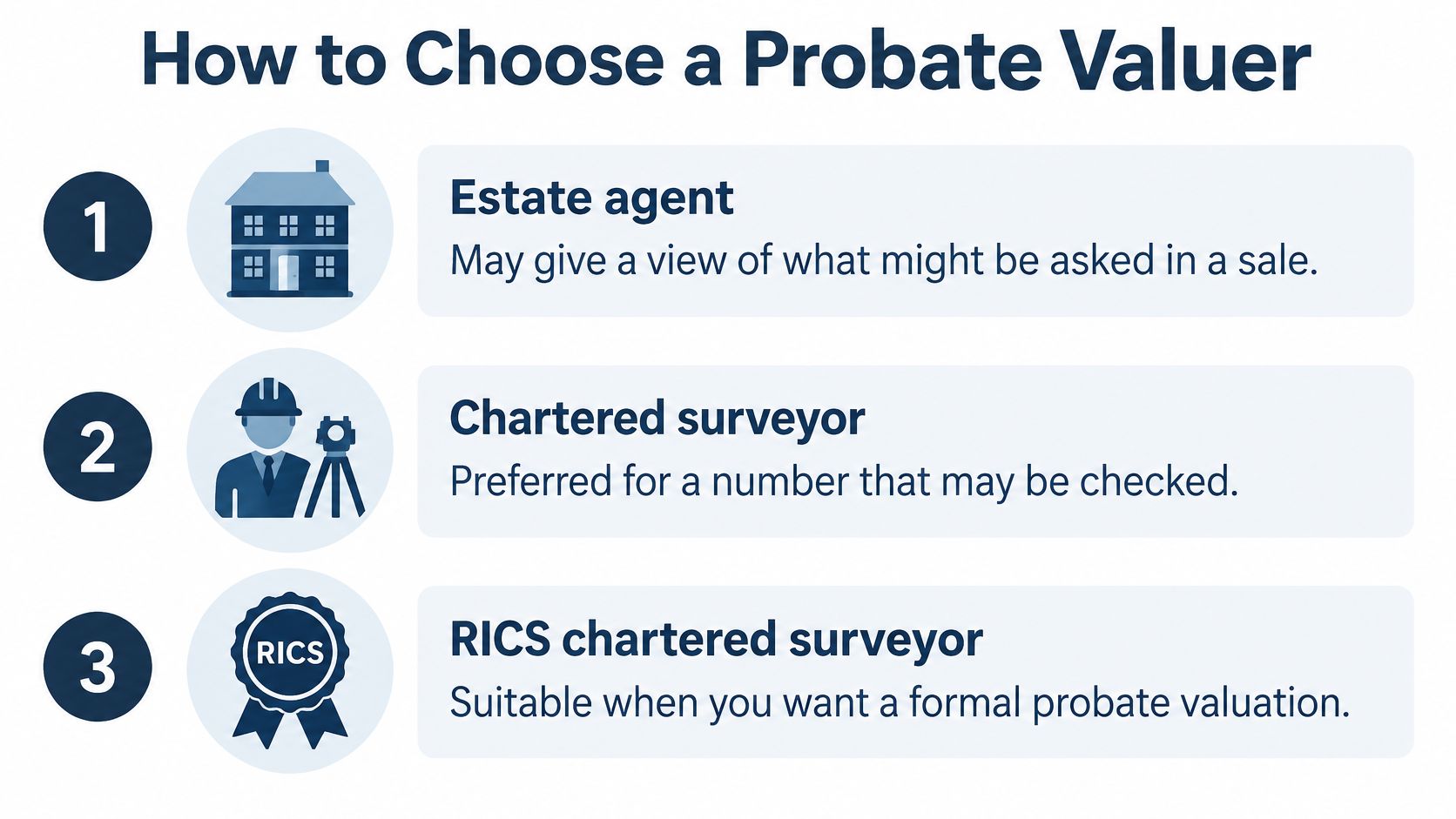
Choose a valuer who will explain how the figure was reached. An estate agent's view of buyer demand can help with a sale, but a suggested asking price is not a probate valuation.
For an estate figure that may be examined, instruct a RICS Chartered Surveyor and Valuer. Ask who will prepare the report, what it will cover and whether the advice is independent. A lender's valuation may answer a different question.
Ask questions that test the proposed report
Before you agree to an instruction, settle these points:
- Valuation date: Will the report assess the property at the date of death?
- Legal interest: Will it identify the tenure and address the lease term where relevant?
- Comparable evidence: Will it use completed sales and explain important differences?
- Condition: Will it reflect defects present at the valuation date, rather than assume the home has been renovated?
The instruction must be clear. “We'll see what it could go on for” describes a possible asking price, not a valuation for an estate. A portal estimate without an inspection may not address the property's condition or legal interest.
If the proposed report does not specify the date, tenure and basis of its figure, ask for those points to be confirmed before instructing. A long report is no substitute for a clear answer to the valuation question.
Independence and local knowledge have practical value
A firm that hopes to secure the sale may have an interest in the family's expectations. Consider that when choosing who should provide the estate valuation.
Local knowledge should be visible in the comparable evidence. Leasehold flats in Southwark or Lambeth need assessment in the context of their particular buildings. For older houses in Catford, Peckham or Forest Hill, condition and alterations matter alongside location.
Corinthian Surveyors London LTD is an independent firm of RICS Chartered Surveyors and Valuers based in Forest Hill, and a member of the Royal Institution of Chartered Surveyors. Its guide to RICS property valuations explains the difference between a formal assessment and an informal estimate. For an estate, set out the probate valuation instruction clearly. If you also need a current assessment for a sale, instruct that separately so each figure answers the right question.
When a Later Sale Disagrees With Probate
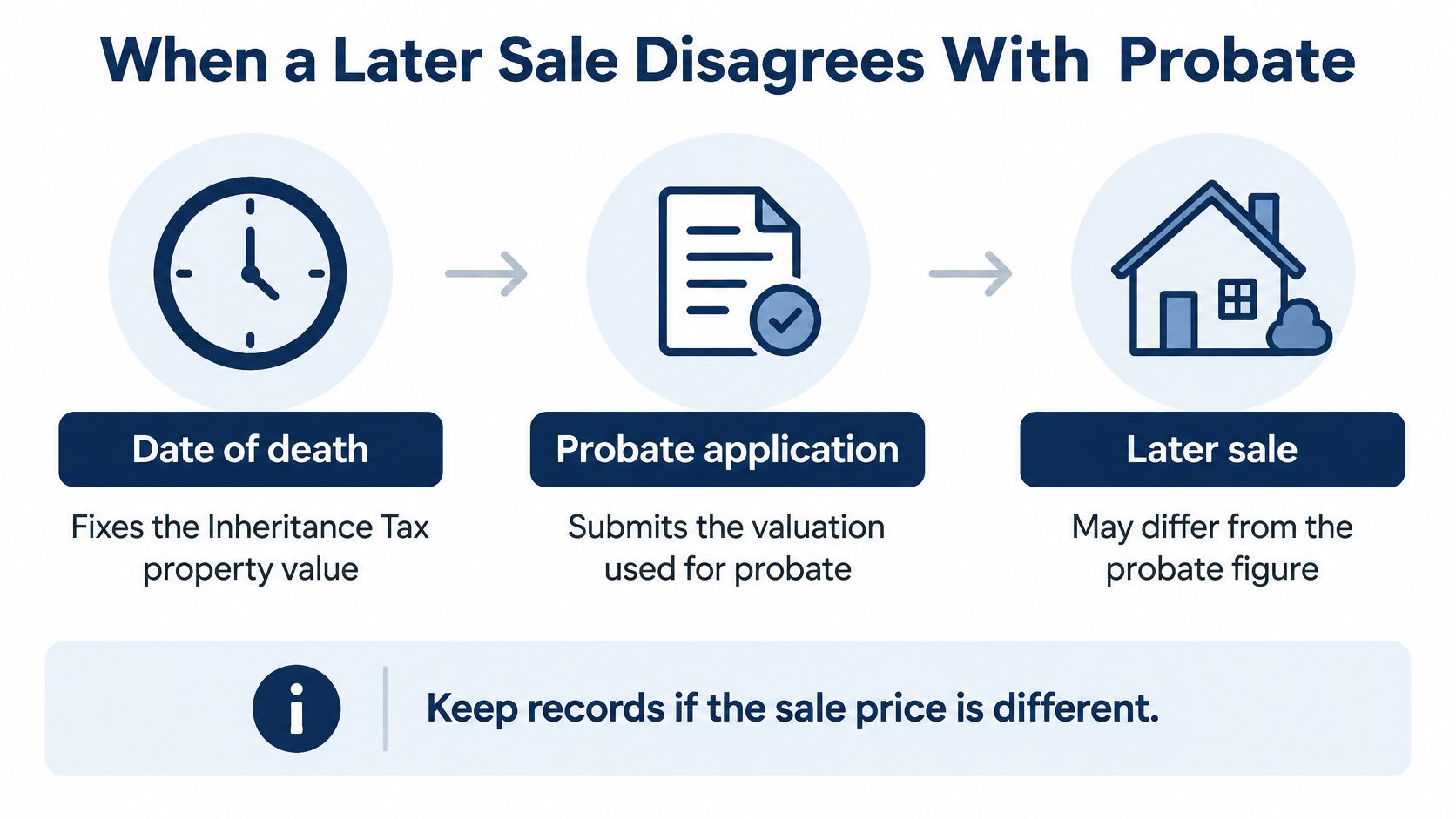
A different sale price is a reason to examine the evidence. It isn't, by itself, proof that the probate valuation was wrong.
The executor needs to distinguish the valuation event from the administrative application and the eventual transaction.
Establish what changed between the dates
GOV.UK's guidance before applying for probate places estate valuation before the application. A later disposal therefore needs to be considered against the circumstances underlying the earlier assessment, not substituted for it.
Say a flat in Deptford is cleared, repaired and marketed after a prolonged vacant period. The eventual buyer sees a different presentation and may face different lease information or market conditions. The valuer must separate those differences before drawing conclusions.
Build a short chronology supported by records:
- Property changes: Record repairs, refurbishment, deterioration and any damage during vacancy.
- Legal information: Note when lease, title or major-works issues became known and whether they existed at death.
- Marketing history: Retain the original asking price, reductions, offers and reasons a transaction fell through.
- Transaction terms: Record anything unusual about the buyer's conditions or the way the sale was conducted.
Keep invoices even where work appears cosmetic. Redecoration can conceal evidence of an earlier leak, while a roof repair can change the condition a purchaser encounters.
A sale is evidence to analyse, not a correction to enter automatically.
Review the valuation rather than choosing the convenient price
A retrospective review is sensible where the original information was incomplete. Short leases, substantial disrepair and unusual title restrictions deserve particular attention. Ask whether the report's assumptions remain supportable once the later evidence is available.
Overstating the death value can increase Inheritance Tax exposure. Understating it can prompt HMRC enquiries and affect the basis used for a later Capital Gains Tax calculation. Neither outcome is improved by selecting whichever figure produces the preferred tax result.
Ask the estate's tax adviser how the valuation interacts with any Capital Gains Tax assessment. The surveyor should address the property evidence, while the adviser determines the reporting consequences.
Keep the report and its supporting material together. Our valuation report example guide helps executors identify the information they should be able to trace. If HMRC asks a question, the answer should come from the documented basis of valuation rather than a reconstruction of family recollections.
Questions to Settle Before You Instruct
How soon should I book a probate valuation?
Book early enough to arrange access, provide the relevant documents and resolve questions before the probate application is prepared. The figure should reflect the property's open-market value at the date of death, not a later asking price after the home has been cleared or repaired.
Tell the valuer if your solicitor is working to a reporting deadline. Agree the scope and expected delivery date before instructing.
Can the valuation visit double as a building survey?
No. A valuation considers the property's condition where it affects value. It is not a detailed diagnosis of defects or a schedule of repairs.
A RICS HomeBuyer survey or Building Survey is a separate instruction. Beneficiaries considering keeping the house may need that advice before deciding on repairs or occupation. Make clear which service you need when arranging access.
What should I have ready before instructing?
Provide the date of death, property address and title documents. For a flat, include the lease and any available information about service charges, major works or restrictions.
Tell the valuer about changes since death, including clearance, leaks, repairs and alterations. Photographs and invoices can help establish what changed and when. If something is uncertain, say so rather than making an assumption.
Confirm with the solicitor what ownership interest needs to be reported. For advice and a quote, call 0800 00 16 422 with the property details to hand.
Corinthian Surveyors London LTD is an independent firm of RICS Chartered Surveyors and Valuers based in London. It provides market valuation reports for homes being sold and a wide range of residential surveying services. Call 0800 00 16 422 for advice and a quote.