
Probate Valuation of Property: A Practical Guide
A probate valuation fixes a property's open market value at the date of death, not the date you apply for probate or the date you eventually sell. The figure is used for inheritance tax reporting, with the basic nil-rate band set at £325,000 and the residence nil-rate band at £175,000 where applicable.
You may be dealing with an empty house in Forest Hill, a leasehold flat in Lewisham or a Victorian terrace in Dulwich. The estate agent may have given you a current appraisal. That figure may be useful for a later sale, but it isn't automatically the figure HMRC expects for probate.
The common trap is simple. Executors ask, “What could we sell it for now?” HMRC asks, “What was the property worth on the date the owner died?” Those are different questions, and the answer must be supported properly.
Table of Contents
- What a Probate Valuation Is
- How the Valuation Figure Affects Inheritance Tax
- Probate Valuations Versus Estate Agent Appraisals and Other Valuation Types
- How a RICS Chartered Surveyor Carries Out a Probate Valuation
- Common Mistakes Executors Make with Property Valuations
- Your Probate Valuation Checklist for London Properties
- Questions London Executors Ask About Probate Valuations
What a Probate Valuation Is
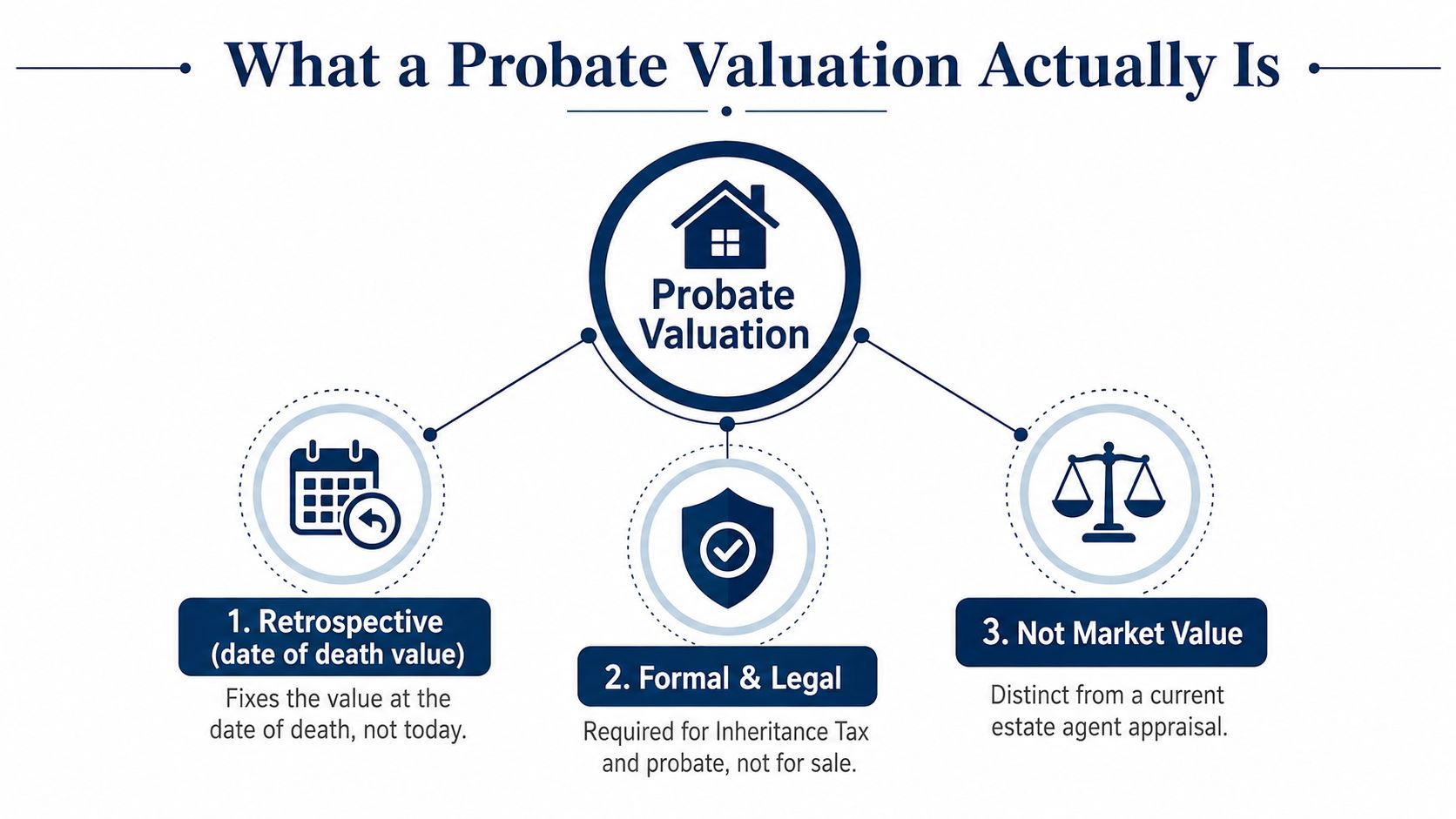
A probate valuation of property records the open market value at the date of death. HMRC's basis is the price the property might reasonably have achieved in an open-market sale on that date, not what it could fetch when you apply for probate or put it on the market later. HMRC explains the valuation basis for an estate.
An estate agent's current appraisal answers a selling question. It does not automatically answer HMRC's probate question. A retrospective valuation must assess the property's condition, accommodation, location and relevant market evidence as they stood at the date of death. Later changes in prices do not alter that historic figure.
The figure HMRC needs
Where the estate requires full details, the executor reports them on form IHT400. HMRC accepts a professional valuation from an estate agent or chartered surveyor, and it gives particular relevance to professional valuations for property or other items worth over £1,500. Treat a valuable property as a documented valuation exercise, not a quick estimate.
The figure feeds into the wider estate calculation. Establish the gross value of the assets, account for permitted debts and liabilities, and report the result through the probate and inheritance tax process. An unsupported or inaccurate property figure can affect the application and invite questions from HMRC.
A chartered surveyor's report should state the valuation date, method, assumptions and comparable evidence. Read more about RICS property valuations to understand why a formal assessment differs from an informal opinion. If the property is sold later, handle navigating a probate sale process as a separate practical task.
Practical rule: Give the valuer the date of death and request a retrospective open market valuation. Do not relabel a current selling appraisal as a probate valuation.
How the Valuation Figure Affects Inheritance Tax
The property's date-of-death value can change the inheritance tax result. Executors calculate the gross estate, deduct permitted debts such as a mortgage, and then compare the net figure with the allowances available to that estate.
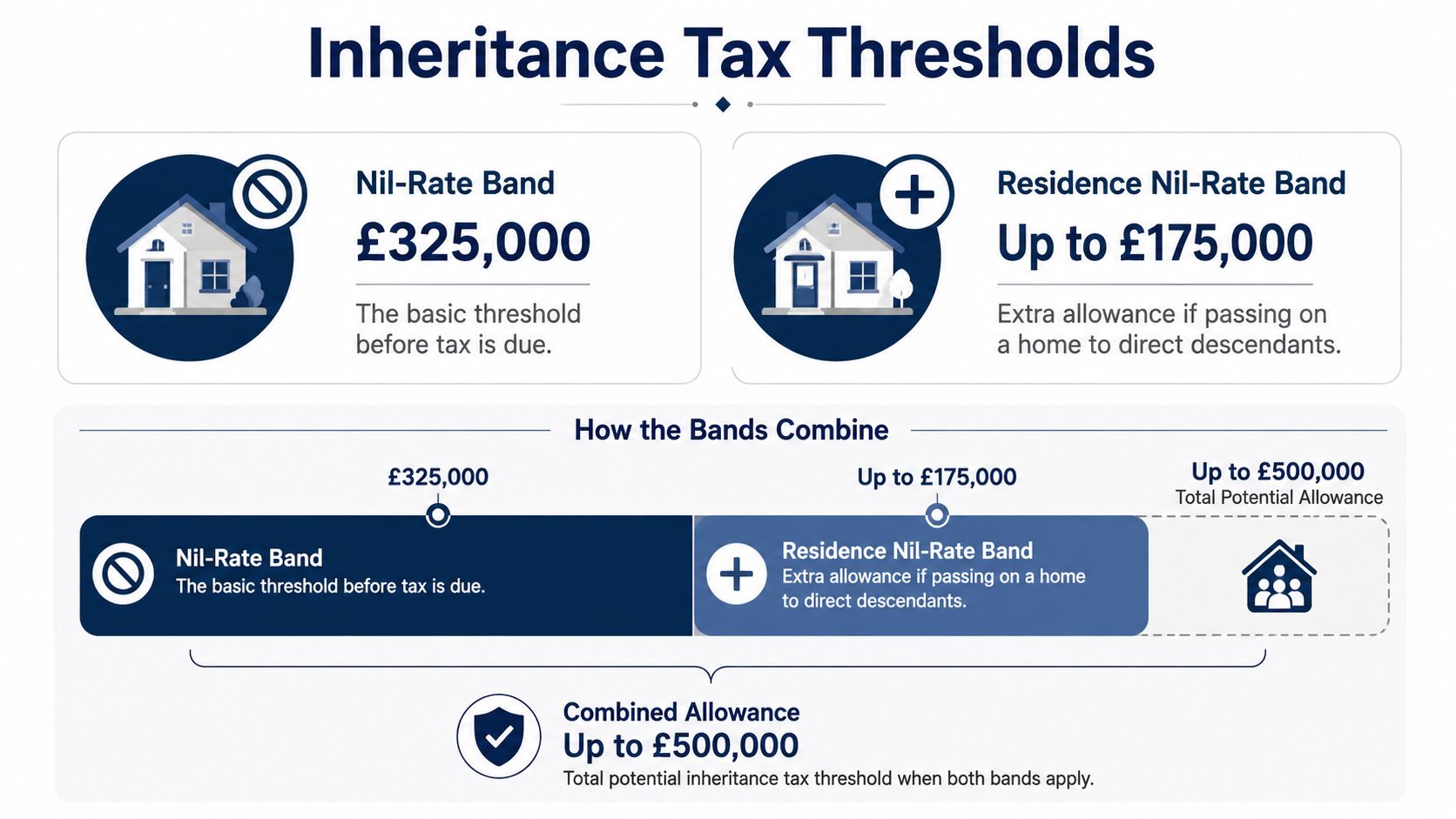
The basic UK nil-rate band is £325,000. The residence nil-rate band is £175,000 for the relevant government threshold period, provided the qualifying conditions are met. That residence allowance does not apply automatically. Check the estate's eligibility with the solicitor or tax adviser handling the return.
Why small valuation errors matter
A family home still belongs in the tax calculation even if nobody plans to sell it immediately. HMRC expects its open market value at the date of death, not a current estate agent appraisal. A later rise or fall in the market does not replace that historic figure.
If the taxable amount remains after the available allowances, inheritance tax is charged at 40% on the taxable amount, subject to the estate's circumstances and any applicable reliefs. HMRC sets out the open market valuation principles.
An understated value can produce an incorrect return and trigger an HMRC enquiry. An overstated value can make the estate pay more tax than necessary. Keep the valuation evidence, comparable sales and assumptions that support the figure, so the executor can explain how it was reached.
The property value must also be assessed with savings, investments, other land, personal possessions and debts. A tax adviser should calculate the liability, while a suitably qualified valuer should provide the property evidence. This guide to inheritance tax planning can help you prepare questions for the adviser managing the estate.
Probate Valuations Versus Estate Agent Appraisals and Other Valuation Types
Different property figures answer different questions. Confusing them is one of the easiest ways to give an executor a report that doesn't support the purpose for which it is being used.
An estate agent's appraisal usually addresses a current sale. The agent is considering market conditions, likely marketing strategy and an asking-price range. A probate valuation looks backwards to the date of death and must explain the evidence supporting that historical figure.
An auction valuation has a different purpose again. It may consider a sale under auction conditions, where the likely result can differ from an ordinary open market transaction. An insurance reinstatement assessment estimates the cost of rebuilding after damage. It isn't the market value of the land and property.
A mortgage valuation is prepared for a lender's security decision. It isn't a building survey and it isn't a substitute for a probate report. This guide to estate agent valuations explains why an agent's opinion and a formal valuation shouldn't be treated as interchangeable.
Valuation types compared
| Valuation Type | Purpose | Date Basis | Provided By |
|---|---|---|---|
| Probate valuation | Estate and inheritance tax reporting | Date of death | Chartered surveyor or estate agent, depending on the circumstances |
| Estate agent appraisal | Current sale and marketing advice | Current or proposed sale date | Estate agent |
| Auction valuation | Indicative auction disposal | Relevant auction conditions and date | Auctioneer or valuer |
| Insurance reinstatement assessment | Rebuilding insurance cover | Current rebuilding basis | Surveyor or cost consultant |
| Mortgage valuation | Lender security assessment | Mortgage instruction date | Lender-appointed valuer |
The distinction matters most in London, where a leasehold flat in Greenwich may have a different value profile from a freehold terrace in Catford. Lease length, service charges, restrictions and the condition of the building can all affect the evidence, but the valuer still has to anchor the conclusion to the date of death.
Don't assume the highest figure is the correct figure. Don't assume the first figure is either. The correct report is the one that answers HMRC's question and records how the conclusion was reached.
How a RICS Chartered Surveyor Carries Out a Probate Valuation
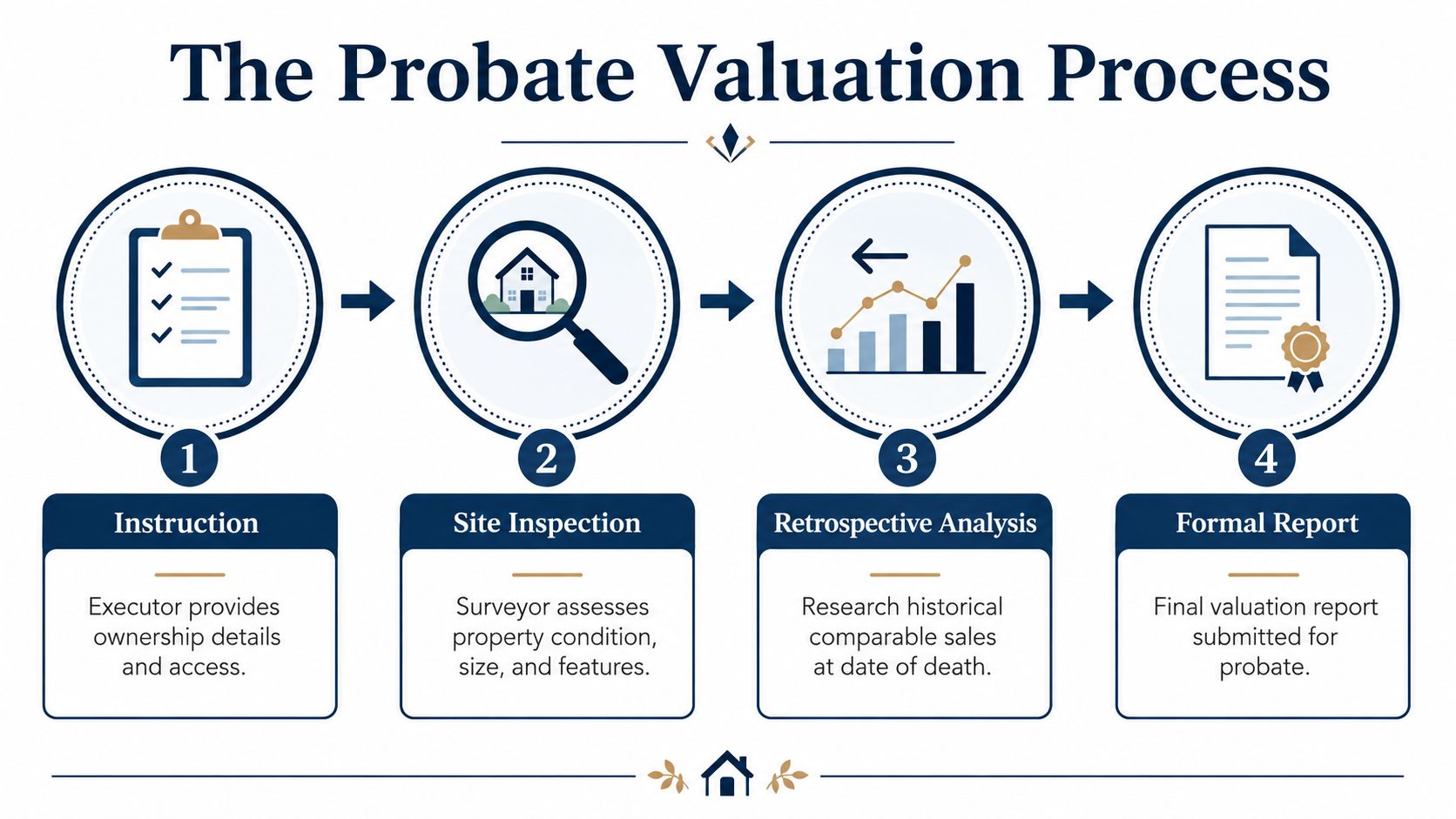
The process starts with the facts. Give the surveyor the full property address, the date of death, ownership details and access arrangements. For a flat, provide the lease and any information available about service charges, ground rent, major works and restrictions.
A title register, plan, lease, previous sale information and details of alterations can all help. Tell the surveyor about extensions, loft conversions, basement works, listed status or known defects. Missing information doesn't always stop the inspection, but it can limit the conclusions that can be drawn.
What happens at the property
The inspection covers the property's size, layout, construction, condition and features. The surveyor considers matters that affect marketability, including damp, roof defects, timber decay, structural movement and evidence of unauthorised work.
Local context matters. A converted flat in Peckham may need different consideration from a 1930s semi in Bromley. A Victorian terrace in Brockley or Sydenham may have rear additions, altered layouts, chimney breast removals or conservation restrictions that influence the historical value.
The surveyor then researches comparable evidence relevant to the date of death. Current listings aren't enough. The report needs to explain the basis of the retrospective opinion and identify any assumptions or limitations.
Watch this short explanation before instructing a surveyor if you're unsure how valuation work differs from a condition inspection.
What a proper report should provide
RICS regulation, the RICS Valuers Registration Scheme and suitable professional indemnity insurance give the executor important safeguards. They don't remove the need to check the report, but they provide a clearer professional framework than an informal conversation with an agent.
Corinthian Surveyors London LTD is an independent practice based in Forest Hill. Clive Thompson holds RICS and CABE qualifications, has over 30 years of experience in the built environment and carries out residential valuation work across London, the Home Counties and the South of England. The practice has no ties to lenders, estate agents or developers.
Use this guide to what a RICS survey is if you need to understand the wider role of a chartered surveyor.
Common Mistakes Executors Make with Property Valuations
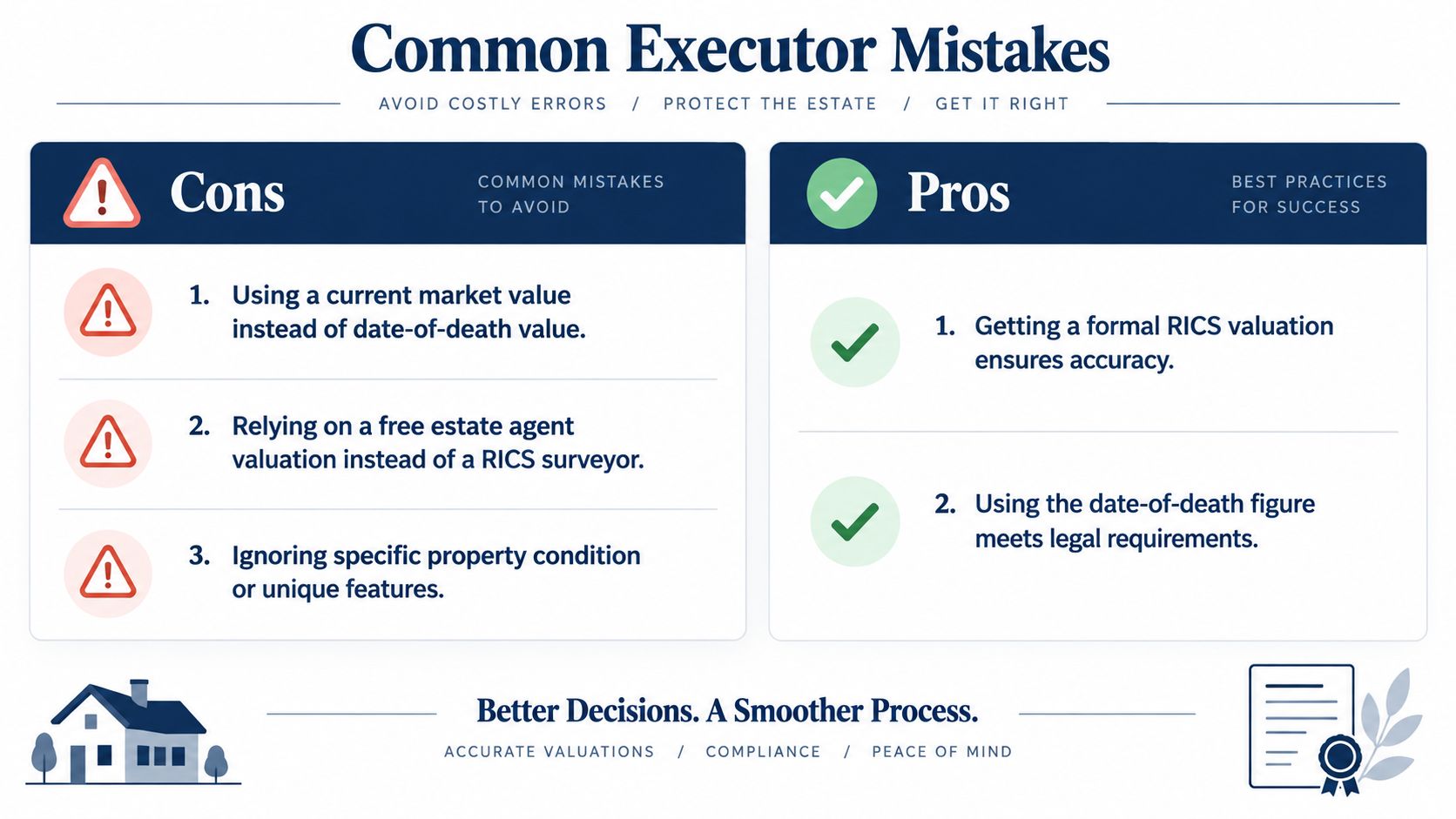
The first mistake is using today's value. The property may have increased or fallen in value after the death, but that later movement doesn't change the probate figure. A current appraisal can therefore be the wrong evidence even if it looks realistic today.
The second mistake is treating a free estate agent appraisal as automatically suitable for the IHT400. HMRC guidance recognises that an estate agent or chartered surveyor may value property, but the appointment should match the complexity and financial importance of the estate. A valuable London property with unusual features deserves a report that records its assumptions and evidence.
Details that can depress value
Executors sometimes describe a property as an ordinary house when the legal or physical details say otherwise. A sitting tenant, restrictive covenant, short lease or unresolved planning issue can affect the open market value.
Condition matters too. A leaking roof, extensive damp, subsidence or structural movement shouldn't be ignored because the family intends to repair the property later. The valuation concerns the property as it stood at the relevant date, with appropriate consideration of its condition then.
Other problems include:
- Wrong date: The executor supplies the application date or sale date instead of the date of death.
- Missing documents: Lease terms, title restrictions and planning information aren't provided.
- No audit trail: The file contains a figure but no clear explanation of comparable evidence.
- Poor communication: Beneficiaries receive different figures and the executor cannot explain why.
If the property later sells for less than its probate value, loss-on-sale relief may be available where the sale takes place within four years of death, as explained in this HMRC guidance on valuing an estate. That isn't a reason to inflate the probate figure. It is a reason to keep the valuation report and sale records.
Don't guess the date, and don't let an asking price become a tax figure by accident.
Your Probate Valuation Checklist for London Properties
Start with the date. Write down the date of death and give it to every professional involved. The whole purpose of the valuation is lost if the instruction starts with the wrong reference point.
Then assemble the property file:
- Ownership: Find the title register, title plan and any available transfer documents.
- Leasehold information: For flats in Lewisham, Greenwich, Woolwich or Southwark, gather the lease, service charge details and known major works notices.
- Property details: Record extensions, loft conversions, basement works, alterations and outbuildings.
- Condition: Note known damp, roof leaks, timber decay, subsidence or structural movement.
- Legal matters: Flag restrictive covenants, planning restrictions, listed status and conservation area controls.
- Access: Arrange safe access to all parts of the home, including lofts, cellars and gardens.
London points worth checking
A Victorian terrace in Peckham or Dulwich may have rear additions, altered kitchens and removed chimney breasts. Those details can affect both condition and value. Properties in conservation areas may also face restrictions on external changes, so the surveyor needs the location and planning context.
Leasehold flats need particular care. The value of a flat in a converted building in Deptford, Bermondsey or Greenwich may depend on the lease terms, the management arrangements and works affecting the wider building. Don't rely on a floor area copied from an old listing.
Before you submit the estate return
Ask the valuer to confirm that the report is retrospective and tied to the date of death. Read the assumptions, check the address and make sure the property description matches the actual home.
Give the final report to the professional preparing the IHT400. Keep the report with the estate records because the same historical figure may be relevant to later capital gains tax calculations. If you need a formal residential valuation, Corinthian Surveyors offers probate valuation work across London and the surrounding Home Counties. Executors can discuss the property and instruction requirements on 0800 00 16 422.
Questions London Executors Ask About Probate Valuations
Do I need a RICS surveyor for probate?
Not every property requires the same level of professional input. HMRC guidance allows property or land to be valued by an estate agent or chartered surveyor. For a valuable, unusual or contentious property, I recommend a formal chartered surveyor's valuation because it provides a clearer record of the inspection, assumptions and historical evidence.
How long does a probate valuation take?
The timescale depends on access, the property type and the availability of suitable evidence from the date of death. A straightforward house is usually easier to assess than a converted flat with missing lease information or a property with planning and condition issues. Give the valuer the documents early and don't wait until the IHT400 is ready.
Do I need a new valuation if probate is delayed?
Usually, the original probate valuation remains tied to the date of death. A later market change doesn't alter that historical basis. Ask the solicitor or tax adviser handling the estate if HMRC has requested clarification or if the circumstances require an updated report for another purpose.
How does the probate value affect a later sale?
The probate value records the property's value at death. A later sale is a separate transaction, so retain the valuation report, sale particulars and completion statement. Your tax adviser can then consider the relevant figures when preparing any capital gains tax calculation.
Corinthian Surveyors London LTD provides independent residential probate valuations for executors across Forest Hill, Lewisham, Greenwich, Dulwich, Bromley and the wider London area. Visit Corinthian Surveyors London LTD to request a valuation discussion based on the property, date of death and documents available.