
Pre Purchase Survey Report Explained for Buyers
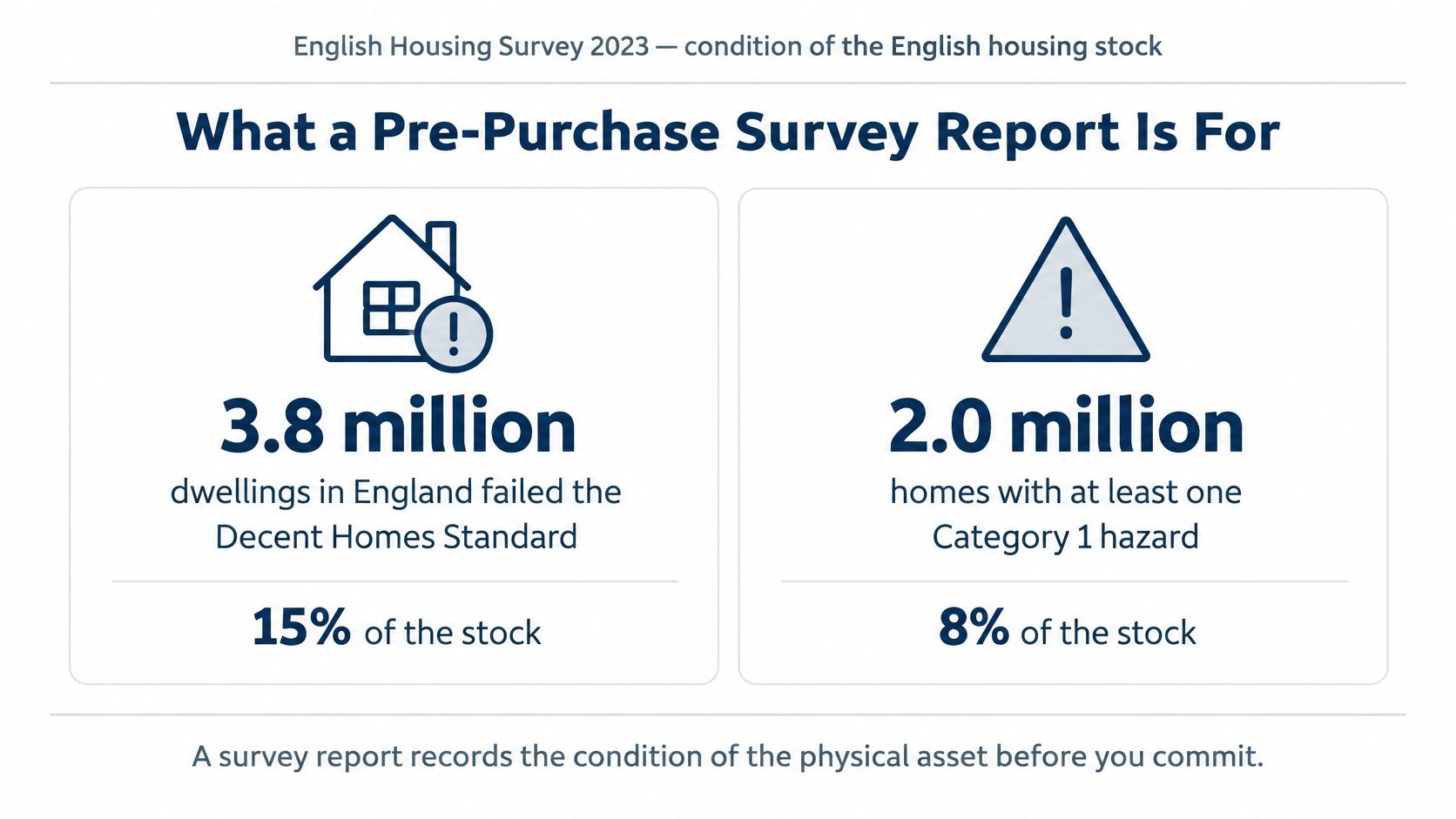
About 3.8 million homes in England failed the Decent Homes Standard in 2023, according to the English Housing Survey. A tidy viewing isn't evidence that a building is sound. A pre purchase survey report becomes useful when you turn its findings into a decision: renegotiate, investigate, budget or withdraw.
Table of Contents
- What a Pre-Purchase Survey Report Is For
- Match the Survey Level to the Building
- How to Read the Condition Ratings
- Defects London Reports Often Flag
- Turn the Findings into a Purchase Decision
- Questions the Report Cannot Answer
- Act on the Report Before Exchange
What a Pre-Purchase Survey Report Is For
The English Housing Survey's housing-quality findings show that 2.0 million dwellings in England, or 8% of the stock, contained at least one Category 1 hazard in 2023. The same findings put damp at approximately 1.3 million dwellings, or 5%, while 21% of privately rented homes were non-decent. These are England-wide figures, not a prediction about the particular flat you're buying in Forest Hill.
Say you view a freshly decorated Victorian conversion. The rooms look dry and the windows open. You still haven't established whether the roof leaks behind the chimney, whether the bathroom extract discharges outside or whether someone removed a chimney breast without adequate support.
The distinction between presentation and condition matters.
What you're actually buying
A pre-purchase survey report is an independent written account of the building's construction and its condition on the inspection date. It should identify significant defects, explain their implications and tell you where further investigation is needed.
A mortgage valuation serves a different purpose. It helps the lender assess its security. Don't treat a lender's acceptance of the property as confirmation that the roof, floors or services are sound.
Corinthian Surveyors London LTD is an independent firm of RICS Chartered Surveyors and Valuers based in London. Our role is to advise the buyer, not protect the seller's asking price or the lender's position.
Practical rule: Buy the evidence you need before exchange, not reassurance based on how the property looked during a viewing.
Evidence, not a guarantee
The inspection is visual. Secured panels, electrical fittings and similar concealed areas aren't normally opened up. Furniture, fitted coverings and inaccessible roof spaces can restrict what the surveyor can establish.
Read those restrictions as part of the findings. An inaccessible area isn't automatically defective, but it isn't confirmed sound either.
The report should leave you knowing what needs attention and what remains uncertain. It's evidence for your purchase decision before exchange, not a promise that every hidden defect or legal problem has been discovered.
Match the Survey Level to the Building
Which RICS report level fits the property
| Survey level | When it fits | What the report adds | Valuation |
|---|---|---|---|
| Level 1 home condition survey | Newer conventional homes that look sound | Short record of construction, condition and urgent risks | Not included |
| Level 2 homebuyer survey | Most conventional houses and flats in reasonable condition | Element comments, services, grounds and condition ratings | Only if a Level 2 with valuation is agreed |
| Level 3 building survey | Large, old, altered, unusual or run-down homes, or major works | Causes, hidden-risk notes, repair scope and consequences | Not included. Instruct a valuation separately |
The RICS Home Survey Standard has applied since 1 March 2021, with the principal service levels explained in the RICS house-survey guide. Each describes construction and condition, identifies visible serious problems and flags further investigation. None is an unrestricted opening-up exercise.
Choose the inspection around the building, not the lowest fee. A Victorian terrace in Lewisham with a removed chimney breast needs a different approach from a recent flat in a conventional block.
Where the extra detail matters
A Level 1 home condition survey gives a short overview. It's suitable when a newer, conventionally built property appears sound and you don't need detailed repair advice.
A Level 2 homebuyer survey suits conventional houses and flats in reasonable condition. It's often what buyers mean when they ask for a homebuyer report. The homebuyer survey comparison helps distinguish that service from a building survey.
For an old, altered or unusual property, choose the depth needed to understand the defects. Don't commission a shorter report and expect it to answer questions outside its scope.
What a building survey adds
The RICS terms-of-engagement guidance recommends Level 3 for large, old, run-down, unusual or altered properties and those being considered for major works. It adds probable causes, risks in uninspected areas, the likely scope of repairs and the consequences of leaving them.
That greater depth includes practical inspection work:
- Windows: The surveyor attempts to open windows on all elevations.
- Floors: Exposed surfaces are examined and loose, unfitted coverings may be lifted where practicable.
- Deflection: A heel-drop test helps assess excessive floor movement.
- External areas: Grounds, retaining walls, trees, boundaries and outbuildings receive closer attention.
A Level 3 building survey doesn't include a market valuation. Instruct that separately if you need advice on market worth; a Level 2 with valuation is a distinct agreed service.
Give the surveyor details of intended works before instruction. Removing walls, converting the loft or refurbishing a neglected house changes the questions the inspection needs to address.
How to Read the Condition Ratings
Condition ratings and the buyer's next read
| Rating | What it means | First response |
|---|---|---|
| Condition rating 3 | Serious defect or urgent repair | Get a specialist view or a priced quote before exchange |
| Condition rating 2 | Repair or replacement needed but not urgent | Budget the work or use quotes in a price discussion |
| Condition rating 1 | No repair currently needed | Treat it as future maintenance |
| Not inspected | That element could not be seen | Don't read the blank as a clean result |
| Further investigation | Risk sits outside the visual check | Instruct the specialist named in the report |
Read the rating alongside the description. The colour tells you where to look, not what to spend or whether to withdraw. The wording explains the defect and its consequences.
The report normally describes construction before working through roofs, walls, floors, windows, services and grounds. It then brings together the risks and matters requiring legal attention. That order lets you connect a finding to the part of the building involved.
Read the serious findings properly
Condition rating 3 means the matter is serious or needs urgent attention. It doesn't automatically mean the property is beyond repair. An unsafe installation and significant structural movement may receive the same rating but require different specialists and different purchase decisions.
Check what the surveyor recommends. An electrical safety concern calls for an electrician's inspection and testing. Unexplained movement may require a structural engineer, access to concealed support or monitoring before anyone can confidently specify repairs.
Condition rating 2 means repair or replacement is needed but isn't urgent. Read the timescale and consequence. Defective external decoration and deteriorating roof coverings shouldn't be treated as equivalent because both appear amber.
Condition rating 1 means no repair is currently needed to the element inspected. It doesn't remove the need for maintenance or guarantee that concealed components are sound.
A rating is a starting point for a question. The explanation beside it is what you act on.
Treat uncertainty as an instruction
Not inspected records a limitation. Find out why the surveyor couldn't inspect the element and whether the missing information matters to your decision.
A roof void blocked by stored belongings presents a different problem from a sealed structural support. Ask whether another visit with access would resolve the concern or whether a specialist investigation is needed.
Further investigation means the visual inspection hasn't settled a material question. The recommendation should identify who needs to investigate and what they need to establish. A vague instruction to obtain advice isn't enough if you still don't know which trade or professional to appoint.
The RICS Home Survey Standard distinguishes the property's physical condition from related legal and environmental matters. A sound-looking alteration may still lack approval. The solicitor must establish that position rather than expect the surveyor to certify the paperwork.
Ask for findings to be ranked by urgency and consequence. Where appropriate, clarify whether the sensible response is negotiation, repair before completion, an agreed retention or legal investigation.
Start your working list with rating 3 findings, uninspected elements and further-investigation recommendations. Then read the remaining report in full so you don't miss a pattern connecting apparently minor defects.
Defects London Reports Often Flag
The housing type changes what needs explaining. A terrace in Brockley, a semi in Beckenham and a warehouse conversion in Bermondsey shouldn't produce interchangeable advice.
Look for a report that connects visible symptoms to the building's construction.
Victorian and Edwardian terraces
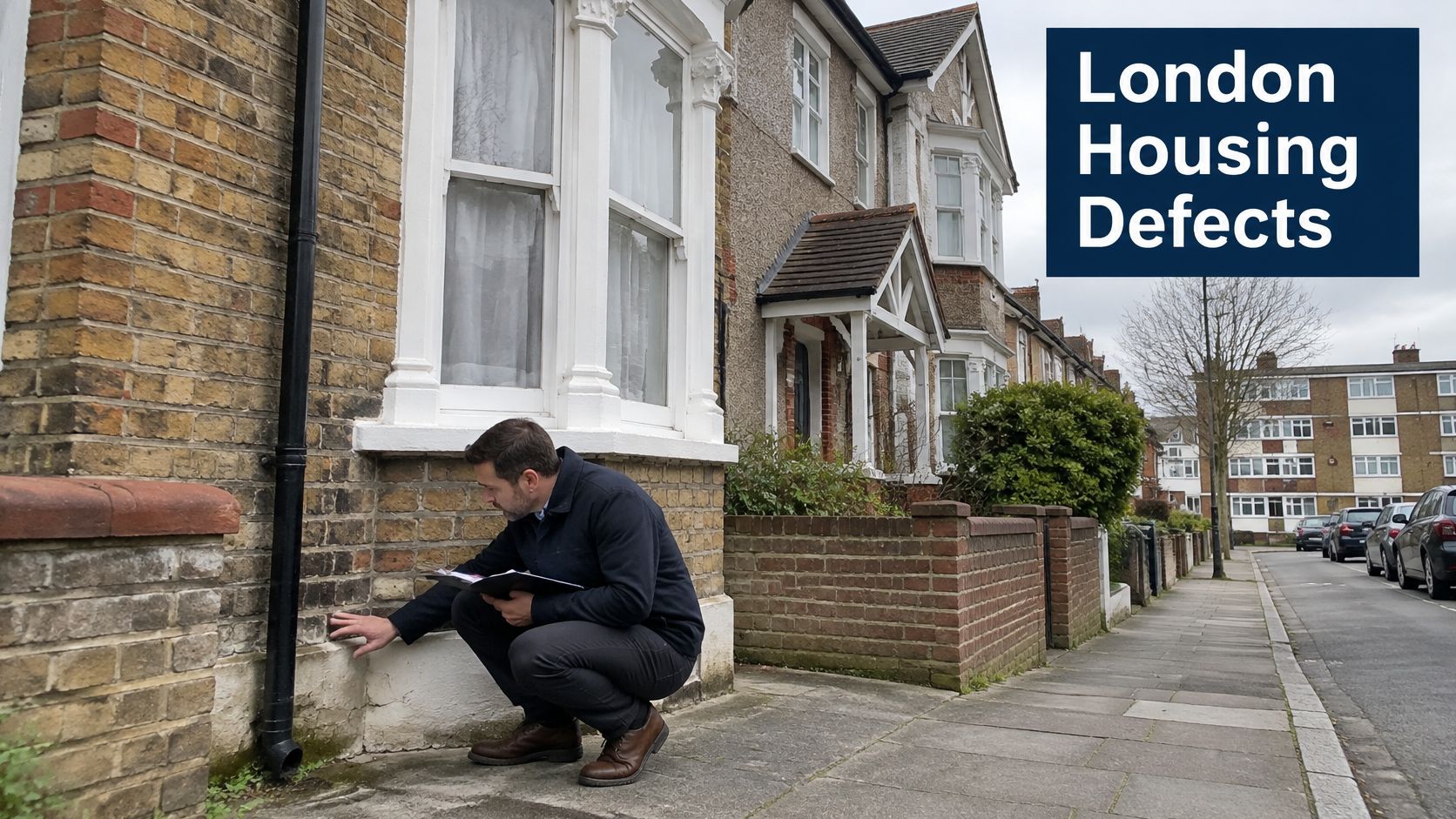
For period houses in Lewisham, Forest Hill, Peckham and Camberwell, pay attention to solid walls, lime mortar, lath and plaster and any remaining lead pipework. Altered chimney breasts deserve particular scrutiny.
If a breast has been removed, the report should say whether its support could be seen. The solicitor should investigate approvals and supporting documents. Don't accept a neat plaster finish as evidence of adequate support.
Lower-wall damp isn't automatically rising damp. Defective drainage, penetrating moisture and bridging can produce symptoms that need different repairs. Where timber is affected, understanding dry rot and wet rot helps explain why identifying the moisture source matters before treating the wood.
An altered period terrace generally points towards Level 3. For older or listed fabric, repair advice must respect the original construction rather than recommend modern replacement materials.
Semis and converted flats
For a conventional semi in Bromley, Sidcup or Orpington, examine the report's comments on roof coverings, bays, drainage and nearby trees. Cracking needs an explanation, not just a photograph.
The surveyor should distinguish apparently historic movement from evidence suggesting continuing movement. Active or unexplained cracking may need an engineer. Serious historic movement can also justify specialist advice where the cause or adequacy of repairs remains uncertain.
A well-maintained, unaltered conventional semi may suit Level 2. Significant extensions, deterioration or unresolved movement favour a deeper inspection.
The same principle applies when looking at the building from outside.
Converted flats in Deptford, Greenwich and Rotherhithe introduce different questions. Look for comments on visible fire separation, flat roofs, roof terraces and the limits of any assessment of sound transfer.
The solicitor must establish who repairs shared components and how the lease allocates costs. A sound interior doesn't settle liability for the roof above it.
Non-standard warehouse construction or extensive conversion work may justify Level 3. A conventional flat in reasonable condition may suit Level 2, provided the agreed scope addresses accessible communal areas.
Local housing stock changes the questions. It doesn't change the meaning of the condition ratings.
Turn the Findings into a Purchase Decision
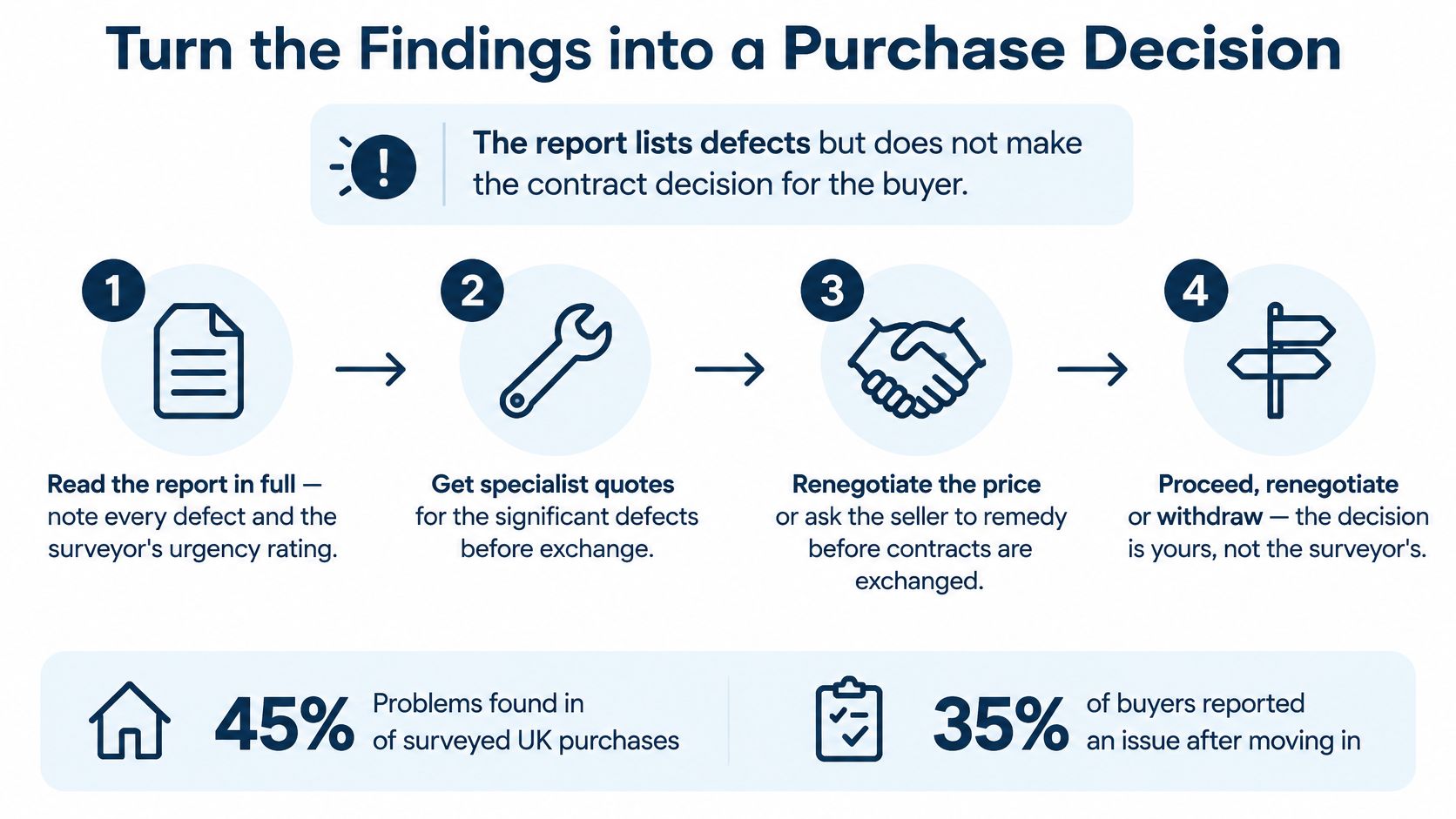
The surveyor identifies defects. You decide whether the remaining risk is acceptable. The mistake is treating a long defect list as either an automatic reason to withdraw or a ready-made demand for a price reduction.
Aviva's UK homebuyer findings reported problems in 45% of surveyed purchases, with survey users saving an average £2,600, mainly through a lower price or seller repairs. That isn't a promised saving on your purchase. It shows why evidence and follow-up matter.
Test the consequence before choosing the response
For every serious finding, ask:
- Urgency: Must someone act before occupation or can the work be planned?
- Cost: Is there a priced repair scope or only an unresolved symptom?
- Safety: Could the defect put occupants or others at risk?
- Lending: Could the finding affect the lender's willingness to lend?
- Legal position: Is there missing approval, shared liability or another paperwork issue?
A missing approval and a construction defect are separate problems. Resolving one doesn't necessarily resolve the other.
Use a process that turns the observation into evidence before you commit.
What to do with each kind of finding
| Finding | Sensible move | Who needs the paperwork |
|---|---|---|
| Structural movement, unsafe services or active rot | Pause until a specialist reports | Solicitor and mortgage lender |
| Damp, roof or timber defect with a clear repair | Renegotiate or ask the seller to repair before completion | Solicitor, with quotes attached |
| Scattered minor wear | Proceed and keep a repair fund | Nobody, unless the items form a pattern |
| Loft, extension or chimney breast without papers | Check planning and building control before pricing repairs | Solicitor first |
| Japanese knotweed, asbestos or widespread woodworm | Treat withdrawal as a real option | Specialist and lender |
Apply the decision to the defect
For suspected unsafe electrics, obtain inspection and testing before negotiating a replacement allowance. You need to know whether the problem is localised or affects the installation more widely.
For a leaking roof with an identifiable repair, get a written quotation. Check whether access equipment, associated timber repairs and making good are included. Then decide whether to negotiate or require properly documented work before completion.
Don't let the seller's offer to send someone round replace an agreed repair specification. Your solicitor should record any arrangement that affects the transaction.
Maintenance test: If leaving the defect could spread damage, affect safety or prevent mortgage approval, don't dismiss it as ordinary upkeep.
For worn sealant or tired decoration, allow a maintenance budget. Don't undermine a serious negotiation by attaching every cosmetic mark to it.
For knotweed, asbestos or widespread timber infestation, establish extent and management options first. Withdrawal is reasonable when the cost, liability or uncertainty exceeds what you're prepared to accept.
Send the surveyor's actual wording, photographs and specialist evidence rather than your paraphrase. The guide to negotiating after a survey explains how to frame a price discussion around documented repairs.
Liz described the practical outcome of a Corinthian survey: “The first enabled us to renegotiate the price we offered”. The useful lesson is the sequence: establish the defect, establish the remedy and then discuss the price.
Questions the Report Cannot Answer
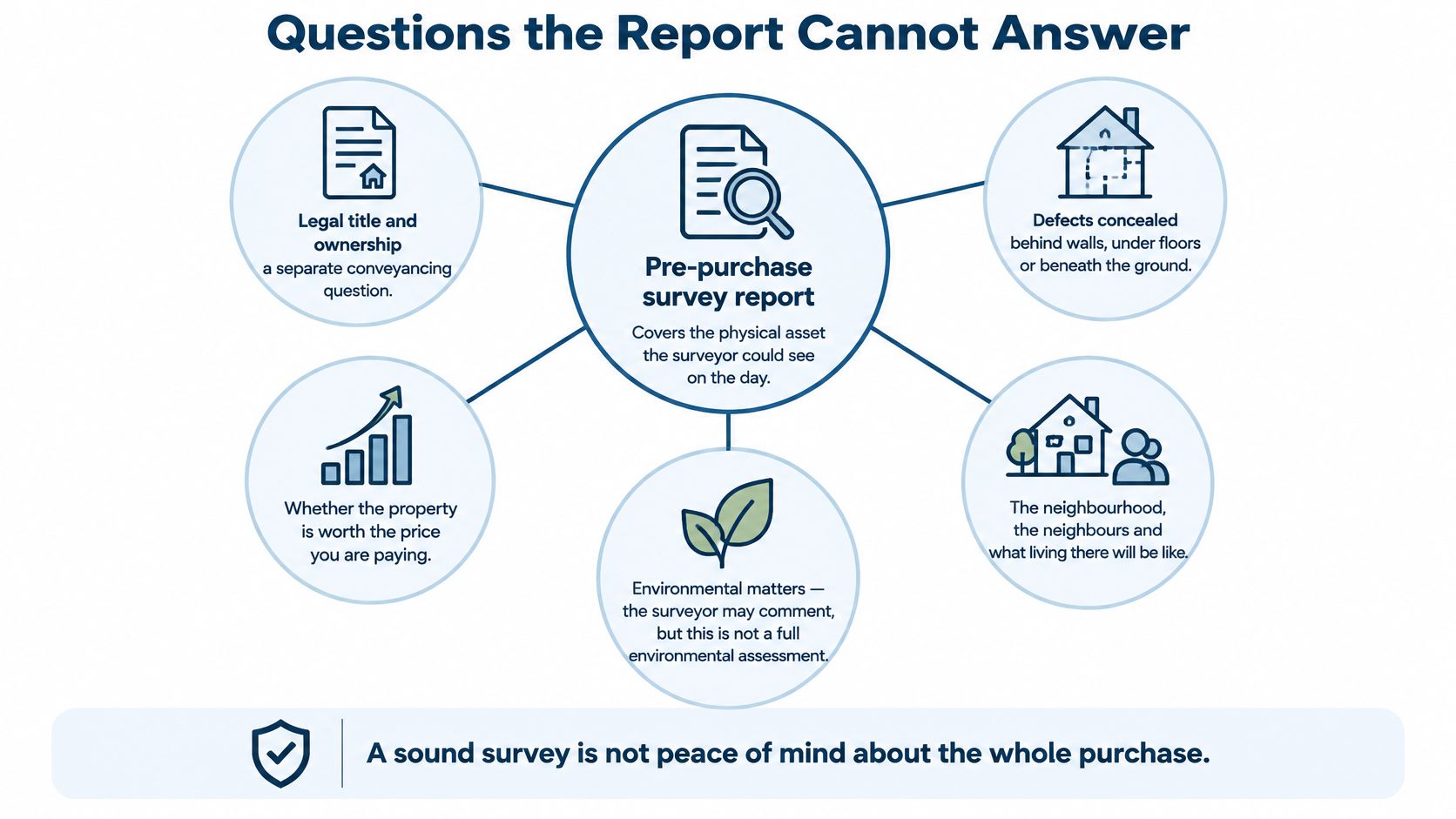
A sound survey isn't peace of mind about the whole purchase. It addresses the physical asset the surveyor could inspect. It can flag other risks without settling them.
Aviva's homebuyer polling found that 53% of sellers admitted withholding some information, while 20% of buyers didn't realise routine maintenance and wear are generally excluded from standard home insurance. Don't assume either the seller's answers or an insurance policy will fill every gap.
Give each unresolved question an owner
The surveyor may comment on flooding, radon or former mining activity. Legal clues can include missing guarantees, uncertain approvals or apparent access rights. These observations aren't substitutes for searches, title checks or policy advice.
Use a handoff list so nothing is left between professionals.
Who answers each unresolved purchase question
| Question | Who answers it | Next step |
|---|---|---|
| Visible condition and defects | Surveyor | Instruct the specialist flagged in the report |
| Title, lease, service charges and restrictive covenants | Solicitor | Review the legal pack and searches |
| Missing approvals and planning history | Solicitor | Ask the seller for papers |
| Flood, drainage and contaminated land | Environmental and local searches | Review with the solicitor |
| Guarantees and certificates | Solicitor | Request from the seller |
| Insurance exclusions for known defects | Insurer | Ask before completion |
| Noise, parking and neighbour nuisance | Local checks and dispute records | Don't expect the survey to answer these |
| Japanese knotweed | Specialist | Obtain specialist reporting even where the surveyor sees growth |
For a converted flat, ask the solicitor to explain service-charge liability and planned shared works. A report on the roof's condition doesn't establish what proportion of the bill you'll pay.
For neighbour disputes, ask about the seller's formal replies and any relevant records. Visit the area at different times to assess noise and parking for yourself.
The boundaries matter as much as the inspection findings.
Don't order every possible extra report
Ask the insurer directly about known defects and relevant exclusions before completion. Don't assume cover will pay for putting right a problem you already know exists.
Commission additional investigations where the survey or solicitor identifies a material risk. Name the question the specialist must answer before appointing them.
That keeps the exercise proportionate. You need enough evidence to resolve consequential uncertainty, not a stack of reports that all leave the same question unanswered.
Act on the Report Before Exchange
A report left unread in the inbox changes nothing. Reading a recommendation for further investigation is not the same as dealing with it, so work through the findings while there is still time to act before exchange.
- Make the action list immediately. Pull out the serious findings, the inspection limitations and every recommendation that needs follow-up.
- Route the paperwork to the right adviser. The solicitor gets the extracts covering approvals, guarantees and legal points. Anything that could affect lending goes to your mortgage broker for referral to the lender.
- Obtain the evidence. Arrange the specialist inspection or written repair quotation before proposing a price adjustment.
- Label every significant finding. Mark each item as renegotiate, investigate, budget or withdraw, then note who owns it: solicitor, insurer, specialist or you. Write down what remains outstanding.
- Keep unresolved risks out of exchange. A safety defect or missing approval that your advisers have not addressed is a reason to delay, not to sign.
Check your instructions if you also need advice on value. RICS's Home Survey service comparison confirms that the detailed building-survey service excludes a market valuation, so a repair bill does not translate automatically into an equivalent reduction in market worth.
Frequently asked questions
Should I send the seller my whole survey?
You commission the report and decide what to share, subject to its terms. The relevant extracts and supporting quotations are usually enough for a price discussion.
Can I proceed with serious findings?
Yes, where the risk has been properly investigated and you accept the documented repair implications. Proceeding on the assumption it will be cheap to fix is how buyers end up funding the seller's neglect.
Who can explain which survey level fits?
Corinthian Surveyors in Forest Hill is led by surveyor Clive, an RICS Chartered Surveyor. Give us the property details, known alterations and intended works so the inspection level can be considered against the actual building.
Corinthian Surveyors London LTD carries out residential RICS Homebuyer Surveys and Building Surveys to help buyers understand defects before committing to a purchase. Call 0800 00 16 422 for advice and a property-specific quote, or visit Corinthian Surveyors London LTD with the property details and the questions you need the report to answer.