
Property Valuation for Remortgage Explained Simply
You've found a new remortgage deal. The rate looks decent. Then the lender's valuation comes back lower than you expected, and suddenly the numbers don't work. That catches a lot of owners out in Forest Hill, Sydenham, Dulwich and across London.
The main mistake is simple. People think the lender is checking the house for them. They aren't. They're checking the security for the loan. That's a different job entirely.
Table of Contents
- What a Property Valuation for Remortgage Really Means
- Mortgage Valuation Versus Independent RICS Valuation
- How the Remortgage Valuation Process Works
- How to Prepare Your Property for Valuation
- Costs Timescales and How Valuation Affects Your Deal
- Avoiding Pitfalls and Getting an Accurate Valuation with Corinthian Surveyors
- FAQ
What a Property Valuation for Remortgage Really Means
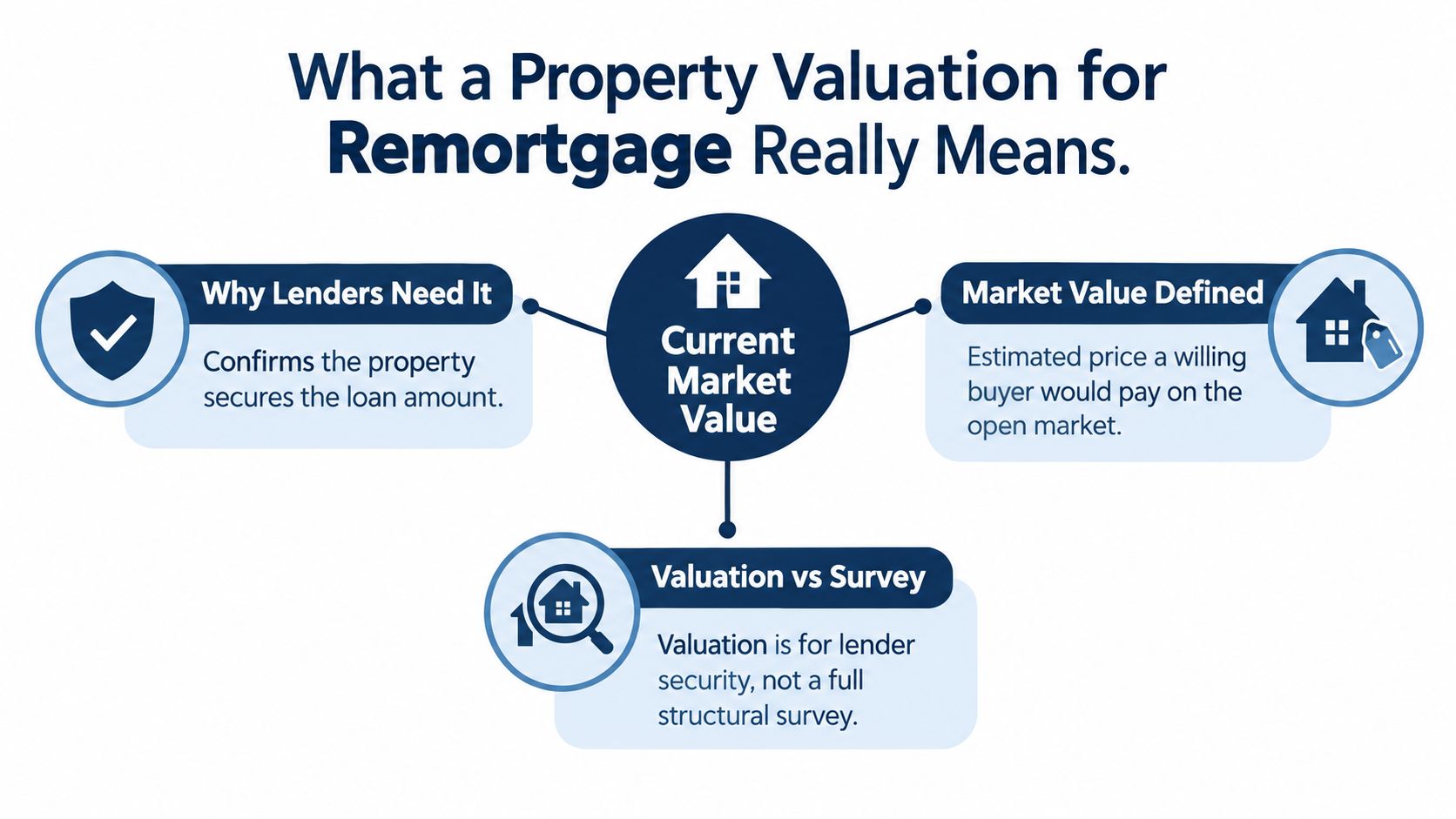
A property valuation for remortgage is the lender asking one question: if they lend against this flat or house, what is it worth on the open market today?
That figure is not based on what you paid. It is not based on what you spent on the kitchen. It is not based on what the neighbour says theirs is worth. It is not based on the highest estate agent estimate either.
RICS defines market value as the estimated amount a property should exchange for on the valuation date between a willing buyer and willing seller, in an arm's-length transaction, after proper marketing, with both sides acting knowledgeably, prudently and without compulsion, set out in the RICS valuation report framework. That wording matters. The valuation date matters. The open market assumption matters.
Why your figure and the lender's figure can differ
Say you own a Victorian terrace in Catford. You've modernised the bathroom, redecorated throughout and fitted bifolds. Fair enough. You expect that to lift the value.
But the lender's valuer still has to look at what comparable properties have sold for, what buyers in that patch are paying and how the property sits in the current market. Officially, the benchmark behind this kind of thinking is the UK House Price Index, which is built from actual residential sales, whether bought with cash or a mortgage, not asking prices, as shown on the UK House Price Index monthly statistics page.
Practical rule: A remortgage valuation is about what the property would sell for in the real market, not what it “should be worth” in your head.
That's why a flat in Peckham with a smart new interior can still be held back by the block, the lease length, the layout or weak comparable evidence. It's also why a house in Bromley that hasn't changed much can still value well if local sold evidence supports it.
It isn't a survey
This is the bit people need to get straight. A lender valuation is not there to tell you if the roof is failing, if there's damp behind the lining paper or if the loft conversion paperwork is missing. Those are survey issues.
If you want a plain English breakdown of what a valuation is and isn't, I'd also read this guide on what a house valuation means. If you're used to looking at overseas automated estimates, it can also help to find zestimate history online just to understand how automated value tracking works in principle, though UK lending decisions still turn on UK evidence and lender rules.
Mortgage Valuation Versus Independent RICS Valuation
People bundle all valuations together. That's where trouble starts. A lender mortgage valuation, an AVM, a desktop valuation and an independent RICS valuation are not the same thing.
The lender's version
Lenders work under a professional framework. RICS sets the standards for secured-lending valuations in the UK, including bank lending valuations and mortgage lending value standards, as set out in the RICS valuation standards guidance. In plain English, the valuer's job is to advise on the property as loan security.
That's not the same as advising you on condition, defects or repair liability.
Many remortgages now go through an AVM or a desktop valuation first. An AVM is automated. A desktop valuation is done by a surveyor from data and records without a full visit. A physical inspection is more likely where the case is higher risk, the property is unusual or the evidence isn't strong enough.
Where an independent valuation fits
An independent RICS valuation is different because it's instructed for your purpose, not the lender's. It can be useful if you want an informed view before applying, or if you need evidence to support a challenge where the lender's figure looks wrong.
That independence matters. A lender-appointed valuer answers to the lender. An independent valuer answers the valuation brief.
Here's the simple version.
Lender Valuation Types Compared
| Valuation Type | Purpose | Inspection Level | Best For |
|---|---|---|---|
| Lender mortgage valuation | Confirm loan security for the lender | Varies by lender and case | Standard remortgage cases |
| AVM | Automated value estimate for low-complexity cases | No physical inspection | Straightforward properties with strong data |
| Desktop valuation | Surveyor assesses value from records and comparables | No internal visit in most cases | Cases where data is decent but a human review is needed |
| Independent RICS valuation | Give the client a formal opinion of market value | Usually based on a proper inspection and evidence review | Reassurance, dispute support, probate, tax or separation work |
A mortgage valuation can be enough for the lender and still tell you very little about the building.
If you want a cleaner breakdown of the difference, read this page on mortgage surveyors and valuation.
London properties often need more caution
In London, the property itself often complicates the picture. A converted flat in Brockley may look ordinary online but hide awkward issues. Think roof responsibilities, poor sound insulation, altered layouts or missing paperwork for old works.
Victorian and Edwardian stock also causes problems. Timber decay, roof spread, movement around bay windows, chimney breast removals and damp around solid walls all change risk. Those things may not always stop a valuation, but they can push a case out of the automated lane and into a closer review.
How the Remortgage Valuation Process Works
You apply for a remortgage on your Forest Hill flat. You expect someone to turn up, check the place properly, and tell you what it is worth. Sometimes that happens. Often it doesn't.
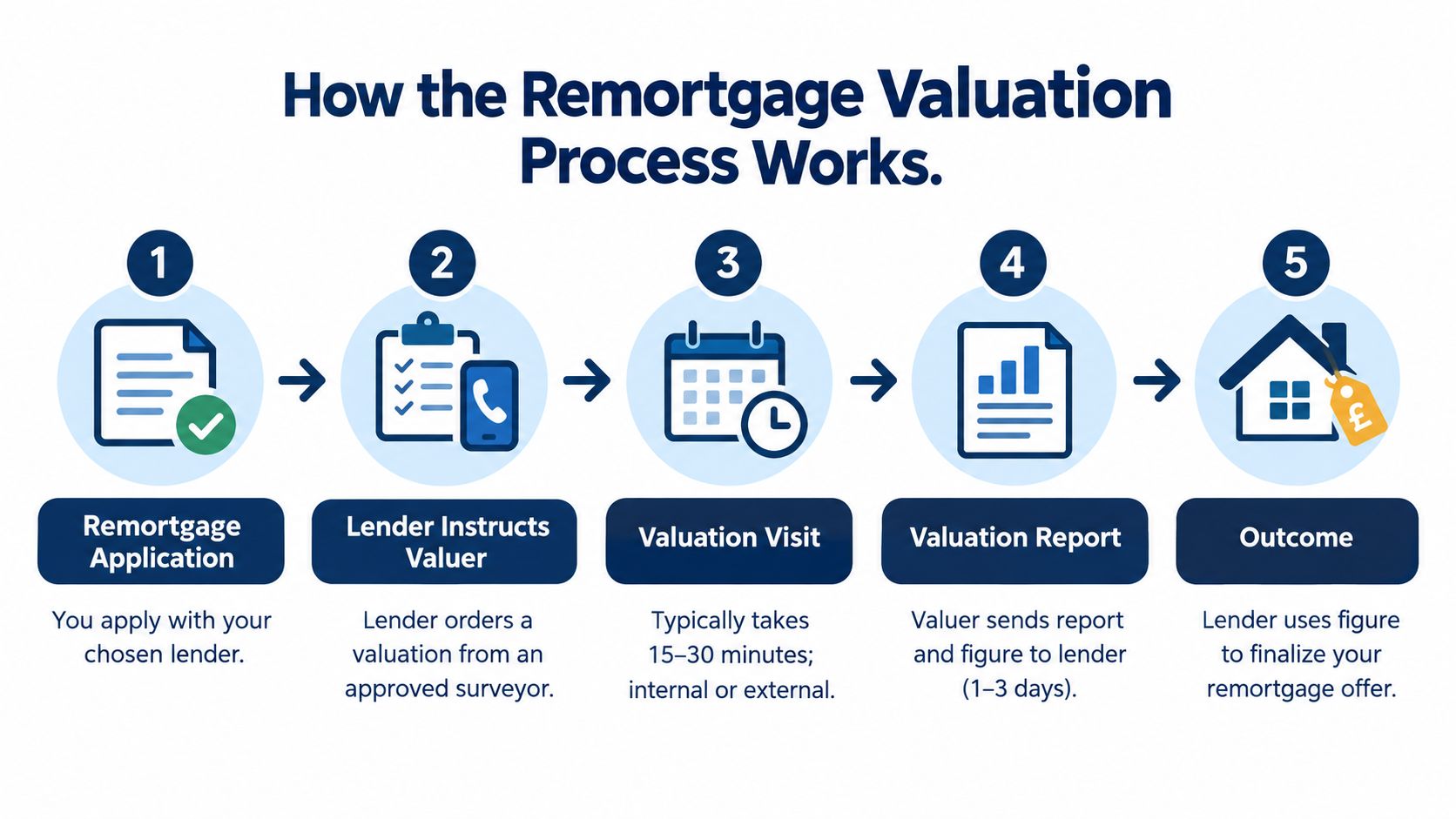
The lender starts with one question. If they lend against this property, is their security good enough?
That is why the process can feel thin from the homeowner's side. The lender is not ordering a condition survey for your benefit. They are checking value and risk for their loan book.
From application to instruction
Once you submit the remortgage application, the lender reviews the basics. Property type. Loan to value. Postcode. Recent sales evidence. Any past flags on the address or building.
If the case looks straightforward, they may use an AVM. That is an automated valuation model based on recorded sales, property data and pattern matching. If the data is decent but not clean enough for full automation, they may use a desktop valuation instead. That usually means a surveyor reviews records, comparables and mapping without inspecting inside.
A physical visit is more likely where the property is unusual, the evidence is patchy, or the risk is higher. London throws up these cases all the time. Period conversions, short leases, ex-local authority flats, mixed-use buildings, basement levels, roof terraces, and altered layouts often need a human being to look harder.
If the lender wants an inspection, they instruct their own valuer or panel firm. You do not usually choose them.
What happens on inspection day
Keep it in proportion. This is a lender security check.
The valuer will usually confirm the address, size up the accommodation, look at the general condition, and note anything that affects saleability or value. They are not carrying out a Level 2 Home Survey. They are not giving you a Level 3 Building Survey. They are not opening up the structure or diagnosing defects.
A typical remortgage inspection is brief. Expect them to look at the main rooms, kitchen, bathroom, windows, signs of damp or movement, and the exterior if they can access it. In a flat, they will also take a view on the block, common parts and overall marketability.
A London valuer will be alert to issues that change lending risk fast. Missing paperwork for an old knock-through. A loft room that looks like a bedroom but has no sign-off. Bay cracking in a Victorian house. A converted flat with unclear roof liability. Those points can affect the figure or trigger more questions.
Here's a straightforward video that helps visualise the general lending side of the process.
What the valuer sends and who sees it
The report goes to the lender.
You may get the valuation figure. You may get a short summary. You often will not get the full reasoning, because the lender is the client for that report.
If the valuer notes something material, the lender can reduce the amount they will lend, ask for documents, add conditions, or pause the case until the issue is sorted.
Why some cases get knocked down
Down valuations usually come from one of four places.
- Weak comparable evidence: The valuer cannot find enough recent sales that properly match your property.
- Property-specific risk: Short lease terms, non-standard construction, visible disrepair, movement, damp, or poor-quality alterations.
- Block or title issues: Service charge problems, major works, cladding concerns, awkward access, or defects in the lease.
- Overstated assumptions: Estate agent pricing, online estimates and remortgage calculators often run ahead of what a cautious lender will accept.
This catches London owners out more than it should. Two flats on the same road can value very differently if one has better lease terms, cleaner layout history, stronger sales evidence or fewer block issues.
What to do if the valuation comes in low
Challenge it properly or leave it alone. Don't argue on principle.
If the figure is plainly off, ask the lender whether they will consider a review. Then send evidence, not frustration. Good evidence means recent comparable sales, details of any major improvements, lease information, planning and building control documents, and anything else that deals with the valuer's concern.
Be specific. A one-bed conversion flat in Honor Oak is not comparable with a purpose-built flat five streets away just because the asking price looked higher. Match tenure, size, condition, floor level, outside space and sale date as closely as you can.
If the issue is more technical, such as a disputed floor area, unusual layout, short lease impact or a building defect that has been repaired, an independent valuation can help support your case. For buy-to-let and HMO remortgages, the valuation method can get more technical again, as set out in the RICS buy-to-let and HMO valuation guidance.
Some down valuations can be overturned. Some are fair. The trick is knowing which is which before you waste two weeks arguing with a lender who will not move.
How to Prepare Your Property for Valuation
Don't stage it like a glossy sales listing. Do make it easy to inspect and easy to understand.

Get the paperwork ready
If you've done works, have the evidence to hand. Don't wave vaguely at the loft and say it was all done properly. Show the documents.
- Extensions and loft conversions: Have planning papers, building regulations sign-off and completion documents ready if they exist.
- Windows, roof and damp works: Keep guarantees, invoices and dates together.
- Leasehold flats: Know the lease term, service charge position and any recent major works to the block.
- Alterations to layout: If walls were removed or chimney breasts altered, be ready to explain when and with what approval.
A valuer won't give extra value just because you spent money. But missing paperwork can make them cautious.
Make access easy
Valuers hate obstacles. If they can't see a room, they can't factor it in properly.
Open locked areas. Clear the loft hatch if it's accessible. Move the bike from the hallway. Make sure the rear garden can be reached. If the boiler is boxed in behind stored junk, sort it before the visit.
Worth doing: Give the valuer a short list of improvements with dates. Keep it factual. New roof covering, rewiring, replacement windows, bathroom refit. No sales patter.
Deal with the obvious defects
You don't need perfection. You do need to avoid giving the impression of neglect.
A dripping tap won't kill value on its own. A ceiling stain you haven't investigated, rotten sash cills, black mould around solid external walls and broken tiles are different. In South East London stock, valuers often notice familiar issues quickly:
- Victorian terraces in Lewisham and New Cross: Damp, timber decay, movement around bays, patched chimney work.
- 1930s semis in Bromley and Beckenham: Roof covering age, cavity wall alterations, old drains and extensions of mixed quality.
- Converted flats in Camberwell and Peckham: Sound transmission, poor fire separation, roof liabilities and awkward lease wording.
If you need a proper condition opinion rather than a lender security figure, use the right survey. A RICS Home Survey Level 2 suits many conventional properties. Older, altered or more complex homes often need a RICS Building Survey Level 3.
Costs Timescales and How Valuation Affects Your Deal
Your lender says the flat is worth less than you thought. Nothing about the property has changed. Your rate has.
The figure changes your LTV
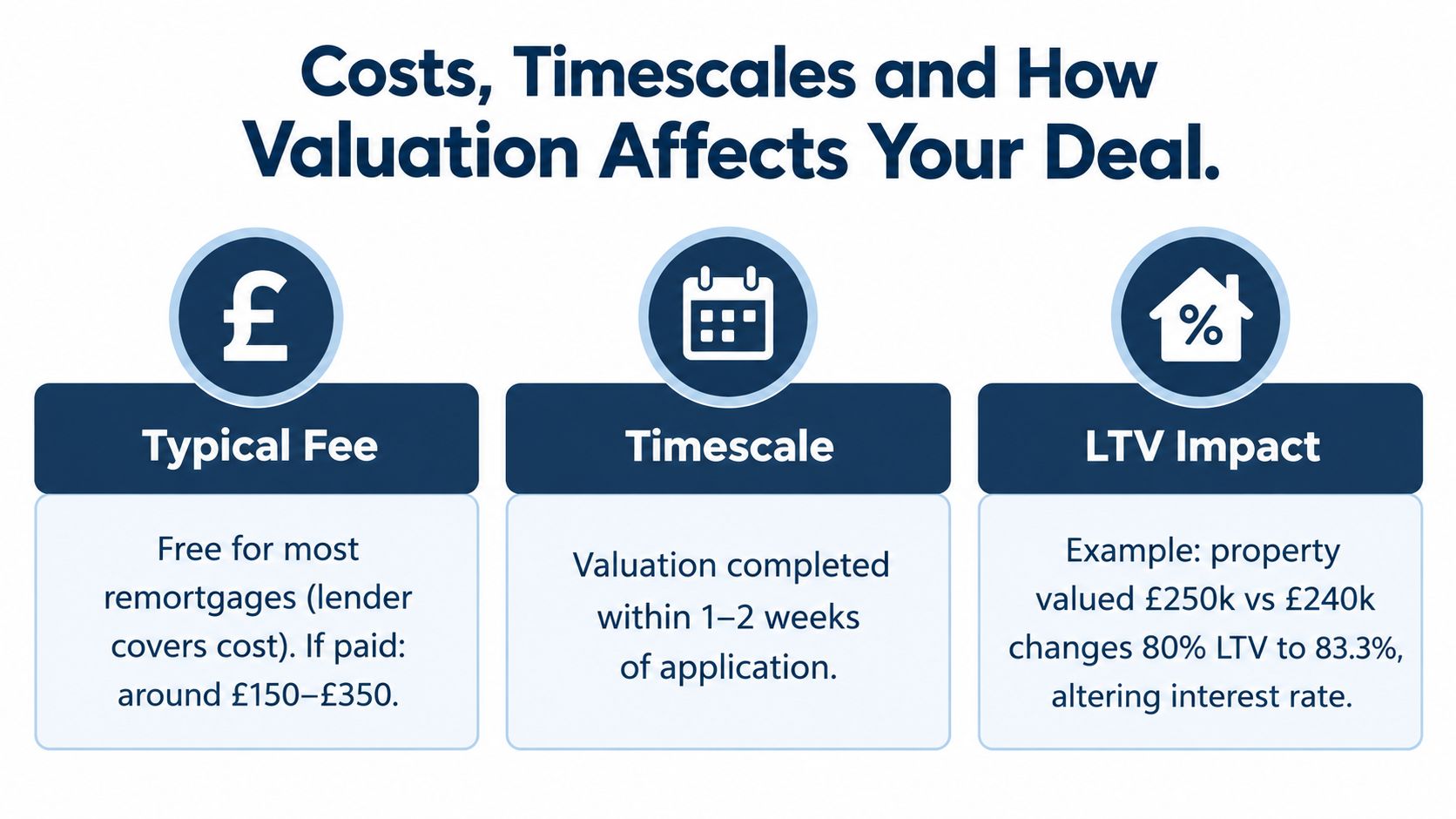
For a remortgage, the lender uses today's value, not the price you paid years ago. Your loan-to-value is your mortgage balance divided by the current value. If that value comes in lower, your LTV goes up. Simple.
That matters because lenders price in bands. A small drop can push you from one band into another and knock you onto a worse product. In London, where mortgage balances are often high, even a modest change in value can have a noticeable effect on the deal.
The valuation can be free, cheap, or expensive
Some lenders cover the basic mortgage valuation. Some charge for it. Some use an automated valuation model or a desktop assessment, which can be quicker but can also be less forgiving where the property is unusual, heavily altered, on a short lease, or hard to compare properly.
If you want a proper breakdown of survey and valuation pricing, read this guide on how much a house valuation costs.
Do not confuse the lender's fee with a full inspection. You are paying for a lending decision, not a condition report.
Timescales depend on the valuation type
An AVM or desktop valuation can come back fast. A physical inspection usually takes longer because someone has to visit, report, and send the figure back to the lender.
Delays usually come from access problems, leasehold paperwork, title issues, or the lender asking follow-up questions about alterations, damp history, movement, or non-standard construction. In London flats, short leases and clumsy lease wording slow things down more often than owners expect.
If your current fixed rate is about to end, do not leave this to the last minute.
Check the whole deal, not just the rate
A remortgage only works if the numbers still stack up after the costs.
Look at these together:
- Arrangement fees: A lower rate with a hefty fee is not always cheaper.
- Early repayment charges: These can wipe out the saving if you switch too soon.
- Valuation result: A lower figure can reduce the amount available or push you into a higher LTV bracket.
- Legal costs: Some deals include them. Some do not.
- Timing: If the remortgage drifts past the end of your current deal, the standard variable rate can undo the benefit quickly.
Why it bites harder in London
London owners feel valuation changes more sharply because values are higher, borrowing is larger, and rate bands matter more. A small shift in the valuer's figure can mean a different monthly payment, a reduced advance, or the end of the product you wanted.
That is the issue in places like Forest Hill, Dulwich, Greenwich, and Balham. The valuation is not a formality. It directly affects what the lender will offer.
Avoiding Pitfalls and Getting an Accurate Valuation with Corinthian Surveyors
The biggest pitfall is trusting the wrong number. Estate agent estimates are useful for marketing discussion. They are not the same as secured-lending evidence.
The second mistake is hiding awkward facts. If the rear extension has no sign-off, if the flat roof leaks or if the loft room is being described as a bedroom when it doesn't have proper approval, say so. These points usually come out anyway. Better to deal with them properly.
What a down valuation actually does
A lower-than-expected valuation is often called a down valuation. In remortgage terms, that means the lender's surveyor has concluded the property is worth less than you expected, and the lender may reduce the amount they will lend or place you in a worse rate band because the LTV has increased, explained in this guide to down valuations on remortgage.
That can be frustrating, but it isn't always final.
How to challenge it properly
Don't send an emotional email saying the valuer is wrong. Send evidence.
Use this checklist:
- Comparable sales: Recent, nearby and similar. Same road is not enough if the layout, tenure or condition differ.
- Correction of factual errors: Wrong bedroom count, missed parking, wrong floor area, wrong tenure detail.
- Documents for improvements: Completion certificates, approvals and proof of material works.
- Local context: If your part of Southwark, Lewisham or Bromley has unusual housing stock, make sure the comparables reflect that.
Keep the request short and organised. Lenders may allow a reconsideration, but they won't revise a figure because the owner is annoyed.
When an independent valuer is worth paying for
If the remortgage is important and the number looks plainly off, an independent valuation can help you decide whether to push back, change lender or pause the transaction. That's especially true with period homes, conversions, leasehold complications and investor stock.
Corinthian Surveyors London LTD is one example of the type of firm to use in that situation. It's an independent practice in Forest Hill, regulated by RICS, with RICS and CABE credentials and no ties to lenders, estate agents or developers. That independence matters when you need a straight view rather than a panel lender process.
A proper valuation should stand up because the evidence stands up. That's the whole point.
FAQ
Can I appeal a remortgage valuation?
Yes, sometimes. You'll need evidence, not opinion. The strongest points are factual errors, better comparable sales and documents supporting works or layout.
Does a remortgage valuation check for defects?
Not in the way a survey does. A lender valuation is mainly about the property as security for the loan. It may note obvious problems, but it is not a condition survey.
Will the valuer come inside my flat?
Sometimes yes, sometimes no. Many lenders use AVMs or desktop valuations for straightforward remortgages. Flats, unusual properties and cases with weaker evidence are more likely to get an inspection.
What if my London flat is valued lower than expected?
Check the lease details, the comparable sales used and whether the valuer may have missed something material about the flat or block. If the figure still looks wrong, ask the lender about their reconsideration process and back your challenge with proper evidence.
If you need an independent view before you remortgage, or you need a valuation that isn't tied to a lender panel, Corinthian Surveyors London LTD handles residential market valuations across London and the South East. If you're in Forest Hill, Lewisham, Greenwich, Bromley or nearby and want plain advice on the right survey or valuation, call 0800 00 16 422 and sort the evidence before the lender's figure derails the deal.