
What Is House Valuation and How It Actually Works
You've accepted an offer, your lender has asked for information, or a solicitor has mentioned probate. Someone then asks, “What's the house worth?” That sounds like a simple question, but the correct answer depends on why the valuation is needed, who will rely on it and the date it must reflect.
A house valuation is a professional opinion of a property's market value, supported by evidence and stated as at a particular date. It isn't the asking price on Rightmove, an estate agent's hopeful figure or an online estimate produced from broad property data. The same freehold or leasehold home can require different valuation treatment for a sale, mortgage, probate, matrimonial proceedings or tax calculation.
Table of Contents
- What House Valuation Really Means
- Market Valuation vs Mortgage Valuation
- How Valuers Actually Arrive at a Figure
- When You Need a Valuation and Which Type Fits
- What a Defensible Valuation Looks Like in Practice
- The Drivers That Move a Property's Value Up or Down
- RICS Red Book Valuations Against Cheaper Alternatives
- Putting It Into Action and What to Do Next
What House Valuation Really Means
House valuation means assessing what a property would reasonably exchange for in the open market at a defined valuation date. A valuer considers the property itself, its location, condition, tenure and relevant market evidence before reaching a reasoned opinion.
That definition matters because property value isn't fixed in isolation. A three-bedroom terrace in Lewisham might attract one figure for an ordinary sale, another for a probate valuation dated to a death and a different assessment for a capital gains tax calculation requiring a historic date. The property hasn't changed because the purpose has changed, but the evidence, assumptions and reporting requirements might.
The official UK market series provides an important reference point. The UK House Price Index is built from sales data supplied by HM Land Registry, Registers of Scotland and Land and Property Services Northern Ireland. The Office for National Statistics calculates it using a hedonic regression model, which adjusts for property attributes. It publishes average prices, sales volumes and monthly and yearly percentage changes, with a January 2015 base of 100.
That makes the index useful for understanding market movement. It doesn't replace a valuation of your particular home.
Practical rule: A valuation should always state its purpose and valuation date. Without those two points, the headline figure may be unsuitable for the decision you're making.
An asking price is a marketing decision. An estate agent may recommend a figure designed to attract viewings, test demand or win an instruction. A formal valuation is different. It should explain the basis of value, identify comparable evidence and account for differences between the subject property and the properties used for comparison.
The official UK property data also distinguishes completed residential transactions from non-market-value events such as remortgages. A remortgage figure can represent a valuation rather than a sale price, so it shouldn't be treated as equivalent evidence.
Market Valuation vs Mortgage Valuation
These two terms are often confused. They serve different clients and answer different questions.
A market valuation, often prepared under the RICS Red Book framework, is commissioned by the person or organisation that needs an independent opinion of market value. It may support a sale, probate, inheritance tax, matrimonial separation, capital gains tax work or shared ownership staircasing.
A mortgage valuation is commissioned by the lender. Its job is to decide whether the property provides adequate security for the proposed loan. It isn't a survey for the buyer and it isn't designed to identify every defect or establish a negotiating figure.
The RICS guidance on residential valuations explains that ordinary residential property is generally assessed using the market approach, based mainly on comparable completed sales. A mortgage valuation may involve a limited inspection, desktop assessment or drive-by review, depending on the lender's instructions and the property.
| Feature | Market valuation (RICS) | Mortgage valuation |
|---|---|---|
| Who instructs it | The owner, solicitor, executor, court or another interested party | The mortgage lender |
| Who pays | The person commissioning the report | Usually the borrower, through the mortgage process |
| Main purpose | Establish market value for a defined purpose | Confirm acceptable loan security |
| Inspection depth | Depends on the instruction, but may involve a full internal inspection | Often limited, desktop-based or external, depending on lender requirements |
| Defect reporting | May record relevant defects affecting value | Not a substitute for a building survey |
| Use in negotiation | Can provide independent evidence | Generally not intended for buyer price negotiations |
| Responsibility | The valuer reports to the commissioning client | The valuer reports to the lender |
A mortgage valuation can say that a property is acceptable security while failing to tell you about defective roof coverings, damp, timber decay or unauthorised alterations. That's why a buyer who relies only on the lender's report can still inherit expensive problems.
For a buyer in Forest Hill, Peckham or Greenwich, the sensible combination is usually a lender's mortgage valuation plus an independent RICS survey suited to the property. You can read more about the distinction in this guide to mortgage surveyors and valuation.
How Valuers Actually Arrive at a Figure
RICS recognises three main valuation approaches. The valuer chooses the method that fits the property and the available evidence.
The market approach compares the property with relevant completed sales. This is the normal method for an ordinary house or flat because buyers and sellers operate in an active residential market.
The income approach considers the income a property can generate. It's more relevant to investment property and income-producing assets than to an owner-occupied terrace.
The cost approach considers the cost of replacing or reproducing the asset, adjusted for depreciation and other factors. It can assist where there's little direct sales evidence, although it isn't normally the primary method for a standard London home.
For a Victorian terrace in Brockley, a valuer will usually start with recent sales of similar terraces nearby. The comparison must go beyond the estate agent particulars. Floor area, bedroom arrangement, rear garden, parking, condition, extension quality and location within the street all matter. A period house on a busy road shouldn't be treated as identical to one facing a quiet green.
The valuer then adjusts the evidence. An additional bathroom may support an uplift, while a short lease, poor condition or inferior location may justify a deduction. Those adjustments must be reasoned and proportionate. They shouldn't be invented to force the evidence towards a preferred result.
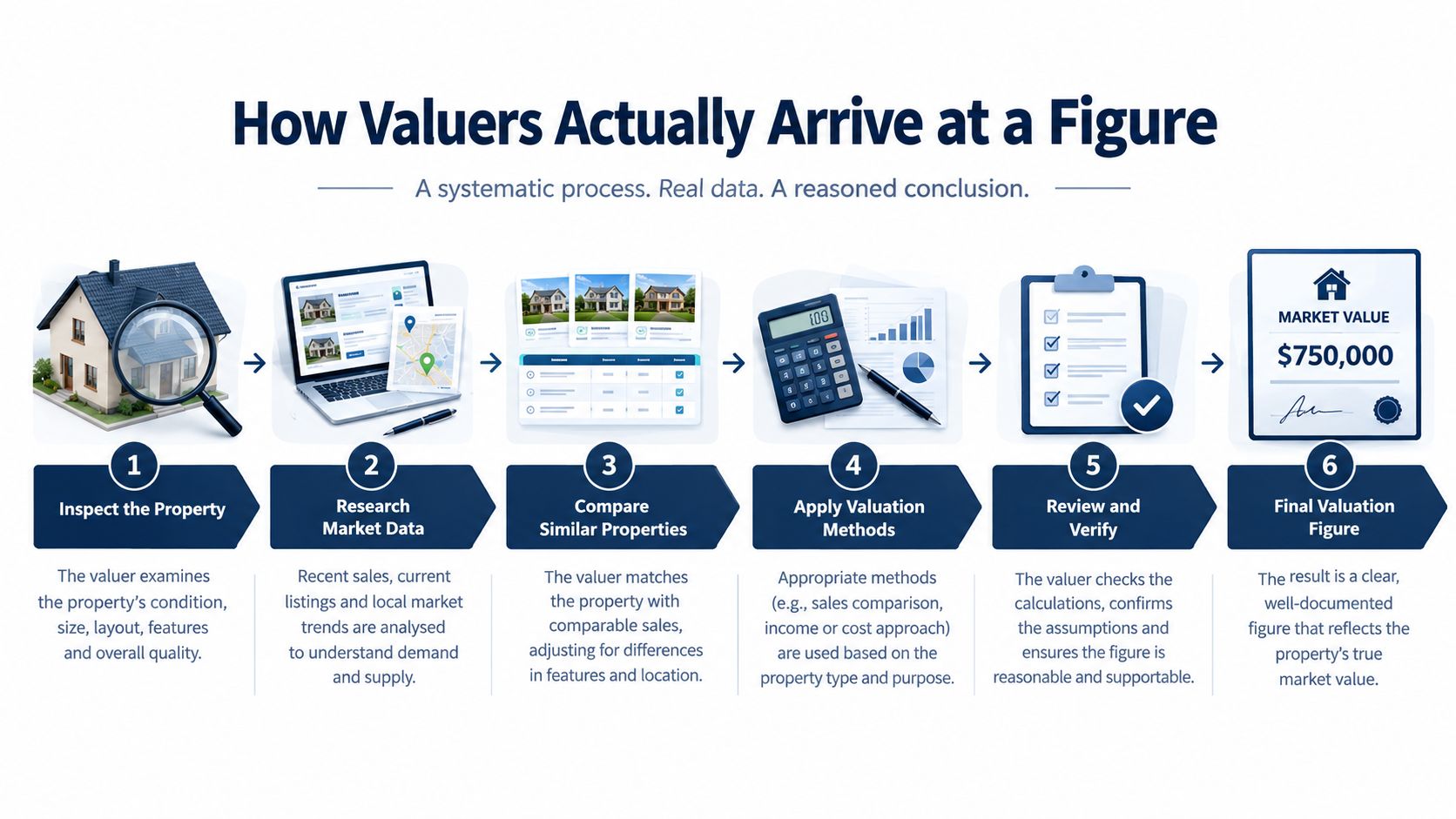
A sound report leaves an audit trail. It identifies the comparable properties, explains why they were selected, records the valuation date and sets out assumptions and limitations. A price per square metre or square foot can help compare properties, but it's a benchmark, not an automatic answer.
Online comparable-sales platforms can help a professional gather and organise transaction evidence. For readers wanting to understand that process, the BatchData valuation platform provides useful background on comparable sales analysis. It doesn't remove the need for a valuer to inspect the property and exercise judgement.
When You Need a Valuation and Which Type Fits
The right report depends on the event that triggered the valuation. Don't order a formal report because the word “valuation” appears in a solicitor's email. First establish what the figure must do.
| Reason you need a valuation | Best-fit report type |
|---|---|
| Selling a home | Estate agent appraisal for marketing, or an independent market valuation where formal evidence is needed |
| Buying a home | Independent RICS survey for condition, plus the lender's mortgage valuation |
| Remortgaging | Lender's valuation, with an independent inspection where condition or value is uncertain |
| Probate and inheritance tax | Date-specific open market valuation, usually prepared by a RICS valuer |
| Matrimonial separation | Independent Red Book market valuation suitable for solicitors or court proceedings |
| Shared ownership staircasing | Valuation prepared under the housing provider's requirements |
| Capital gains tax | Market valuation dated to the relevant tax event, including retrospective valuation where required |
| Landlord or tenant rent review | Market rent valuation based on the relevant tenancy and property evidence |
For probate, HMRC requires the property's open market value at the date of death. That means the price the property might reasonably have achieved on the open market at that time, not the price an agent hopes to achieve months later. The HMRC inheritance tax manual sets out that date-specific requirement.
The gross property value must be established before estate liabilities are considered. A mortgage balance is accounted for separately as a debt in the estate calculation. It shouldn't be deducted from the property's gross market value within the valuation itself.
Selling is more straightforward, but a formal report can still matter. An estate agent appraisal helps set a marketing strategy. It carries less weight where a solicitor, executor, court or tax authority needs an independent figure. The practical guidance in what a valuation surveyor does can help you identify the correct instruction before paying for the wrong report.
What a Defensible Valuation Looks Like in Practice
A defensible valuation starts with the valuation date. For a normal sale, that may be the inspection or report date. For probate or capital gains tax, the valuer may need to assess market conditions retrospectively.
The next step is evidence. A valuer studies completed local sales and selects properties that are genuinely comparable. The UK House Price Index helps establish wider movement, but it can't account fully for a particular home's position, condition or lease terms. Local evidence remains essential.
For a London valuation, the inspection should record matters such as:
- Construction and age: Victorian brickwork, Edwardian detailing, 1930s construction or a converted warehouse each create different valuation considerations.
- Condition: Damp, subsidence, structural movement, timber decay, roof defects and poor alterations can affect marketability and price.
- Accommodation: Floor area, layout, extensions, bedroom count and bathroom provision must be considered together.
- Tenure: Lease length, ground rent and service charge can materially affect a flat's value.
- Location: A property in Blackheath, Catford or Dulwich may need different local comparisons even when the accommodation appears similar.
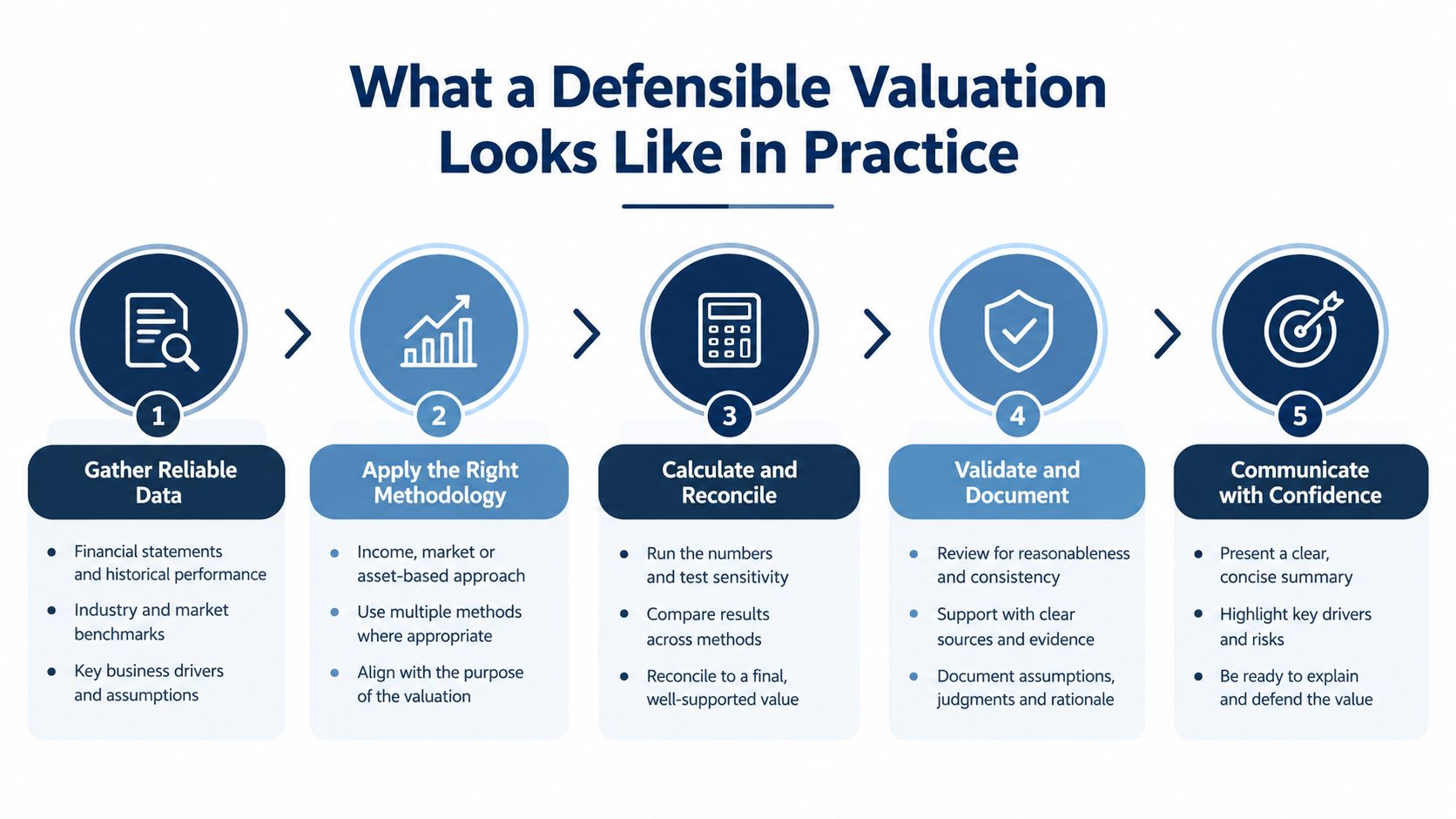
The finished report should state the basis of value, the date, the extent of inspection, comparable evidence, assumptions and any caveats. It should allow another professional to understand how the valuer reached the conclusion.
That matters in a disagreement. A report prepared for valuing property in disputes may need to withstand scrutiny from solicitors, opposing experts or a court. A casual estimate won't provide the same audit trail.
The Drivers That Move a Property's Value Up or Down
Location usually has the greatest influence, but “location” means more than the borough name. A house in Forest Hill can differ sharply in value depending on its position near a busy route, access to transport, outlook, flood history and the character of the immediate street. School catchments, local amenities and planning changes can also affect buyer demand.
Then comes the property itself. RICS measurement standards provide a consistent basis for recording floor area, but size alone doesn't settle the figure. A well-planned two-bedroom flat may be more useful than a larger home with dark internal rooms, awkward circulation or a compromised conversion.
| Value driver | Category | Typical direction of impact |
|---|---|---|
| Micro-location | External | Better outlook, transport access and quieter position generally support value |
| Floor area | Physical | More useful accommodation generally supports value |
| Layout | Physical | Efficient rooms and natural circulation usually help |
| Condition | Physical | Damp, roof defects and structural movement normally reduce value |
| Kitchen and bathrooms | Specification | Good-quality, serviceable fittings generally support buyer appeal |
| Garden and parking | External | Usable outside space and secure parking often support value |
| Lease length | Legal and financial | A shorter unexpired term can reduce value and mortgageability |
| Service charge and ground rent | Leasehold | High or unusual liabilities may reduce demand |
| Market evidence | Market | Recent relevant sales provide the strongest pricing reference |
For a converted flat in Bermondsey, the lease and management arrangements may matter as much as the internal finish. For a 1930s semi in Bromley, the roof, drainage, extensions, loft conversion and evidence of building regulation approval may carry greater weight. A period terrace in Lewisham may need careful attention to chimney breast removals, lath and plaster, lime mortar and original lead pipework.
Renovation can improve value, but not every pound spent returns a pound in the valuation. Kitchen and bathroom work may improve appeal, while poor-quality extensions or overly personalised finishes can narrow the buyer pool. This practical guide on how renovations add value is useful for thinking through improvement choices, although local London evidence should determine the final valuation.
Lease length requires particular care. Once the unexpired term drops below 80 years, it becomes a significant valuation consideration because of its effect on marketability, lending and lease extension costs. Don't apply a generic deduction without examining the lease and the relevant market evidence. For a London-specific discussion, see what affects property value in London.
RICS Red Book Valuations Against Cheaper Alternatives
A free appraisal, an online estimate and a RICS Red Book valuation aren't interchangeable.
An estate agent's appraisal is useful for deciding how to market a property. The agent knows local buyer behaviour and may understand which asking price is likely to attract interest. But the appraisal is generally part of winning or retaining an instruction. It isn't an independent professional valuation prepared for legal or tax reliance.
An online estimate is even more limited. It uses available property data and broad assumptions. It may provide a starting point, but it won't see the damp patch behind the wardrobe, the poor loft conversion, the short lease or the rear garden backing onto a noisy road.
A formal RICS valuation is a written professional opinion prepared under the applicable RICS standards. The valuer is independently accountable for the work and must explain the basis of value, evidence and assumptions. That makes it suitable for situations where another party may challenge the figure.
| Feature | RICS Red Book valuation | Estate agent appraisal | Online estimate |
|---|---|---|---|
| Inspection | Defined inspection and reporting scope | Usually an appraisal visit | No physical inspection |
| Evidence | Documented comparable evidence and professional analysis | Local market knowledge and sales strategy | Broad data inputs |
| Independence | Professional duty and declared assumptions | Connected to potential agency instruction | Often linked to lead generation |
| Legal or tax reliance | Suitable where the instruction requires it | Usually unsuitable | Unsuitable |
| Property defects | Considered where within the inspection scope | Limited assessment | Not identified |
| Report format | Formal written report | Appraisal or marketing advice | Automated result or range |
For an ordinary sale, an agent's appraisal may be enough to choose an asking price. For probate, matrimonial proceedings, capital gains tax or a dispute, use the formal report. Lenders, HMRC and courts need evidence that can be examined, not an instant number designed to start a conversation.
Putting It Into Action and What to Do Next
Start with the purpose. Ask the solicitor, lender, executor or housing provider what type of valuation they require and whether it must comply with the RICS Red Book. That one question can prevent delays and an unsuitable report.
Use this checklist before instructing a valuer:
- Confirm the purpose: Sale, mortgage, probate, tax, matrimonial work, rent or staircasing each has different requirements.
- Agree the valuation date: Record the date in writing, especially for probate and capital gains tax.
- Gather documents: Provide the title, lease, recent Energy Performance Certificate, floorplan and records of extensions or alterations.
- Arrange access: Choose an internal inspection where the figure will be relied upon. A desktop-only instruction has obvious limits.
- Ask about assumptions: Clarify whether the valuation assumes vacant possession, a particular tenure, planning consent or repair works.
- Check the report: Confirm the turnaround, fee structure, intended recipient and whether the report can be shared with the relevant solicitor, lender, buyer or authority.
An independent practice should take the brief first, inspect the relevant evidence, examine the property and explain how the conclusion was reached. Corinthian Surveyors London LTD is an independent firm of RICS Chartered Surveyors and Valuers based in Forest Hill. Clive Thompson holds RICS and CABE qualifications and has over 30 years of experience in the built environment. The firm is regulated by RICS, is a member of the RICS Valuers Registration Scheme and has insurance with Royal Sun Alliance.
Corinthian has no ties to lenders, estate agents or developers. Its residential work covers market, probate, matrimonial, capital gains tax, market rent and shared ownership valuations across London, the Home Counties and the South of England. The firm also provides Level 1, Level 2 and Level 3 RICS surveys where a valuation needs to be considered alongside the property's condition.

If you need a market, probate, matrimonial, capital gains tax or shared ownership valuation, Corinthian Surveyors London LTD can identify the correct basis and prepare an evidence-led report for the intended purpose. Call 0800 00 16 422 or visit Corinthian Surveyors London LTD to arrange the next step.