
Surveys and Valuations Explained for London Homebuyers
You've had the offer accepted, the agent is pressing for a quick answer and the mortgage lender has started talking about a valuation. This is the point where buyers in Lewisham, Greenwich, Bromley, Croydon and across South East London get caught out. A survey and a valuation are not the same job, and if you mix them up you can end up paying for the wrong thing and relying on the wrong report.
A survey looks at the physical condition of the property. A valuation gives an evidence-based opinion of market value for a specific purpose, often lending, probate, tax or separation. RICS sets the standards for both, but the output is different and the user is different.
The practical choice is simple. If you want to know about damp, roof defects, structural movement, timber decay or other visible issues, you need a survey. If you need a figure for a lender, HMRC, a solicitor, a housing association or an insurer, you need a valuation. Sometimes you need both, and the same independent RICS valuer can often handle either side of that job.
Table of Contents
- Surveys and Valuations Explained
- The Three RICS Survey Levels
- What a HomeBuyer Report Actually Covers
- When You Need a Valuation Instead
- The Process, Timeline and Costs
- What a Mortgage Valuation Does Not Do
- Practical Advice for London Buyers, Sellers and Landlords
- FAQs and Next Steps for Commissioning a Surveyor
Surveys and Valuations Explained
You're at the kitchen counter, the offer has been accepted, and the question lands. Do you book a survey, a valuation, or both? That is where buyers get muddled, especially when an agent uses the two words as if they mean the same thing.
A survey is about condition. It tells you what is visible, what is wrong, what needs further investigation and what may cost you later. A valuation is about value, and in the UK a lender's valuation is for the lender's benefit, not yours as the buyer. The lender wants to know the property supports the loan, not to hand you a defect report.
That split matters in real life. UK consumer guidance says a valuation is done to satisfy the mortgage lender that the property is worth the amount being borrowed, while an independent survey is there to assess condition for the buyer's decision making. Survey prices also vary with the depth of inspection and the type of property, with RICS survey pricing statistics showing a Level 2 average of £403 on an average-priced property and £854 for a Level 3 on higher-value homes (RICS survey pricing statistics, UK consumer guidance).
Practical rule: if the question is “what's wrong with the building”, order a survey. If the question is “what is it worth for this purpose”, order a valuation.
For a plain-English valuation methodology overview, verticalrent's valuation guide is a useful external read. It will not replace a qualified surveyor's report, but it does show how a value opinion is built.
| Aspect | Survey | Valuation |
|---|---|---|
| Main purpose | Checks physical condition | Estimates market value |
| Main user | Buyer or owner | Lender, solicitor, HMRC, housing association or insurer |
| Focus | Defects, risk and repair | Supported value opinion |
| Output | Condition report | Valuation report |
| Best for | Buying decisions and renegotiation | Lending, probate, tax and legal work |
If you want the surveyor to inspect the building and also provide a value, that can be done. RICS Home Survey Level 2 includes both a survey and a valuation in one report, which is why it is so often used on London purchases where buyers need one document to support the deal. If you want the formal RICS explanation of survey types, what a RICS survey covers sets it out clearly. Corinthian Surveyors London LTD handles both sides of that split, but the report you need should always be driven by the problem you are trying to solve, not by what sounds cheaper.
The Three RICS Survey Levels
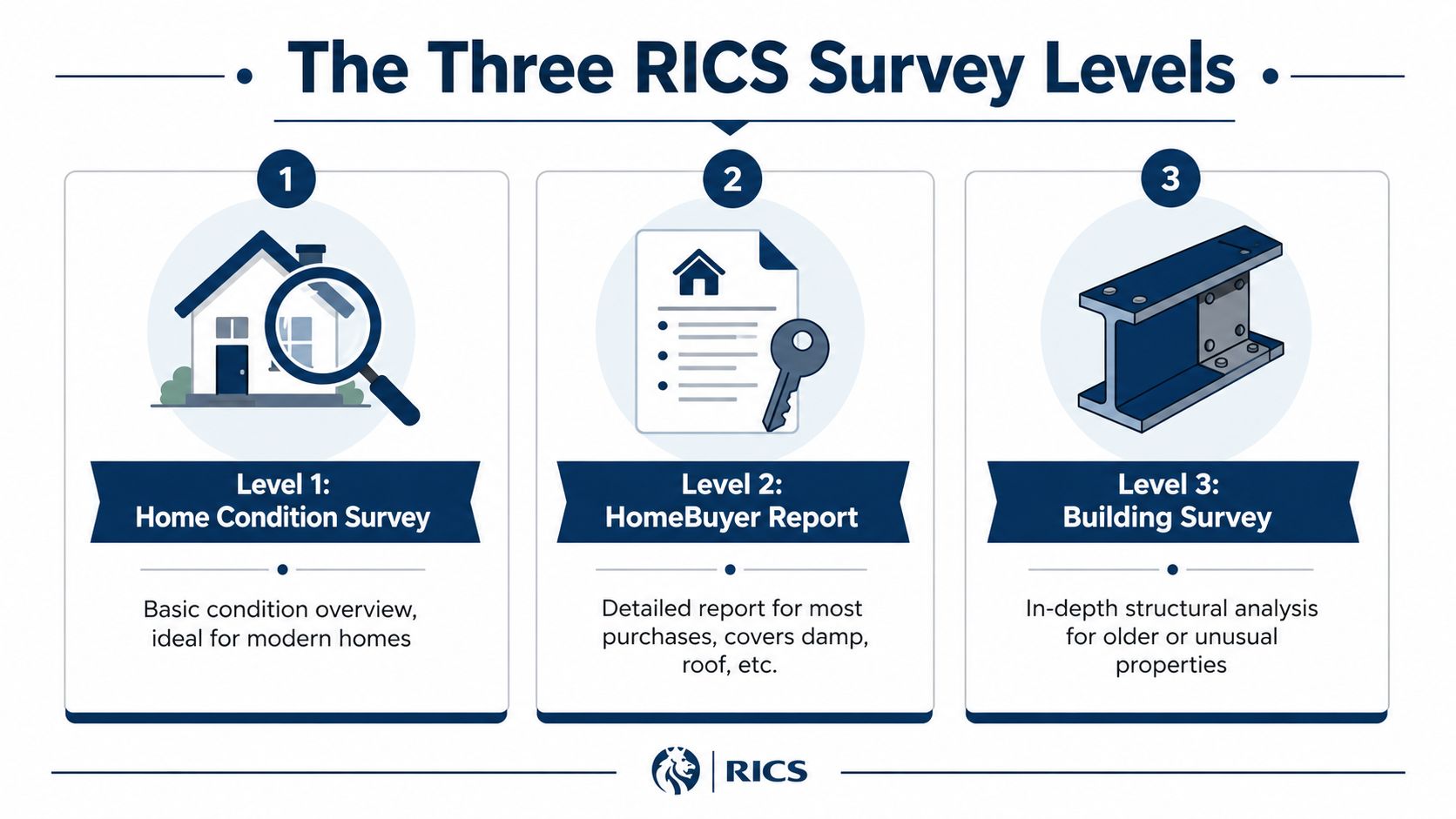
A modern flat in Lewisham or Catford usually doesn't need the same level of inspection as a Victorian terrace in Greenwich or a converted warehouse in Bermondsey. That's why the RICS levels exist. They match the depth of the inspection to the age, construction and complexity of the building.
Level 1 Home Condition Survey
This is the lightest option. It gives a straightforward overview of condition and is suited to newer or more conventional homes where you mainly want a basic check before exchange. It's the right kind of report when the building is simple, the risk profile is low and you do not need a detailed analysis of defects.
Level 2 HomeBuyer Report
This is the workhorse for most London purchases. It suits standard houses and flats in reasonable condition, and it uses the traffic light rating system to show what is urgent, what needs attention and what looks acceptable. That makes it easier to read quickly, especially if you're buying a 1930s semi in Bromley or a post-war flat in Croydon.
Level 3 Building Survey
This is the deepest RICS survey. It's the right choice for older, altered, larger or more unusual properties, including period houses, leasehold conversions and buildings with a history of movement or patchy maintenance. If you're buying a Victorian house in Peckham, a maisonette in Camberwell or a property with obvious structural quirks, Level 3 is usually the sensible call.
The government's survey guidance says samples should be representative and that, if statistical analysis is needed, 400 respondents is probably the floor and 800 is much better (Survey Technical Guidance). The point transfers neatly to property. The better the evidence and the clearer the scope, the better the result. A thin, rushed inspection gives you false comfort.
The survey level should follow the building, not your wish to save a few pounds. If you need help deciding, start with the property type and the defects you're worried about, then choose the report that answers that question. The RICS survey overview is a sensible place to check the structure before you instruct anyone.
What a HomeBuyer Report Actually Covers
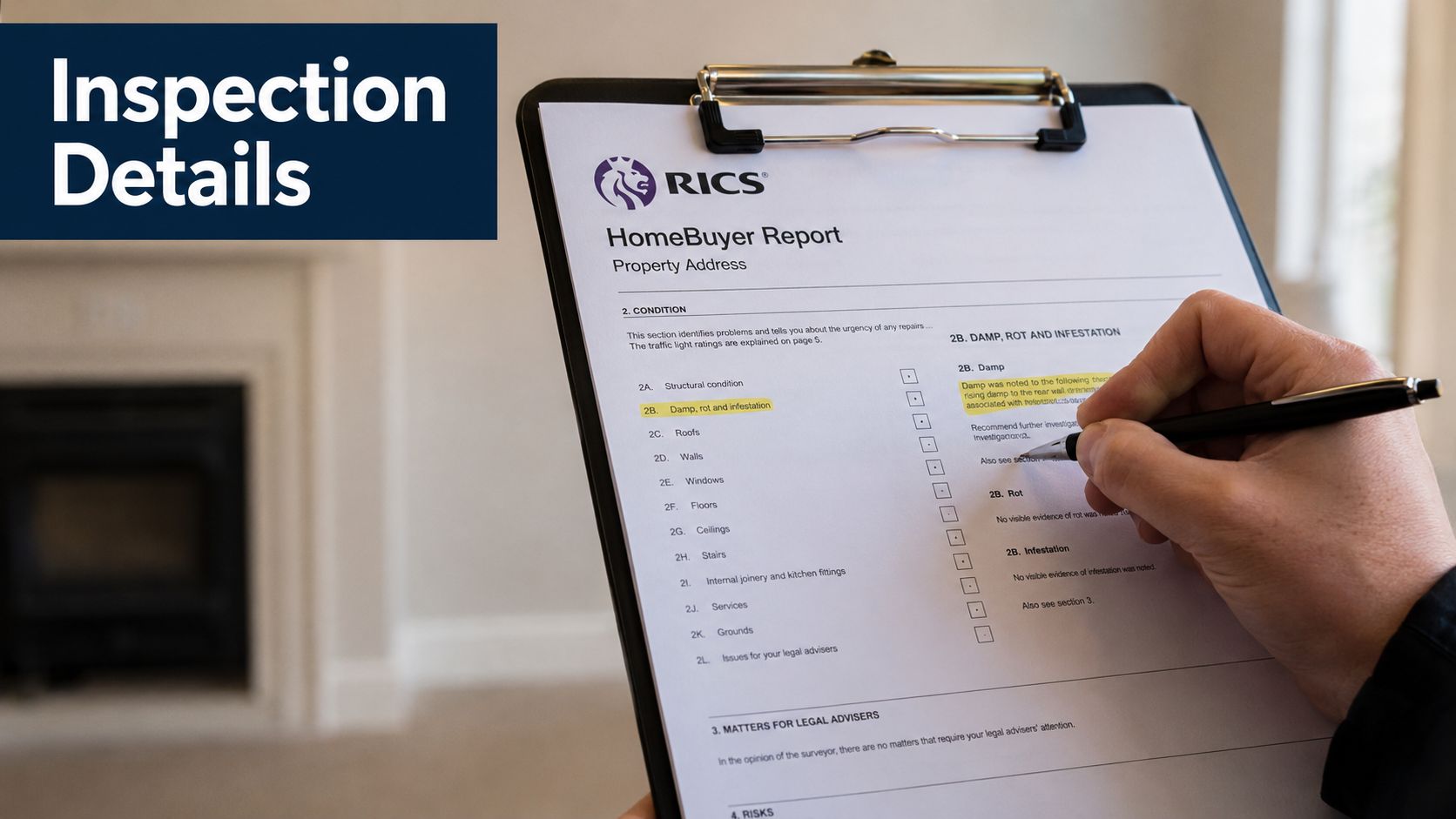
The RICS HomeBuyer Report is the one most London buyers should understand first. It's built for mainstream property purchases where you want a clear read on condition without going into the depth of a full Building Survey. It looks at visible issues that matter to a buyer's decision, especially the defects that can lead to repair bills after completion.
A proper Level 2 report will usually cover damp, roof condition, timber decay, subsidence signs, structural movement, serviceable visible elements and any obvious defects that change the risk picture. It does not rip the building open. It won't test hidden pipework behind finished walls or carry out specialist asbestos sampling unless a separate specialist is brought in.
The rating system is what makes it useful. Red means serious or urgent. Amber means concern, further investigation or repair is likely. Green means the element appears acceptable at the time of inspection. That colour coding is what helps a buyer decide whether to renegotiate, ask for a repair or move on.
A 1930s semi in Bromley might come back with a few amber items around the roof covering and old windows. A Victorian maisonette in Camberwell may throw up more issues because older conversions often hide previous alterations, imperfect fire separation or signs of moisture movement around chimneys and timber floors. The report is only as good as the building in front of it.
Use the report like a negotiation tool, not a trophy. If the red and amber items change the real cost of ownership, put them back into the price discussion before exchange.
If you want a deeper plain-English guide to this report type, the HomeBuyer survey overview is worth a look. In practice, the report should tell you what matters now, what can wait and what needs a specialist.
A good Level 2 report is not about flooding you with pages. It's about giving you the facts you need to decide whether the property is still the right one.
When You Need a Valuation Instead
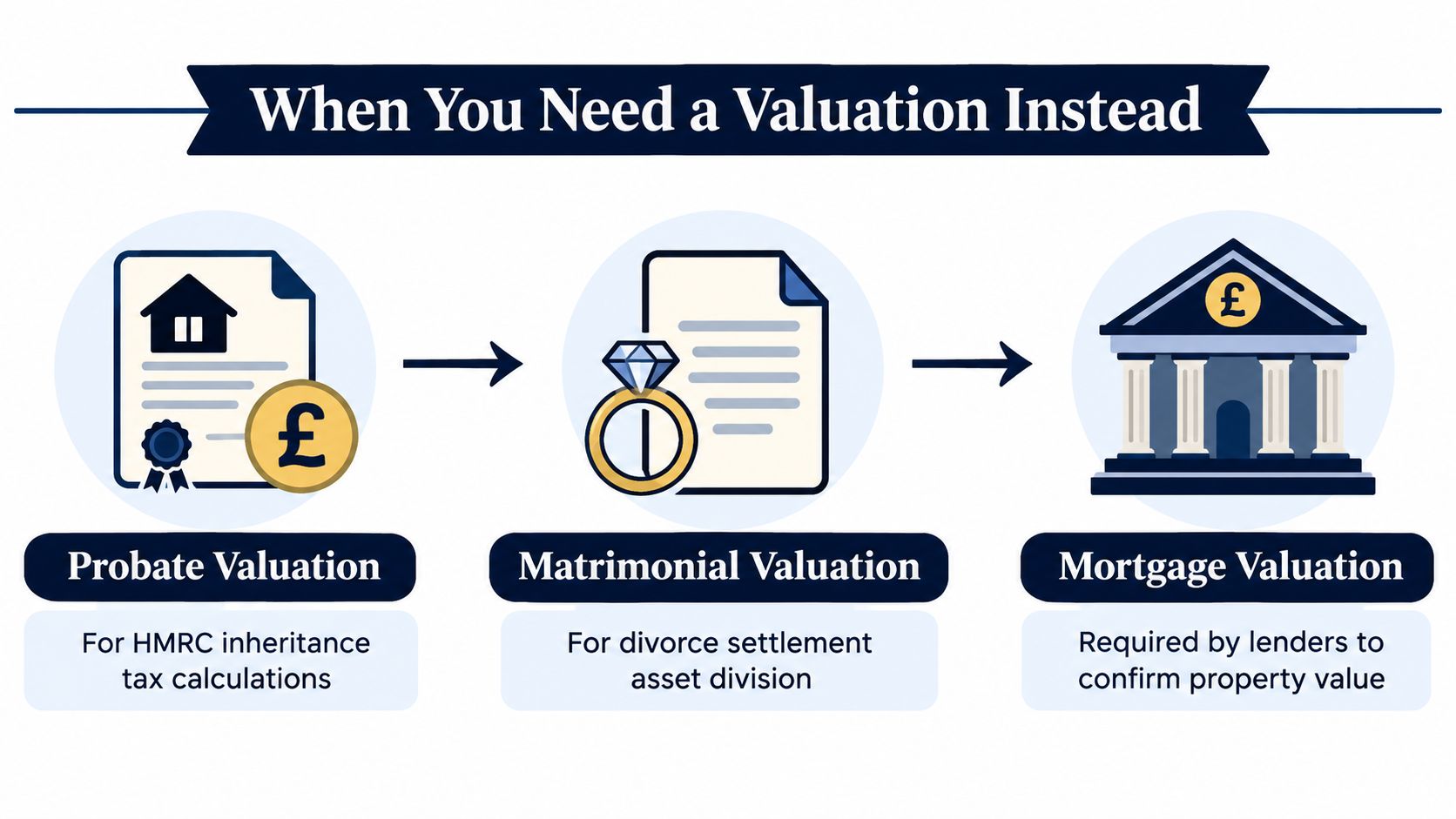
A valuation becomes the main event when the number itself is the point. That happens in probate, divorce, tax work, shared ownership staircasing, rent reviews and insurance. In those cases, a condition report won't answer the legal or financial question being asked.
Common reasons to instruct a valuation
- Probate valuation: used for HMRC inheritance tax and estate administration.
- Matrimonial separation valuation: used by solicitors and sometimes the court when assets need dividing.
- Capital gains tax valuation: often needs a retrospective date, not just a current market figure.
- Shared ownership staircasing valuation: used where the housing association needs a current value.
- Market rent valuation: used by landlords and tenants where rent needs an evidence-based figure.
- Building reinstatement cost assessment: used for insurance, because the rebuild figure matters, not the sale price.
These are not casual opinions. They are written valuations with a purpose, and the valuer needs to be independent. A lender-appointed valuer is working for the lender. An independent RICS-regulated valuer works without a sale incentive or a lending tie.
RICS Global Standards require the valuer to gather enough evidence through inspection, inquiry, research, computation or analysis so the opinion is properly supported. They also require environmental factors, including energy-rating schemes and required improvements, to be addressed where they matter to value (RICS Global Standards). That is why weak comparables or poor building information can drag down confidence in the final figure.
For a practical comparison of how formal property assessments are used in different settings, the Unitism guide to DC assessments gives a useful external angle. It's a different market, but the discipline is the same, evidence first and opinion second.
Corinthian Surveyors London LTD carries out market, probate, matrimonial separation, capital gains, rent and reinstatement valuations for residential property. If the number is what you need, do not ask for a survey and hope it turns into a valuation by magic. Ask for the right report at the outset.
The Process, Timeline and Costs
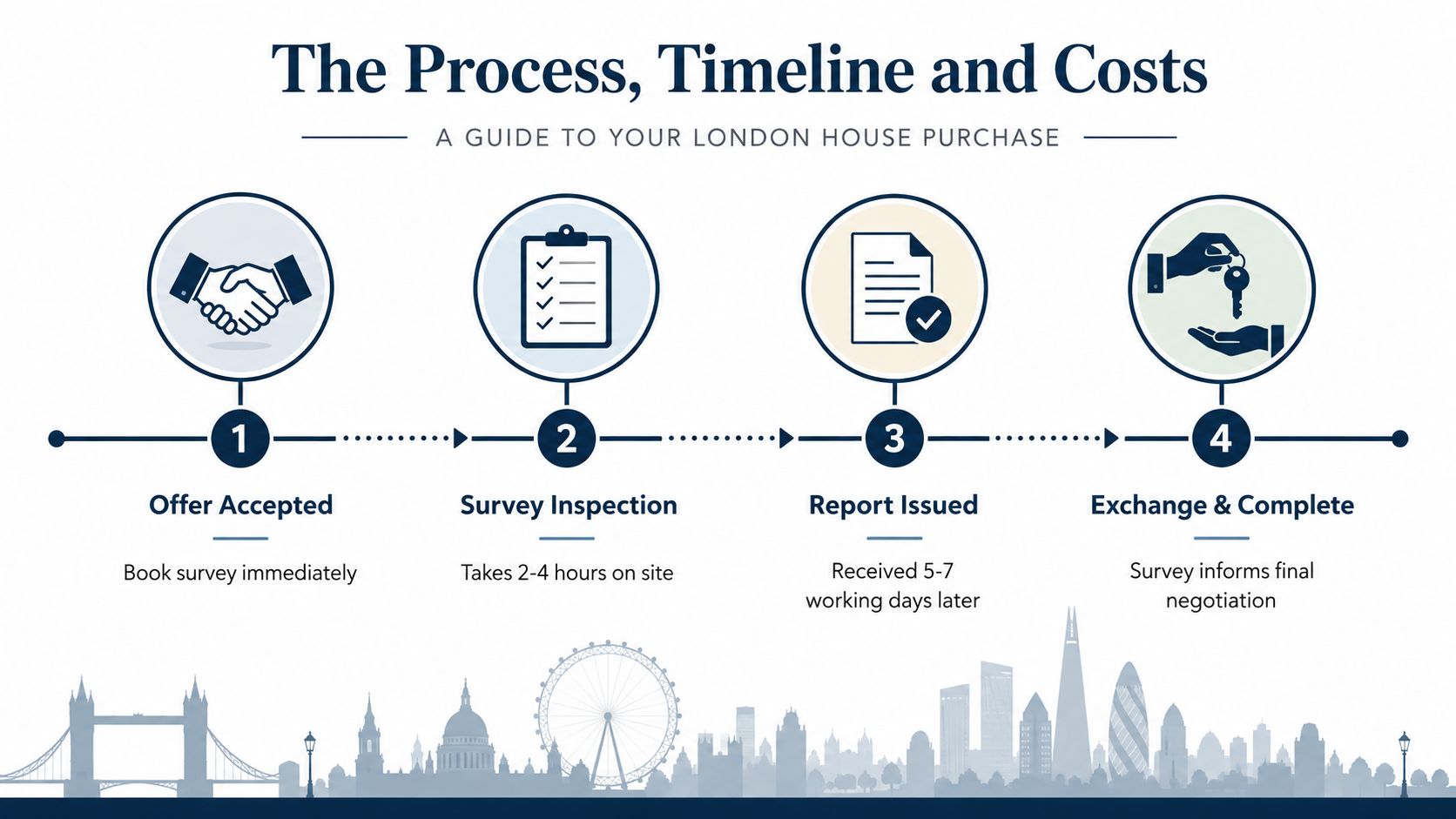
A London purchase needs discipline. Offer accepted, survey booked, report read, negotiation handled, then exchange and completion. Leave the survey until the end and you lose the main chance to use defects in price talks.
Book the inspection as soon as the offer is accepted. That gives the surveyor time to get on site before the legal work has moved too far ahead. A standard inspection usually takes a few hours on site, then the written report follows after that. If the report flags something serious, you may need a follow-up specialist, and that is where extra cost starts to appear.
The fee depends on the type of report and the complexity of the building. Current RICS survey cost averages show £403 for an average Level 2, £439 for a Level 2 with valuation, and £854 for a Level 3 on a higher-value property. Use those figures as context, not as a quote for your property. The building itself sets the fee, not a neat national average.
A lender's valuation fee sits in a different box. That fee is paid to the lender or its appointed valuer and it does not buy you a buyer-focused condition report. If you need to see where that sits in the transaction, the mortgage valuation note sets it out clearly.
Best practice: tell your solicitor the survey is booked and ask them to keep the timetable flexible until the report lands. Negotiation works before exchange, not after.
Shared ownership staircasing valuations and lease extension work run on a different track. The housing association or landlord often controls the timetable, so do not expect them to move at purchase speed. That is why you need a valuation specialist who understands the process as well as the number.
What a Mortgage Valuation Does Not Do
A mortgage valuation is there to protect the lender. It confirms the property is suitable security for the loan and that the lender is comfortable advancing the money. It is not a condition report for you, and it is not meant to identify the sort of defects that show up in a proper RICS survey.
That report may be brief, may not be shared in full and may be written only for the lender. The consumer guidance is clear on the distinction, and it is still one of the biggest mistakes buyers make. People see the word valuation and assume someone has inspected the roof, checked for damp and looked at the structure. That is not what the lender bought.
This is why buyers in London should not lean on a mortgage valuation as a safety net. If you are buying a flat in Bermondsey with a long lease, a terrace in Lewisham with signs of movement or a family house in Greenwich that has been altered over the years, you need an independent survey that works for you, not for the bank. The lender's figure is about security. Your survey is about risk.
The plain answer is this. In most London purchases, you should commission your own RICS survey and treat the lender valuation as a separate lender process. That keeps the two jobs in their proper lanes and stops you making a decision on incomplete information.
Practical Advice for London Buyers, Sellers and Landlords
If you're buying in South East London, match the report to the building. Victorian terraces in Lewisham, Forest Hill and Brockley often need a sharper eye on roofs, chimneys, old timber and previous alterations. Ex-local authority blocks and 1930s semis in Bromley or Croydon can look plain from the outside and still hide roof, drainage or condensation issues.
Sellers should stop relying on an estate agent's estimate as if it were a valuation. It isn't. If the property is being used for probate, separation or tax work, get a proper market valuation from an independent valuer. That also helps where a rebuilding figure is needed for insurance, because the reinstatement cost is not the same as the asking price.
Landlords need to think differently again. A market rent valuation is a separate exercise, and a pre-purchase survey still matters if the property is being bought as an investment. In London, flat conversions, maisonettes and listed buildings need local knowledge as much as technical skill.
For buyers and landlords who want a second opinion on property data and investment decision making, Action Accountants Limited's guide is a useful outside read. It sits alongside, not instead of, a survey or valuation.
Before you instruct any surveyor, ask these things:
- Are you RICS or CABE qualified? You want the person carrying out the work to hold the right professional credentials.
- Are you independent? Check there are no ties to lenders, estate agents or developers.
- Are you insured? Professional indemnity cover should be in place.
- Will I speak to the surveyor directly? You should not be passed around a sales desk.
- Which report do you recommend for this property? The answer should be specific, not generic.
Corinthian Surveyors London LTD is independent, based in Forest Hill and works across London boroughs and the Home Counties. Clive Thompson holds RICS and CABE qualifications and the firm is a member of the RICS Valuers Registration Scheme. That matters when the job is a real one, not a glossy brochure exercise.
FAQs and Next Steps for Commissioning a Surveyor
How long does a survey take. Usually a few hours on site, then the written report follows after that. For a straightforward flat in Southwark the job may be quick, but an older house in Greenwich or Bromley can take longer because the defects are less predictable.
Do I need a survey on a new build. Yes, if you want independent eyes on the property. A snagging list is not the same as a proper condition report, and warranties do not remove the need to know what you're buying.
Can I use a survey to renegotiate the price. Yes, if the report gives you evidence of defects, repair cost or risk. Do it before exchange, and do it with specifics, not vague complaint.
What happens if the survey finds serious defects. You either renegotiate, ask for repairs, get a specialist opinion or walk away. That's the whole point of paying for the report in the first place.
Have your address, property type, tenure and mortgage position ready, then tell the surveyor what worries you most. Corinthian Surveyors London LTD typically turns reports round quickly, and because the firm is independent from lenders, estate agents and developers, the advice stays focused on your decision, not anyone else's agenda. Call 0800 00 16 422 if you want a per-property quotation and a proper steer on the right report.
If you need a straight answer on surveys and valuations, Corinthian Surveyors London LTD can handle the inspection, the valuation or both, depending on what the property and transaction need. Visit Corinthian Surveyors London LTD to see the residential services, then choose the report that fits the job rather than the cheapest label on the page.