
Estate Agents Valuations: A Complete Guide for 2026
An estate agent valuation is a market appraisal, not a formal valuation, and that difference matters in law, lending and tax. Many people hear one number and treat it as fact. It isn't. It is a commercial judgement built from a narrow evidence base, and the figure can be pushed up or down by the agent's interest in winning your instruction.
That is why the spread between agents tells you so much. A 5% gap between the highest and lowest figure is described as normal, 10% to 20% is common, and anything wider than 20% is a red flag that the high figure may be more tactic than valuation, according to the evidence-based guidance in this UK valuation note. If you are dealing with a £500,000 home, that normal spread can already be £25,000. That is enough money to matter, so you need to know what sits behind the number.
Table of Contents
- What an Estate Agent Valuation Is
- How Estate Agents Produce a Valuation
- Why Three Valuations Can Give Three Different Numbers
- Overpricing, Underselling and How to Spot the Tactic
- Estate Agent Valuation vs RICS Formal Valuation
- How to Prepare for Valuation Visits and What to Ask
- What to Do Next and When to Bring in a Surveyor
- Frequently Asked Questions About Estate Agents Valuations
What an Estate Agent Valuation Is
An estate agent valuation is a market appraisal, not a formal valuation, and that difference matters in law, lending and tax. It is the agent's view of where a property should sit in the market if it is marketed sensibly, not a certified figure that stands up on its own in court or with HMRC.
The purpose is commercial. The agent wants your instruction, wants the asking price to sound credible and wants enough interest to generate viewings and offers. That is why a number from an estate agent can be useful, but only as a starting point.
A formal valuation is different. A RICS valuer works to a professional standard and produces a figure that can be relied on for legal, tax or financial work where the number may be challenged. If you are selling a normal house in Crystal Palace or a flat in Deptford, the agent's appraisal may be fine for marketing. If you are dealing with probate, a matrimonial split or capital gains tax, it is the wrong tool.
Practical rule: if the figure might be argued over later, do not rely on an estate agent's opinion alone.
The scale of the UK estate agency market shows why this matters. IBISWorld estimated the Estate Agents in the UK industry at £15.5 billion in 2026, after £15.4 billion in 2025 IBISWorld industry profile. In a sector that large, valuation is not a side issue. It is the first pitch.
For a homeowner, the mistake is mixing up a sales appraisal with a valuation that carries weight outside the sales office. A plain-English explanation of the line between the two is in this house valuation London guide.
How Estate Agents Produce a Valuation
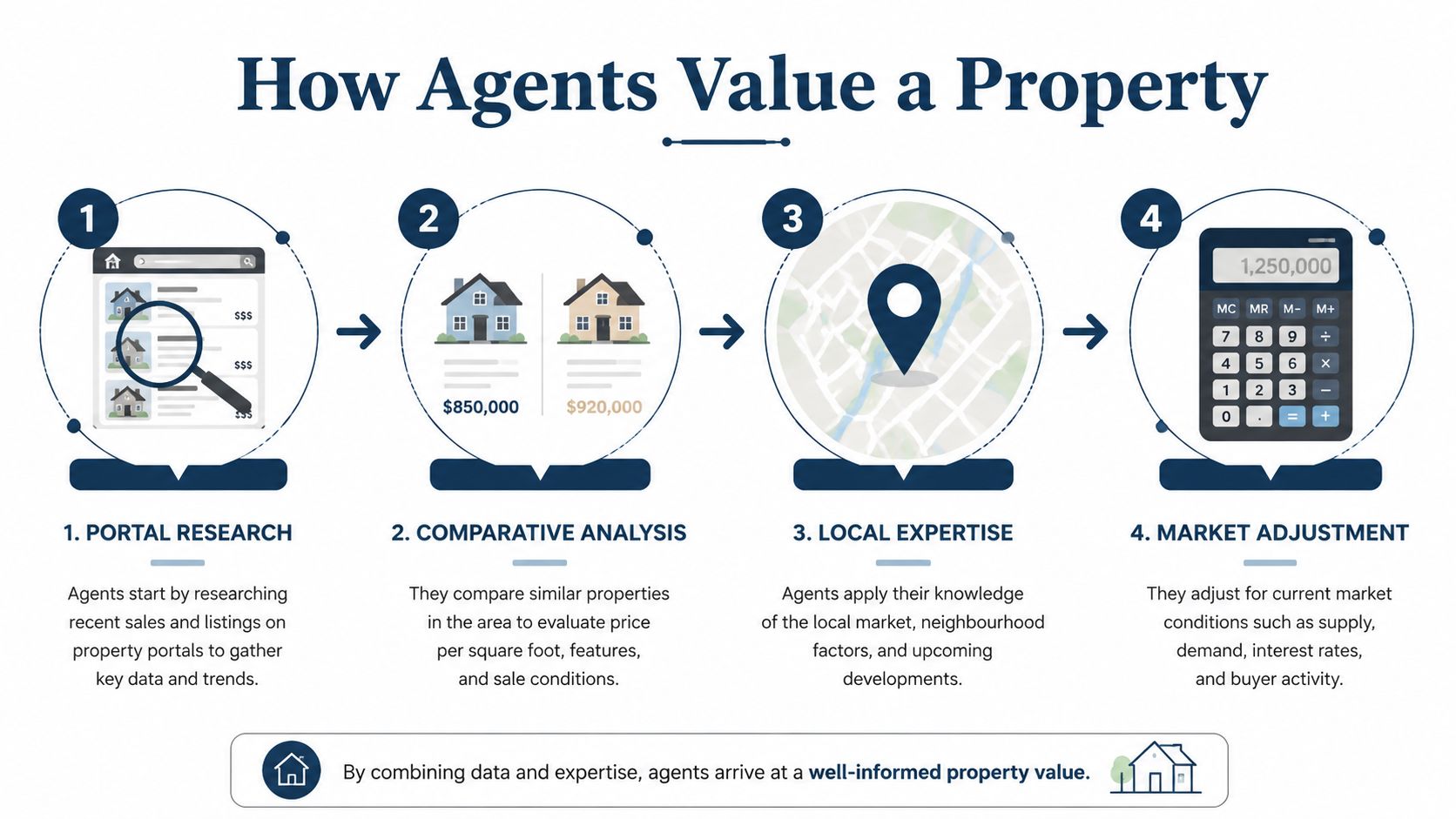
Most estate agents start with the comparative method. They look at recent sold prices for nearby homes, then adjust for condition, size, layout, parking, outdoor space and how saleable the property looks on the day. That is commercial judgement, not a formal valuation. The agent is building a price that should attract interest and still sound believable.
The evidence should be local, recent and specific. In practice, a decent appraisal ought to lean on a small set of comparable sales in the same area, with sold-price data used to test whether the asking figure is grounded or just optimistic. Residential valuers usually give more weight to comparables that are close by and sold recently, because distant or stale sales do not tell you much about the house in front of you. John D Wood's note on property valuations makes the same point about relying on nearby, recent comparables rather than loose comparisons John D Wood on property valuations.
The visit matters just as much as the desk work. HomeOwners Alliance says agents pull from portal listings and Land Registry sales data, then inspect the property for size, bedrooms, bathrooms, layout, garage, parking and garden before they settle on a figure HomeOwners Alliance on estate agent valuations. That is the right sequence. The trap is when the agent ignores awkward facts, like a tired roof in Lewisham, a weak loft conversion in Bromley or a clumsy layout in a Bermondsey warehouse flat.
A valuation is only as good as the comparables behind it. If the comps are weak, the number is weak.
That is why you should stress-test the evidence, not admire the number. Ask which sales were used, why those homes were chosen and what was adjusted for condition, presentation and location. If the agent cannot explain that clearly, the figure is just a sales pitch with better stationery.
The strongest valuations usually come from agents who can show their working and defend it under pressure. If you want a practical framework for that conversation, the expert CMA tips are useful. Read them with a hard eye. The point is not the marketing gloss, it is whether the agent has enough evidence to justify the price they are putting in front of you.
Why Three Valuations Can Give Three Different Numbers
Three agents can look at the same Catford three-bed Victorian terrace and give you £525,000, £550,000 and £590,000. The number on the page is not the story. The story is how hard each agent pushed the evidence, and whether one of them was trying to flatter you into instructing them.
Some of the gap will be normal judgement. One agent may rate the condition more conservatively, another may give more credit to presentation, and a third may be working from a thin set of comparables and filling in the blanks with optimism. You should treat the spread as a check on the quality of the valuation, not as a menu of prices.
Ask for the evidence, not the headline. Which sales were used. Why those homes, and not others. What was adjusted for condition, layout, outdoor space, parking and exact location. If the answer is vague, you are looking at a sales pitch dressed up as valuation.
A good agent will show the comparables and explain the judgment calls. A weak one will lean on confidence and expect you not to notice the gaps.
If the highest figure comes without solid comparables, treat it as a sales tactic until proved otherwise.
Use the spread to pressure-test the case. If the gap is wide, make each agent put the sold comparables, sale dates, location and condition adjustments in writing before you take the number seriously. That is the point where bluffing becomes obvious. For a practical way to read the reasoning, the expert CMA tips are useful if you read them with a hard eye.
The safest choice is the valuation that can be defended, not the one that feels best. If one agent will not show working, and another cannot explain why their figure sits above or below the rest, the number is weak. In that situation, the formal route is usually the safer one.
Overpricing, Underselling and How to Spot the Tactic
The classic trick is overpricing. The agent gives you a flattering figure, wins the instruction and then watches the property sit there until you reduce the price. Sellers lose time, momentum and often confidence.
The opposite trick is underselling. An agent offers a low number, promises a quick sale and makes the process look easy. That can suit a vendor in a hurry, but it can also leave money on the table if the evidence was ignored.
The warning signs
- No measuring: If the agent walks round, smiles and leaves without checking key dimensions or layout details, the number is soft.
- One comparable only: A serious valuation should not hang on one conveniently similar sale.
- No explanation of adjustments: If they cannot say why your loft room, garden size or condition changes the figure, they are guessing.
- Too much enthusiasm for your upgrades: New kitchen, fresh paint and staging help presentation, but they do not magically add value equal to the cost spent.
The visit itself tells you a lot. An agent who talks more than they inspect is selling a story. An agent who spends most of the appointment checking evidence is doing the job properly.
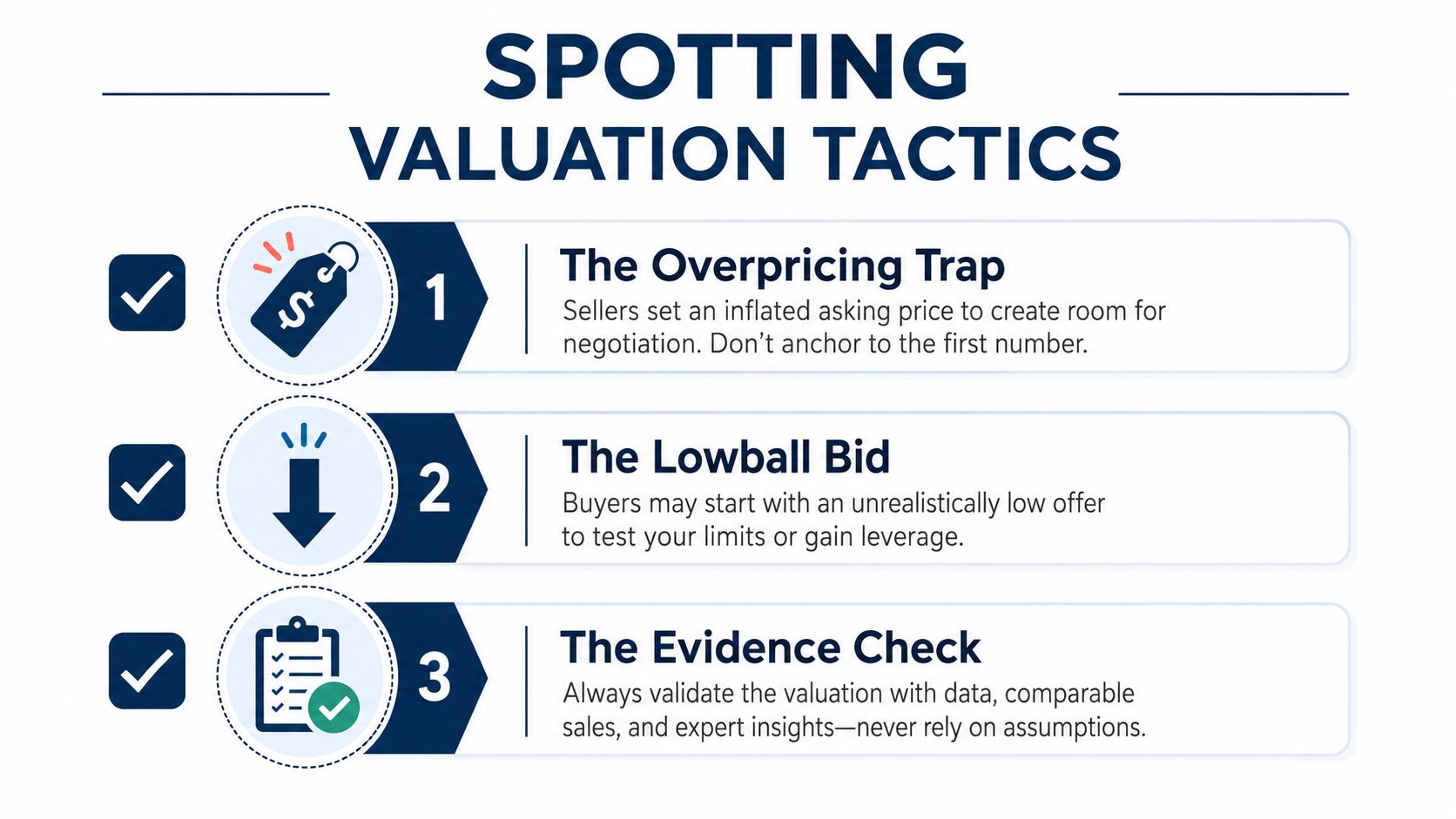
If the number looks too high, ask for the comparables in writing and check them against recent sold data. If it looks too low, ask what would change their view and whether they are building in an easy sale. In both cases, force the discussion back to evidence, not confidence.
A disciplined seller does not reward the loudest number. They reward the clearest reasoning.
Estate Agent Valuation vs RICS Formal Valuation
An estate agent valuation is a commercial judgement for selling. A formal RICS valuation is a professional opinion prepared to stand up to scrutiny. That is the split that matters, and homeowners who understand it stop treating both figures as if they mean the same thing.
The agent is trying to win an instruction and set a price that will attract buyers. The surveyor is producing a figure that can be used in probate, tax, divorce, shared ownership staircasing, lending or a legal dispute. Different job, different standard. Corinthian Surveyors London LTD, for example, is an independent firm of RICS Chartered Surveyors and Valuers and holds relevant professional qualifications, which is the kind of background you want where independence matters.
| Criterion | Estate Agent Valuation | RICS Formal Valuation |
|---|---|---|
| Purpose | Marketing price and instruction strategy | Legal, tax, financial or dispute work |
| Evidence base | Comparables, portal data and local judgement | Structured valuation evidence and professional standards |
| Who can rely on it | Mainly seller and agent for sales strategy | Courts, solicitors, HMRC, lenders and other formal users |
| Who pays | Usually free | Usually paid for by the client |
| Best use | Setting an asking price | Probate, capital gains tax, matrimonial separation, shared ownership and contested figures |
| Weight if challenged | Limited | Much stronger |
For residential property, the comparative method is still the main route, but a formal valuer applies it with more discipline and produces a report that is built to be defended. That matters when a solicitor, lender or tax authority may challenge the figure. If you want the formal side laid out plainly, see this guide to RICS property valuations.
The cost difference is real, but so is the risk of using the wrong document. A flat in Southwark may only need an agent's appraisal to go on the market. The same flat, if it sits inside an estate or a separation, needs a formal valuation. The cheaper option is the one that matches the job. The expensive mistake is using a sales figure where a defensible valuation is required.
A seller should also remember that an agent's number is shaped by sales strategy. A surveyor's figure is shaped by evidence and duty. That is why a high agent valuation can help you win instructions, while a formal valuation helps you settle a figure that others can rely on if the matter becomes contested.
How to Prepare for Valuation Visits and What to Ask
Before anyone arrives, gather the paperwork. Title documents, the latest EPC, planning consents for extensions or loft works, completion certificates, warranties and guarantees all help an agent understand what they are pricing. If you have had major works done in Peckham, Beckenham or Eltham, show the paperwork. Do not rely on memory.
Take photographs too, especially if the property is empty or cluttered. A clear photo set helps you compare how each agent responds to the same evidence. That is useful if you later review a photo gallery comparison because presentation can affect the market response, even when the underlying valuation should stay anchored to sold evidence.
Ask direct questions at the door.
- Which sold comparables are you using?
- How have you adjusted for condition, layout and parking?
- What would you price it at if you were launching today?
- What would you expect after the first four weeks?
- How would you handle a price reduction if the market does not respond?
Write the answers down. Do not trust your memory after three separate visits. The best agents are usually consistent when questioned. The weakest ones start drifting into waffle.
Keep the discussion on sold evidence, not asking prices. Asking prices are a wish list. Sold prices are the market talking.
What to Do Next and When to Bring in a Surveyor

If the valuations are close and the evidence is sound, pick the agent who can explain the reasoning plainly and market the property properly. If the numbers are wildly apart, stop and challenge the evidence before you instruct anyone. The highest figure is not the best figure.
Bring in an independent surveyor when the number may be challenged or needs a formal basis. That means probate valuations, capital gains tax valuations, matrimonial separation valuations, shared ownership staircasing, building reinstatement cost assessments and any sale where lender or legal scrutiny is likely. For a mortgage-related figure, read mortgage surveyors valuation and separate it from the sales pitch.
Corinthian Surveyors London LTD is independent, with no ties to lenders, estate agents or developers. It is regulated by the RICS, based in Forest Hill in SE26 5T3 and works across London, the Home Counties and the South of England. That makes it a sensible call when you need a figure that is not dressed up to win instructions.
If you are preparing to sell, or you need a valuation that will hold up if challenged, speak to an independent RICS surveyor rather than relying on a glossy sales appraisal alone. Call 0800 00 16 422 and ask Corinthian Surveyors London LTD to look at the property properly.
Frequently Asked Questions About Estate Agents Valuations
How long does an estate agent valuation last?
Not long if the market shifts or if fresh local sales come in. Treat it as a snapshot, not a permanent figure.
Do estate agents charge for a valuation?
Usually not. It is generally part of their sales pitch and instruction process.
What if a lender's valuation is lower than the estate agent's figure?
The lender's figure wins for lending purposes. If that happens, you need to recheck the comparables and decide whether to renegotiate or obtain a formal RICS valuation.
Can I insist on a higher asking price than the agent recommends?
Yes, but don't be surprised if viewings slow down and the price has to come back. If the evidence does not support your number, the market will say so quickly.
A CTA for Corinthian Surveyors London LTD.