
Homebuyer Report vs Building Survey: A London Guide 2026
You've had an offer accepted. The mortgage offer lands in your inbox. The estate agent is pushing for progress. At that point, a lot of buyers ask the same question: do I need a HomeBuyer Report, or should I pay more for a Building Survey?
In London, that decision matters more than people think. A Victorian flat conversion in Lambeth, a terrace in Forest Hill or a warehouse flat in Bermondsey can hide defects that don't show themselves on a quick visual inspection. The wrong survey can leave you owning the problem.
Most buyers don't protect themselves properly. A 2019 research report found that only about 30% of UK homebuyers commissioned either a homebuyer's survey or building survey before buying, which tells you how often people are relying on hope instead of evidence, according to Oakfield Surveyors' report on whether you need a home buyer's survey or building survey.
Table of Contents
- Why Your Mortgage Valuation Is Not a Survey
- The Two Main RICS Surveys at a Glance
- What Each Survey Actually Inspects
- Real World Examples of Survey Findings
- Which Survey Is Right for Your London Property
- Using Your Survey Report for Negotiations
- Frequently Asked Questions About Property Surveys
Why Your Mortgage Valuation Is Not a Survey
The most expensive mistake I see is buyers treating the mortgage valuation as if it protects them. It doesn't. It protects the lender.
If your bank arranges a valuation, the lender wants to know one thing: is the property suitable security for the loan. That is not the same as checking the place properly for damp, structural movement, roof failure or timber decay.

What the valuation is really for
A mortgage valuation is brief. It is not an independent inspection for your benefit. It won't give you the sort of practical advice you need before you commit to a purchase.
That's why buyers who rely on the bank's report often feel blindsided later. The valuation may support the mortgage offer and still tell you almost nothing useful about the building's actual condition.
Practical rule: If the report was commissioned for the lender, it isn't your survey.
This point is especially important in London. A flat in Peckham might have concealed damp behind fresh paint. A maisonette in Camberwell might have structural alterations to chimney breasts. A house in Brockley might show movement that needs proper interpretation, not a quick glance.
What you should do instead
If you want advice that serves your interests, order an independent RICS survey. That gives you a report written for you, not for the bank.
I've written separately about the confusion around lender inspections and buyer protection in this explanation of mortgage surveyors' valuations. Read it if you're still tempted to treat the valuation as enough.
The short version is simple. If you're buying property in London and you skip an independent survey, you're taking on blind risk.
The Two Main RICS Surveys at a Glance
The homebuyer report vs building survey question is really a question about risk. Level 2 is for more standard properties in reasonable condition. Level 3 is for properties where age, alteration or design create more uncertainty.
Here's the plain comparison.
| Feature | RICS Home Survey Level 2 (HomeBuyer Report) | RICS Building Survey (Level 3) |
|---|---|---|
| Best suited to | Conventional properties in reasonable condition | Older, larger, altered or non-standard properties |
| Inspection style | Visual inspection of accessible areas | More detailed inspection with fuller analysis of construction and defects |
| Reporting format | Uses a traffic-light style condition rating system | Narrative technical report without the simplified rating format |
| Level of detail | Flags visible issues and urgent concerns | Explains defects, likely causes, implications and repair approach |
| Typical property examples | Modern flat, standard house, newer build of common construction | Victorian terrace, Edwardian conversion, extended house, unusual flat conversion |
| Repair guidance | Limited compared with Level 3 | Includes more detailed repair advice and recommendations |
| Who should choose it | Buyers of straightforward homes with low apparent risk | Buyers of London period stock, altered homes or anything that raises doubt |
A Level 2 survey is the old HomeBuyer Report in modern RICS language. It suits conventional homes built from common materials and in reasonable condition. The Smith Heritage Surveyors explanation of what is included in a RICS Level 2 Homebuyer Survey is clear that it is designed for conventional properties built after 1930, is visual only and does not test services.
A Level 3 survey is the one I recommend whenever the property is older, altered or not straightforward. The Sam Conveyancing guide on the difference between Level 2 and Level 3 surveys states that Level 3 surveys are mandatory for older, larger or non-standard properties such as those with extensions or conversions.
For a broader plain-English overview, this guide to what a RICS survey is is worth reading before you instruct anyone.
If the property is ordinary, Level 2 can be sensible. If the property is complicated, Level 3 is usually the cheaper decision in the long run.
What Each Survey Actually Inspects
The difference between a Level 2 and a Level 3 is not just wording. It changes what you learn, how clearly you understand the risk and what you can do next.
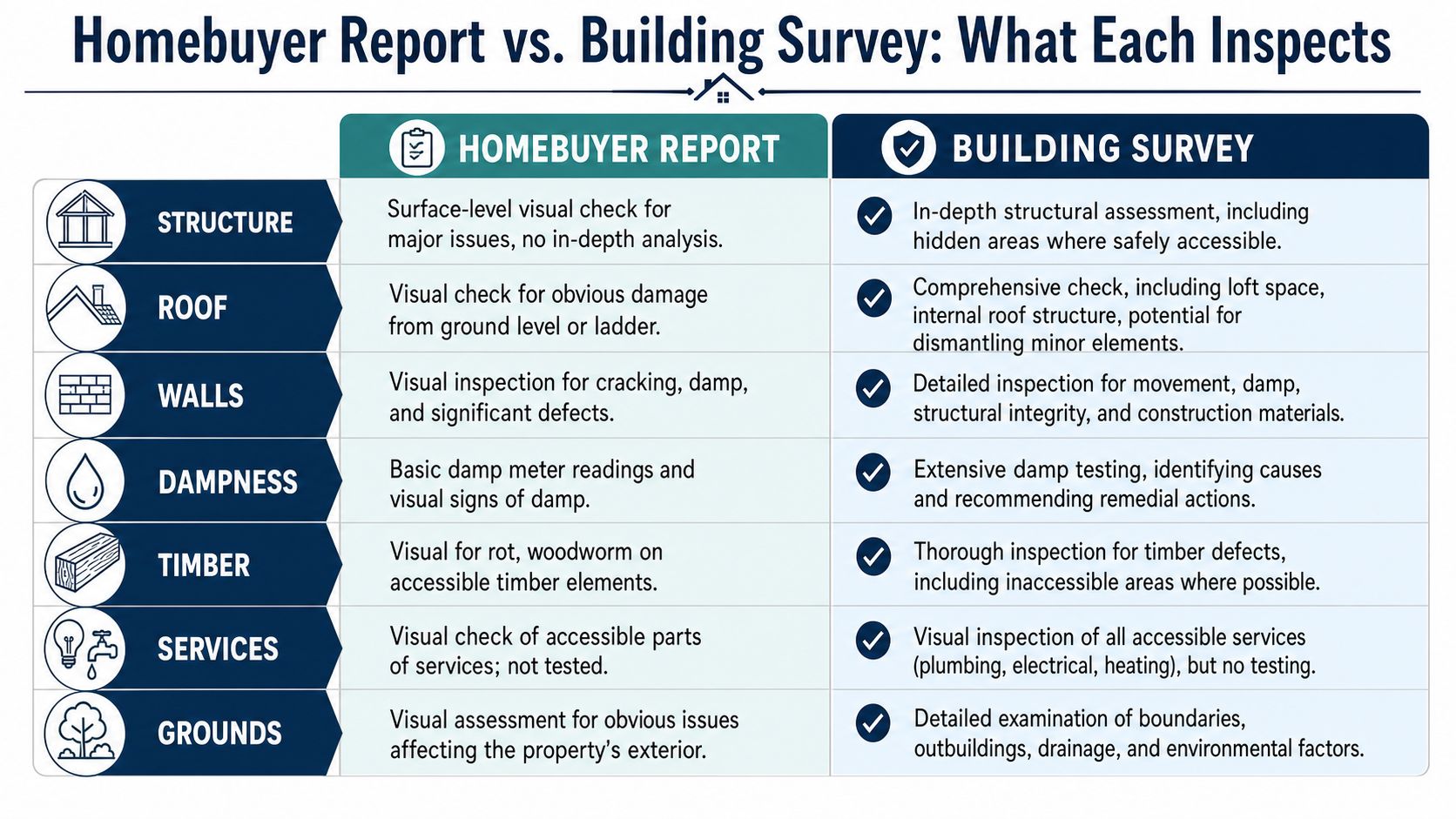
A useful outside reference is this guide for property owners on inspections from Prophaven Property Management. It's not a substitute for a RICS survey, but it helps buyers think practically about what should be checked around a property.
How Level 2 deals with defects
A Level 2 survey is built around a visual inspection. The surveyor looks at accessible parts of the building and reports visible defects. It is good at spotting obvious problems. It is not built for deep diagnosis.
That matters because a lot of serious defects in London homes are partly concealed. Floor structures, hidden damp, poor-quality alterations and movement patterns often need context, not just a visual note.
The reporting style is also different. The RICS Level 2 HomeBuyer Report uses a traffic-light rating system, Status 1, 2 and 3, while the Level 3 Building Survey replaces that with detailed technical commentary on causes, construction implications and repair options, as explained by Harding Chartered Surveyors in their comparison of Homebuyer Reports and Building Surveys.
In practice, Level 2 often tells you something is wrong, or might be wrong. It does not always tell you enough about why it is wrong or what the repair strategy is likely to involve.
- Structure: Visual check for cracking, distortion and signs of movement.
- Roof: Looks for obvious defects from accessible vantage points.
- Walls and damp: Notes staining, cracking, bulging or visible moisture signs.
- Timber: Records visible rot or wood-boring insect evidence where accessible.
- Services: Observed visually, not tested.
- Outside areas: Notes visible issues affecting the property and grounds.
Here is the video version if you prefer a visual explanation.
How Level 3 goes further
A Level 3 survey is much more useful when the building has history. That includes age, extensions, conversions, unusual materials or signs of prior movement.
The surveyor still works within access limits, but the report goes into the building's construction, the likely cause of defects and the sensible repair route. That is the difference between being told there is cracking and being told whether the cracking looks consistent with historic movement, thermal movement, poor alteration work or something more serious.
For buyers in London, Level 3 reports prove their worth. A Victorian terrace in New Cross, a split-level conversion in Sydenham or an Edwardian house in Dulwich often needs explanation, not just ratings.
Level 3 gives you the why. That's what helps you decide whether to proceed, renegotiate or walk away.
Real World Examples of Survey Findings
Survey language can feel abstract until you see how defects play out in real properties. In London, the same symptom can mean very different things depending on the building type.
Cracks and movement
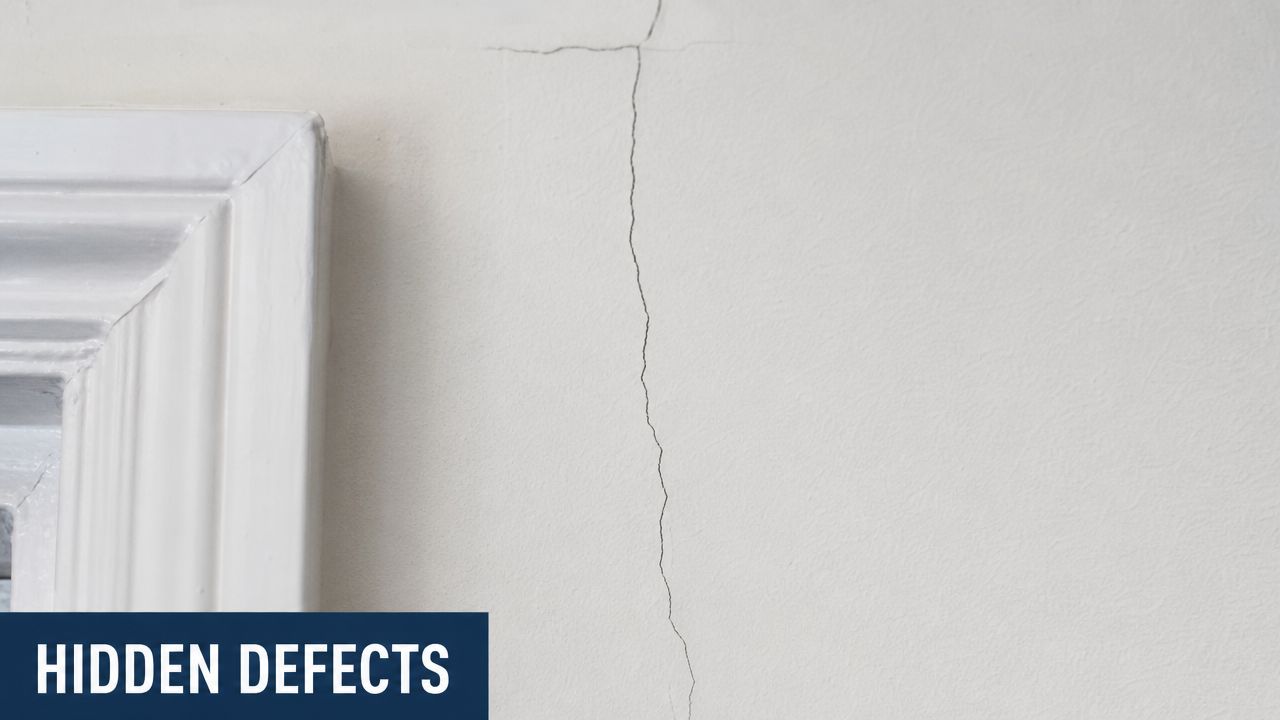
Take a crack by a window in a Victorian terrace in Lambeth or Southwark. A Level 2 survey may record the crack, rate the element accordingly and advise monitoring or further investigation if needed.
A Level 3 survey is more likely to examine the pattern, location and likely cause in context. Is it local movement around an opening. Is it historic settlement. Is it related to altered internal walls. Is there evidence of ongoing distortion elsewhere. Those distinctions matter.
A buyer who gets only a surface-level note may assume the defect is minor. Sometimes it is. Sometimes it isn't.
Damp and poor alterations
Now consider a flat conversion in Islington or Forest Hill with newly plastered walls, modern decoration and a tidy viewing presentation. A Level 2 can record visible signs and obvious limitations. But if the issue sits behind finishes or beneath floor coverings, the report may only be able to flag suspicion.
A Level 3 is still not destructive, but it is better suited to older and altered stock where hidden defects are more likely. It also gives fuller commentary on building fabric, likely moisture paths and the effect of poor ventilation, bridging or inappropriate modern materials.
I also see plenty of problems linked to alterations. Removed chimney breasts, unsupported openings, cut roof timbers and DIY rear extensions are common enough across boroughs like Lewisham, Hackney and Wandsworth. A standard survey on a standard home is one thing. A standard survey on a non-standard home is another.
A tidy finish can hide a rough building. Fresh paint doesn't repair structure.
Which Survey Is Right for Your London Property
Buyers require a straightforward answer. In London, Level 3 should be your default choice for most period property, most conversions and anything that has been altered.
A lot of local housing stock is exactly the sort of building that falls outside the comfort zone for a Level 2. Victorian terraces in Lewisham, Edwardian houses in Bromley, mansion flats in Westminster, warehouse conversions in Bermondsey and split flats in Crystal Palace all come with quirks that need fuller analysis.
When a Level 2 is usually enough
A Level 2 can make sense when the property is straightforward.
- Modern purpose-built flat: Think a more recent flat in Canary Wharf, Greenwich Peninsula or a similar development of standard construction.
- Standard house in reasonable condition: A later build with no obvious signs of movement, no major extension and no unusual materials.
- No significant alteration history: If the building hasn't been chopped about, converted or heavily remodelled, the risk profile is lower.
Even then, you still need to be realistic. Level 2 is visual only. If the home has warning signs, don't force the cheaper survey to fit the deal.
When you should choose Level 3
If the property is older or changed in any meaningful way, choose Level 3 and move on. Don't overthink it.
A 2025 UK case study found that a Level 2 survey missed £30,000 of hidden structural and damp issues that a Level 3 would likely have flagged, and it highlighted the practical reason why: Level 2 inspections do not include lifting carpets, moving furniture or uncovering floors, so hidden rot or subsidence in older London conversions can remain undetected, according to this video case study on Level 2 versus Level 3 survey limitations.
That is exactly why Victorian conversions in Forest Hill, Brockley, Clapham and Balham need caution. Suspended timber floors, concealed voids, patched plaster and old alterations can hide expensive defects.
Choose Level 3 if the property is any of the following:
- Victorian or Edwardian: That includes terraces, semis and converted houses across Lambeth, Southwark, Lewisham and Islington.
- A flat conversion: Converted stock often carries risk around fire separation, damp paths, structural changes and roof responsibility.
- Extended or remodelled: Rear additions, loft conversions and opened-up layouts need closer scrutiny.
- Unusual construction: Anything non-standard should push you towards the fuller survey.
- Visibly defective: If you can already see cracking, damp staining or distortion, Level 2 is the wrong tool.
One practical point. Corinthian Surveyors London LTD is an independent firm in Forest Hill, with RICS and CABE credentials and no ties to lenders, estate agents or developers. That sort of independence matters because the advice should be based on the building, not the transaction.
Using Your Survey Report for Negotiations
A survey isn't just about deciding whether to buy. It's also one of the few bits of hard evidence you can use to renegotiate sensibly.
If a defect is identified by an independent surveyor, the conversation changes. You are no longer saying, “I think this might be a problem.” You are saying, “This defect has been identified, here is the likely implication and here is the repair issue that needs pricing.”
For a typical house valued at £500,000 in the UK, a Level 3 Building Survey costs between £950 and £1,000 plus VAT, and it can include cost estimates for identified repairs, which a Level 2 does not provide, giving buyers evidence to support price renegotiation, as explained in this video on the cost and value of a Level 3 Building Survey.
That's why I tell buyers to treat the report as a negotiating document, not a formality.
A practical way to use it
- List the urgent items: Separate defects that affect safety, weather tightness or structural stability.
- Get repair quotes: Use the survey findings to obtain quotes from suitable contractors where needed.
- Send clear evidence: Give the estate agent and seller the relevant survey extracts and any supporting quotations.
- Decide your position: Ask for a price reduction, ask for works or walk away if the risk no longer stacks up.
If you want a more detailed breakdown of the process, this guide on how to negotiate house price after survey sets it out properly.
Buyers often focus on the survey fee. The real figure to focus on is the repair bill you avoid or recover.
Frequently Asked Questions About Property Surveys
How long does a survey take and when do I get the report
Timing depends on the survey type and the property. The HomeOwners Alliance guide to what sort of survey you should have states that a HomeBuyer Report typically takes up to 4 hours, a Building Survey can take up to a full day and the average turnaround time for a residential survey report is five working days.
Can a property fail a survey
No. A survey is not a pass or fail exercise. It is an assessment of condition and risk.
Ultimately, the question is whether the defects are acceptable to you at the agreed price. Plenty of old London properties have defects. The issue is understanding them before you exchange contracts.
What if the surveyor misses a major defect
Surveyors work to a defined scope and with access limits. That is why choosing the right survey matters.
If you instruct a Level 2 on a building that really needs Level 3, you are choosing a narrower inspection. It is better to match the survey to the building than argue later about what should have been obvious.
Do I need a survey on a newer property
Usually, yes. Newer does not mean flawless.
If the property is standard and relatively modern, a Level 2 may be suitable. But don't assume a fresh finish means sound workmanship. Recent data shows Level 2 surveys in London cost £400–£1,000 and Level 3 surveys cost £700–£1,500, while the cost of fixing defects missed in Level 2 can exceed the survey price difference by 10x, according to the HomeOwners Alliance explanation of HomeBuyer surveys in London.
If you want a clear answer on which survey fits the property you're buying, Corinthian Surveyors London LTD can advise on the right level of inspection for homes across London and the South East. Clive Thompson is RICS and CABE qualified, the practice is independent and regulated by RICS, and the advice is based on the building rather than the deal. For straightforward guidance on your purchase, call 0800 00 16 422.