
How a New Build Surveyor Guides Your London Home Purchase

You've reserved a flat in Greenwich or Lewisham. The brochure looked spotless. The show home smelled of fresh paint and new carpet. Then the completion date gets close and the doubts start. Are the doors hanging straight. Has the bathroom been sealed properly. Is the finish what you paid for. And if something's wrong, when exactly do you raise it.
That's where a new build surveyor matters. Not after the problems become an argument. Before that. The useful bit most buyers miss is timing. A survey on a new build isn't just about spotting defects. It's about spotting them in the short window when the builder is still on the hook and before handover muddies everything.
Table of Contents
- Introduction
- Role of a New Build Surveyor
- Overview of Survey Types for New Builds
- Commissioning Surveys at the Right Time
- Common Defects and Warranty Handling
- Costs and Choosing a Surveyor in London
- Practical Checklist for New Build Buyers
- FAQs and Next Steps
Introduction
A lot of buyers assume a new flat in Woolwich, Deptford or Bermondsey doesn't need much checking because it's new. That's backwards. New homes often need more discipline, not less, because the defects are usually hidden in plain sight. Poor finishing, incomplete items, missing sealant, badly fitted windows, heating problems, drainage issues, specification mismatches. None of that fixes itself.
A common problem is confusion. Buyers mix up a snagging survey, a mortgage valuation and a standard RICS survey as if they do the same job. They don't. One checks for defects before handover. One protects the lender. One gives you a condition assessment at a defined level of detail.
Practical rule: If you wait until you've moved in to start thinking about snagging, you've already made life harder than it needed to be.
The smart approach is simple. Know which survey fits the property, book it at the right point in the buying process and keep everything in writing.
Role of a New Build Surveyor
A new build surveyor is there to look past the marketing finish and inspect the property as a built object. That means checking what has been delivered, not what the brochure implied or what the sales office said over coffee.
What the surveyor is actually doing
The first job is usually a pre-completion snagging survey. That is the moment to catch unfinished work, poor workmanship and obvious defects before keys are handed over. It can include things like chipped frames, uneven floors, cracked tiles, loose sanitary fittings, poor mastic lines, incomplete brickwork and windows that don't close properly.
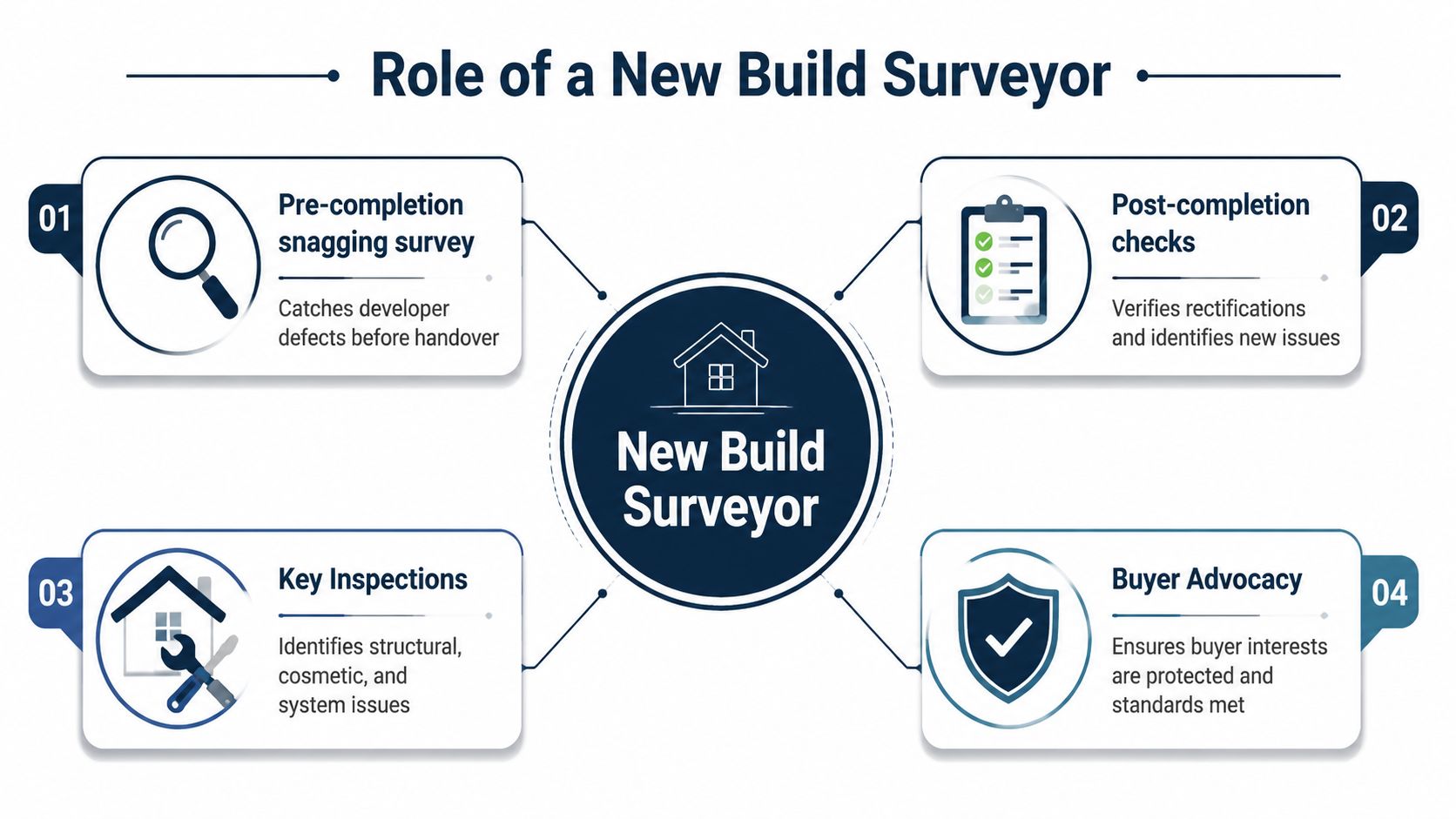
After that comes the second job. The surveyor checks whether the builder has put right what was raised and whether anything more serious sits underneath the cosmetic issues. That can include damp control, roof details, drainage concerns, defective finishes around balconies or terraces, plumbing installation issues and faults in electrical fittings.
A good surveyor also compares the finished property with the developer's stated specification. On a new build, that matters. If the specification says one thing and the flat has another, that is not a minor irritation. It can affect value and future cost.
- Specification checking: Flooring, tiling, heating type and fitted items need to match what was sold.
- System checks: Electrics, plumbing, ventilation and heating should be installed properly and operate as intended.
- Structural warning signs: Cracking, movement, poor roof work and defective detailing must be recorded early.
- Reporting: The list needs to be clear enough that the builder cannot wriggle out of what was found.
Why timing matters more than buyers realise
There's another reason to book early. Capacity is tight. The UK surveying profession needs 1,710 new surveyors each year to replace retirees and meet a target workforce of 72,010 by 2029, according to RICS on the surveyor workforce shortfall. At the same time, new build dwelling starts in England reached 124,860 between October 2024 and December 2025, a 15% increase on the previous year, with around 210,000 to 215,000 completions projected in England during 2025/26 in that same RICS piece. More homes means more inspections. Leave it late and your ideal survey date may already be gone.
Book the surveyor when the site is talking about handover, not when you are collecting the keys.
Overview of Survey Types for New Builds
Buyers get tripped up here all the time. They hear “survey” and think one report covers everything. It doesn't. On a new build, you need to separate defect spotting from broader condition reporting.
Comparison of New Build Survey Types
| Survey Type | RICS Level | Coverage | Best For |
|---|---|---|---|
| Developer-appointed snagging inspection | Not a RICS level | Usually focused on the builder's own sign-off process and visible completion items | The builder's internal process, not your independent protection |
| Independent snagging survey | Specialist inspection | Visible defects, workmanship issues, incomplete items, fit and finish, specification discrepancies | Buyers who want defects logged before or soon after handover |
| RICS HomeBuyer Report | Level 2 | Standard survey for conventional properties in reasonable condition, including issues such as damp or subsidence, but not detailed analysis of hidden defects | Straightforward properties where a lighter survey is suitable |
| RICS Building Survey | Level 3 | More detailed inspection and analysis, with greater scope to examine condition, defects and risk areas | Buyers who want the fullest assessment or where there is concern about quality, complexity or specification |
RICS states that a Level 2 HomeBuyer Survey is designed for conventional properties in reasonable condition and is the standard pre-purchase survey for many buyers, covering issues such as damp or subsidence while excluding detailed analysis of hidden defects, as set out on Corinthian's RICS profile page.
Which one makes sense on a new build
On most new builds, a snagging survey is the first thing to think about. Not a Level 2. Not a lender's valuation. A proper snagging inspection. That's because the immediate risk is usually poor finishing, missed items and build quality problems that need to be pinned on the developer before handover or very soon after.
A Level 2 can still have a place, but don't confuse “useful” with “sufficient”. It was not built to act as a snagging list. If you're weighing up the difference, this guide on HomeBuyer Report vs Building Survey is worth reading because it deals with the distinction buyers often blur.
A Level 3 Building Survey is the stronger option where the build is more complex, the specification is high value, the design is unusual or you want a deeper report. In London, that often applies to larger flats, penthouses, mews houses and developments where the finish promised in the sales pack needs close checking.
Commissioning Surveys at the Right Time
The awkward truth is that many new build problems are not hard to spot. They are hard to enforce if you spot them too late.
The key window before handover
The New Homes Quality Code requires homes to be “substantially complete” before handover, and that creates the practical opening for a pre-completion inspection, as explained in Mulberry Homes' guide to surveys on new builds. That's the point buyers should use. Not after the first night in the flat. Before handover, while the builder still wants the completion signed off.
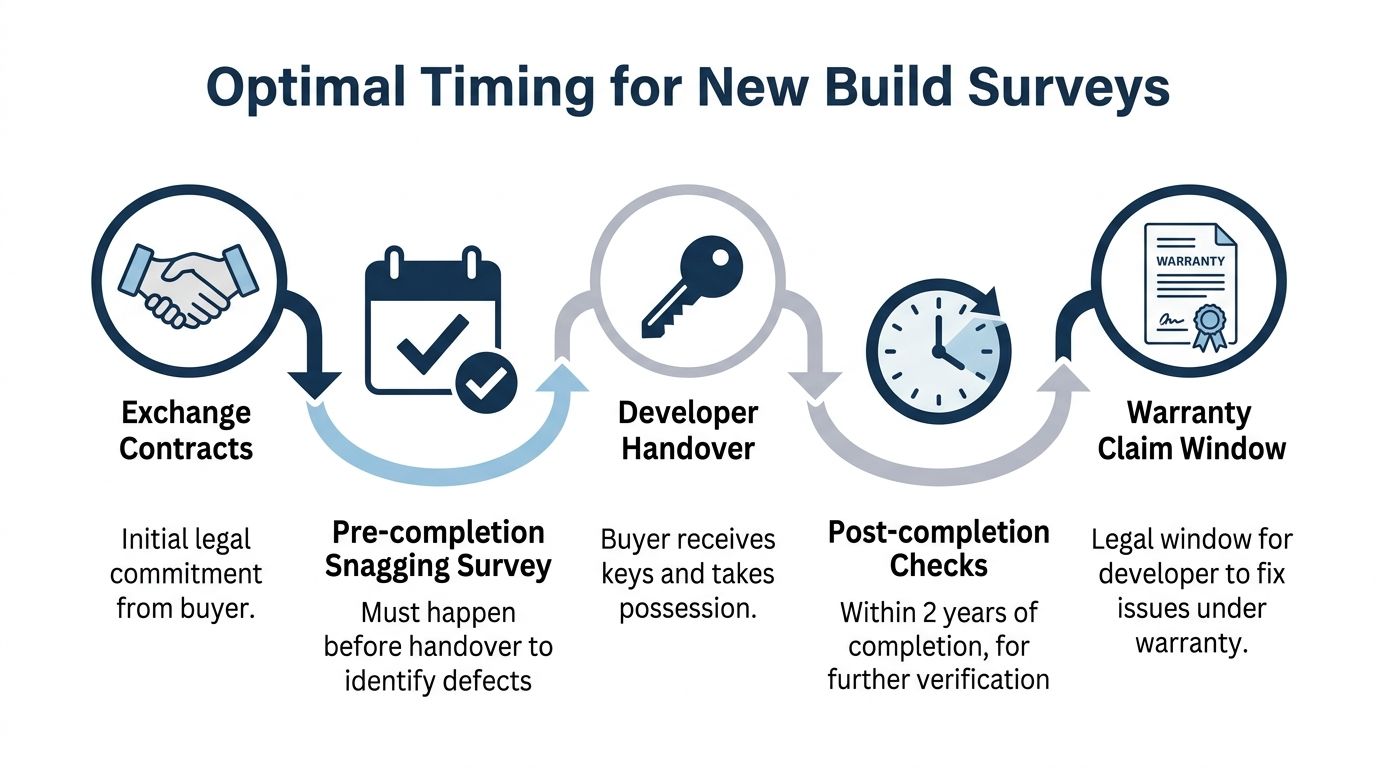
If the property is being sold as complete, treat that as your cue to arrange an independent inspection. Don't let the developer's customer care process substitute for it. Their list is not your list.
This short video gives a useful visual sense of how the survey timing fits into the buying process.
A simple order that works
Keep the sequence tight and practical:
Before exchange, decide what level of protection you want.
If you know you want an independent snagging survey and possibly a higher-level report, plan it before dates start moving around.As handover approaches, book the pre-completion snagging inspection.
This is the critical stage for visible defects and unfinished items.Use the report to press for rectification before keys.
The builder is far easier to pin down before completion than after.After handover, keep a written defect log.
New issues can show up once you are living there and using the heating, plumbing and ventilation every day.
Don't argue from memory. Argue from a dated report, photographs and an email trail.
If you want the lightest RICS option for a straightforward property, a Level 1 Home Condition Survey can be relevant in some situations. If you want the deepest inspection, a Level 3 Building Survey is the stronger route. What matters is booking at the right point, not treating survey choice as an afterthought.
Common Defects and Warranty Handling
The defects on new builds are often mundane. That doesn't make them harmless. Small errors compound when they affect water, heat or movement.
Defects that turn up again and again
In London developments, surveyors regularly look for things such as:
- Joinery faults: Doors that bind, frames out of line, poorly fitted skirting and damaged architraves.
- Tiling and finishes: Uneven tile runs, hollow tiles, poor grouting and bad sealant around baths and showers.
- External defects: Gaps in mortar, incomplete pointing, badly finished balconies and drainage falls that don't direct water properly.
- Services issues: Extract fans not performing properly, heating controls not set up correctly and plumbing leaks around traps or valves.
Some of these are plainly cosmetic. Some are not. Water ingress around windows, failed sealing in wet rooms and poor external detailing can move quickly from nuisance to damage.
What needs recording properly
Where Premier Guarantee cover applies, one point matters a great deal. Its technical manual requires a desk study, site walkover and trial pit investigation in accordance with BS 5930 on every site to access the guarantee, as set out in the Premier technical manual. If that BS 5930-compliant ground investigation record is missing, that is not clerical trivia. It is a serious item for the surveyor to flag because it relates directly to foundational risk and insurance protection.
A buyer can live with a paint snag for a week. A buyer cannot sensibly ignore a problem tied to ground investigation or structural integrity.
Always insist that the builder confirms remedial works in writing. Verbal promises on site are worth very little once teams move on and managers change.
Costs and Choosing a Surveyor in London
Price matters. Independence matters more.
What you are paying for
For a new build in the UK, a RICS Level 3 Building Survey typically costs between £630 and £1,500+, with the higher end often applying in London because of complexity, location and property value, according to this guide to new build specifications and survey costs. That same source notes that Level 3 inspections may involve checking 100+ specific snagging items and comparing the developer's specification with what has been installed.
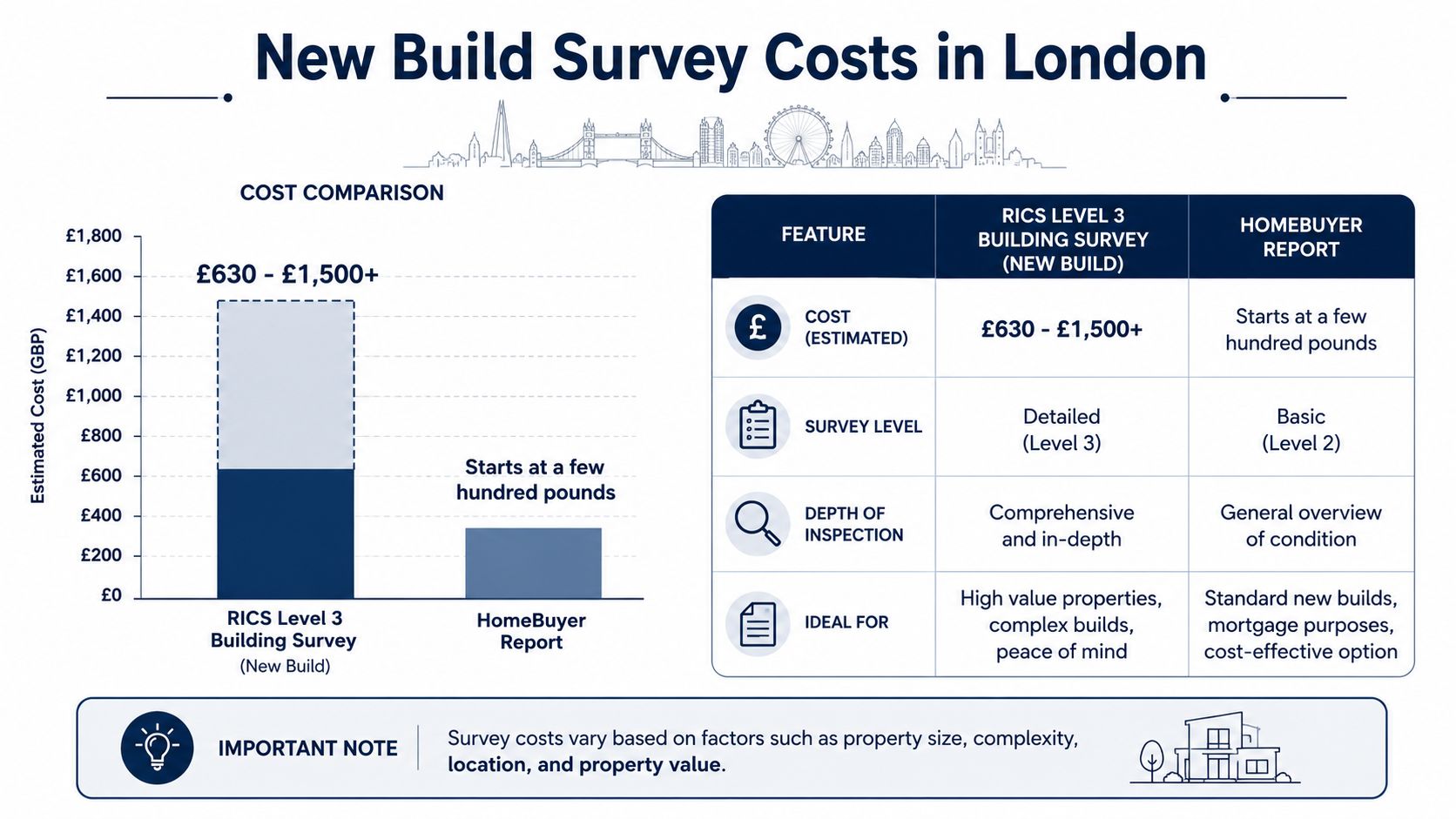
A Level 1 report starts at a few hundred pounds and bespoke Level 3 services can exceed £1,000, as noted in Collier Stevens' explanation of survey options for new builds. You are paying for time on site, technical judgement, report quality and the ability to identify what is cosmetic, what is contractual and what is a warning sign.
How to choose properly in London
In places like Southwark, Greenwich, Croydon and Bromley, local knowledge helps. A surveyor who understands the stock, the common build patterns and the way local developments are finished will usually ask sharper questions.
Use a simple filter:
- Check qualifications: RICS matters. CABE is also a strong signal in building matters.
- Check independence: Avoid anyone tied to the developer, lender or estate agent.
- Check scope: Ask exactly what the report covers and whether specification checking is included.
- Check communication: If the explanation is vague before instruction, the report will probably be vague too.
If you want a sharper shortlist process, this article on how to choose a building surveyor in London without wasting time or money is a useful filter.
A lender-appointed valuer is there for the lender. A developer's inspector is there for the developer. Your surveyor should be there for you.
Practical Checklist for New Build Buyers
The cleanest way to handle a new build purchase is to treat it as a sequence, not a scramble.
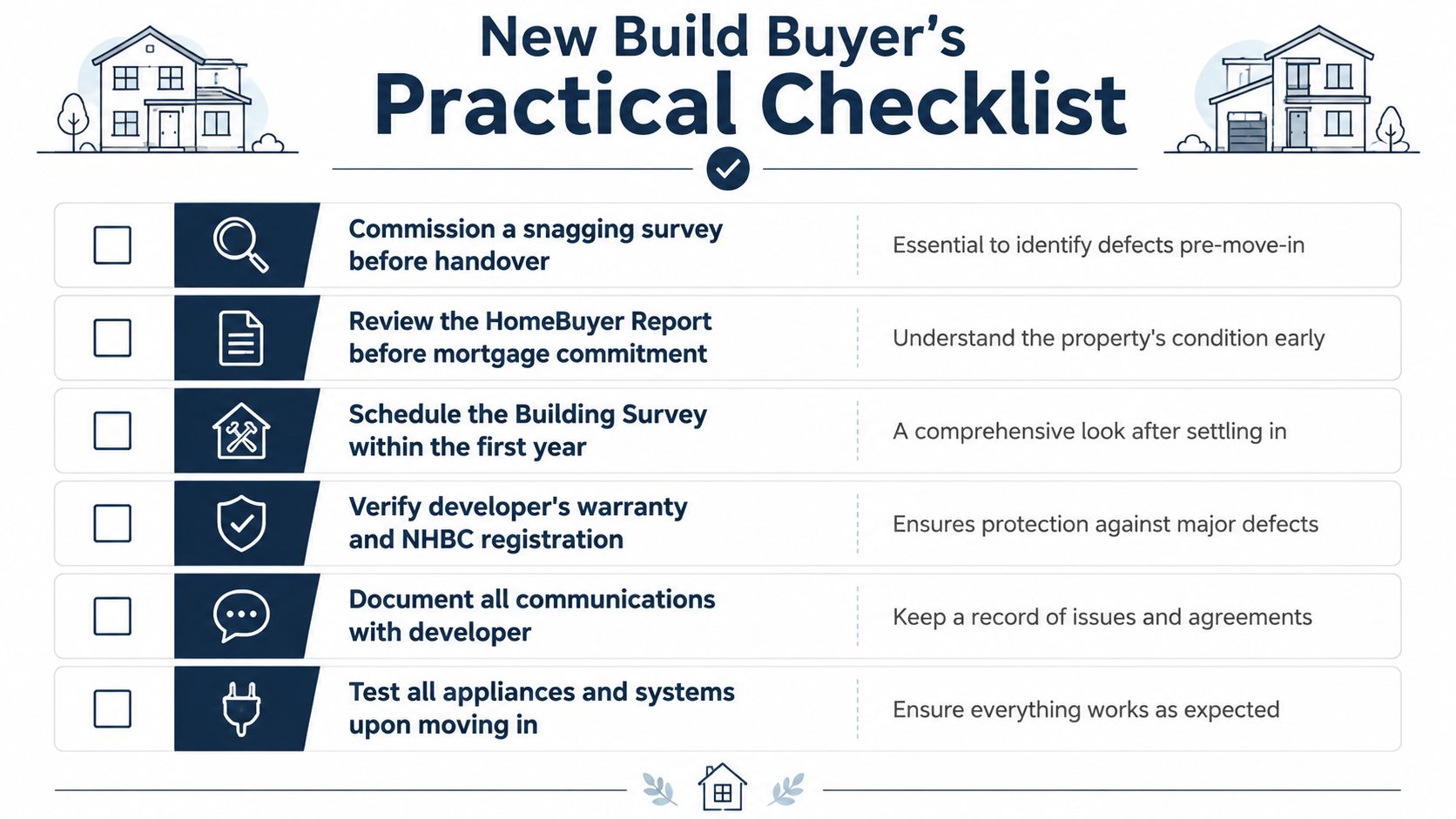
- Reserve early, plan early: As soon as the plot is reserved, decide whether you want only snagging or a wider survey strategy.
- Book pre-completion snagging before handover: This is the inspection that gives you the best chance of getting defects fixed while the builder still controls the site.
- Read every line of the paperwork: Check the specification, extras list and warranty documents against what you were told in the sales process.
- Review your survey before committing further: If you have taken a Level 2 or Level 3 route, read it before you drift too close to completion without a plan.
- Document every issue in writing: Email the builder. Attach photos. Date everything.
- Test the flat like you live there: Run taps, check heating controls, open windows, inspect sealant, test sockets and look at finishes in daylight.
- Push back with evidence, not frustration: A report plus a written defect list is far more effective than a heated phone call.
- Use structured questions: If you need help organising what to ask the developer or agent, these effective real estate questionnaire strategies are useful for keeping the process tidy and factual.
The best buyers are not the loudest. They are the ones with a paper trail.
FAQs and Next Steps
Can I do snagging after handover
Yes, but it is better before handover. After completion, you can still raise defects, but your influence changes. Pre-completion is cleaner because the builder still wants the deal finished and signed off.
What if defects show up after the warranty period
At that point, your options depend on the defect, the paperwork and any evidence you kept. If the issue suggests movement, water ingress or another technical problem, stop guessing and instruct the right specialist.
How do I negotiate remedial work or a price reduction
Start with the survey report, the photos and the specification. Be precise. State what is wrong, where it is and what remedy you want. This guide on how to negotiate house price after a survey gives a sensible framework for handling that conversation.
When should I bring in another expert
Bring in a structural engineer for movement or foundation concerns. Use a damp specialist when moisture diagnosis needs closer testing. If planned remedial works affect shared walls or adjoining owners, a party wall surveyor may need to step in.
Keep your records. Save every report, email and photo. If you want independent RICS advice from a firm regulated by RICS, with RICS and CABE-qualified leadership and no ties to lenders, estate agents or developers, Corinthian Surveyors London LTD can help buyers across London. For straightforward guidance, call 0800 00 16 422.
If you need an independent view before you accept handover on a new build, Corinthian Surveyors London LTD serves London from Forest Hill and focuses on clear residential advice, not developer spin. That includes RICS survey work, valuations and related services for buyers who want the defects identified properly and the next step explained in plain English.