
First Time Buyer Guidance for London Properties

You've had the offer accepted. Good. Now move fast and move in the right order, because the seller won't wait while you decide who to instruct. In London, the first mistake is usually treating the mortgage as the whole job. It isn't. You need a solicitor, a surveyor and a clear grip on the numbers before the chain starts to harden.
The other mistake is assuming the lender's valuation protects you. It doesn't. A mortgage valuation is for the lender's risk, not for your pocket, and it will not tell you whether the roof is tired, the flat is leasehold trouble or the seller has hidden a costly defect behind fresh paint. That's why first time buyer guidance has to start with process, not wishful thinking.
Table of Contents
- What Happens After Your Offer Is Accepted
- Choosing the Right RICS Survey for the Property
- Reading Your Survey Report and Acting on the Findings
- Leasehold Costs and Service Charges in London
- SDLT, First Homes and the Real Cost of Buying
- The Offer to Completion Timeline for London
- Choosing an Independent Surveyor in London
- First Time Buyer FAQ
What Happens After Your Offer Is Accepted
The first 48 hours matter more than most buyers realise. You're not just celebrating, you're setting the pace for the whole transaction. In practice, that means instructing your solicitor, booking your survey, and getting your mortgage file moving at once. If you leave any of those tasks hanging, the chain will feel it.
Practical rule: don't wait for the seller's paperwork before you act. Good buyers line up their team immediately, then keep the file moving.
A London purchase also means you need to think beyond the price tag. Your total outlay includes your deposit, SDLT, legal fees, survey fee and search costs. For many first-time buyers, the deposit is the headline item, but the smaller costs can still bite if you've budgeted too tightly.
The lender's valuation is not your safety net. It answers one question, which is whether the lender is comfortable with the loan against the property. An independent RICS survey answers the question that matters to you, which is what condition the building is really in and what could cost you after completion. If you want a sensible buyer's checklist after the keys are sorted, get moving tips from Container Self Store and use it to plan the practical side, not the legal side.
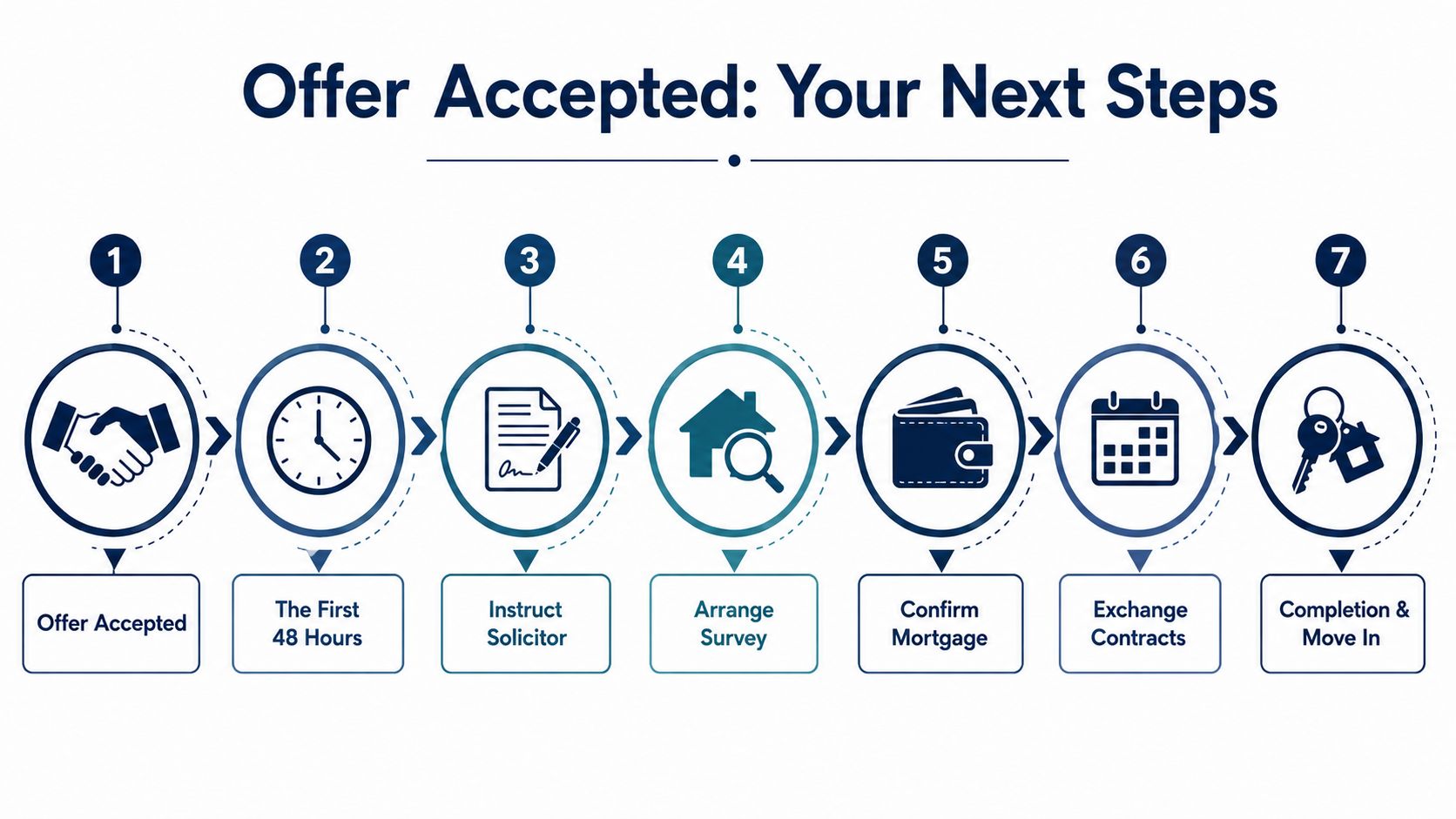
For first-time buyers in South East London, especially places like Lewisham, Forest Hill and Brockley, I'd expect a solicitor and a surveyor to be instructed the same day if possible. The market moves quickly when a seller has already found their next place. Corinthian Surveyors London LTD works independently, with no ties to lenders, estate agents or developers, so the advice sits with the buyer rather than someone else's transaction.
Choosing the Right RICS Survey for the Property
Pick the survey to suit the building, not your optimism. A tidy-looking flat in Blackheath does not need the same report as a converted Victorian house in Peckham or a tired terrace in Camberwell. The older and more altered the property, the more you need a surveyor who can read the building, not just tick boxes.
RICS Survey Levels Compared
| Survey Level | Best For | Format | Typical Use in London |
|---|---|---|---|
| Level 1 Home Condition Survey | Modern, conventionally built homes in reasonable condition | Basic condition assessment | Newer flats and straightforward houses where the structure looks sound |
| Level 2 HomeBuyer Report | Typical houses and flats in fair condition | Clear report with condition ratings and advice | Victorian terraces, 1930s semis and standard flats across boroughs like Bromley and Croydon |
| Level 3 Building Survey | Older, altered, listed or non-standard properties | Detailed building inspection and analysis | Period homes, major conversions, visible defects, subsidence concerns and complex leasehold stock |
The Level 1 survey is light-touch. It suits straightforward buildings where you mainly want reassurance that nothing obvious is wrong. The Level 2 survey is the usual starting point for London first-time buyers because it gives a decent balance of detail and cost without pretending to be a forensic investigation. The Level 3 Building Survey is the right call when the house is older, altered, listed, structurally suspect or just plain awkward.
If the property has been heavily extended, converted or patched over, don't save money by choosing the wrong survey. You'll often pay for that mistake later in repairs, renegotiation or both.
The key question is simple. Does the building look conventional, or does it raise awkward questions about movement, damp, roof condition, timber decay or leasehold complications. If it's the latter, go straight to a Level 3. If it's a standard home in reasonable shape, a Level 2 is usually the sensible default. For a straight overview of services, see Corinthian's survey and valuation pages, then choose from the building, not the brochure.
Reading Your Survey Report and Acting on the Findings
A report is only useful if you act on it properly. The colour coding matters because it tells you where the primary risk sits. Red means urgent action. Amber means repair or further investigation. Green means no immediate repair is needed.
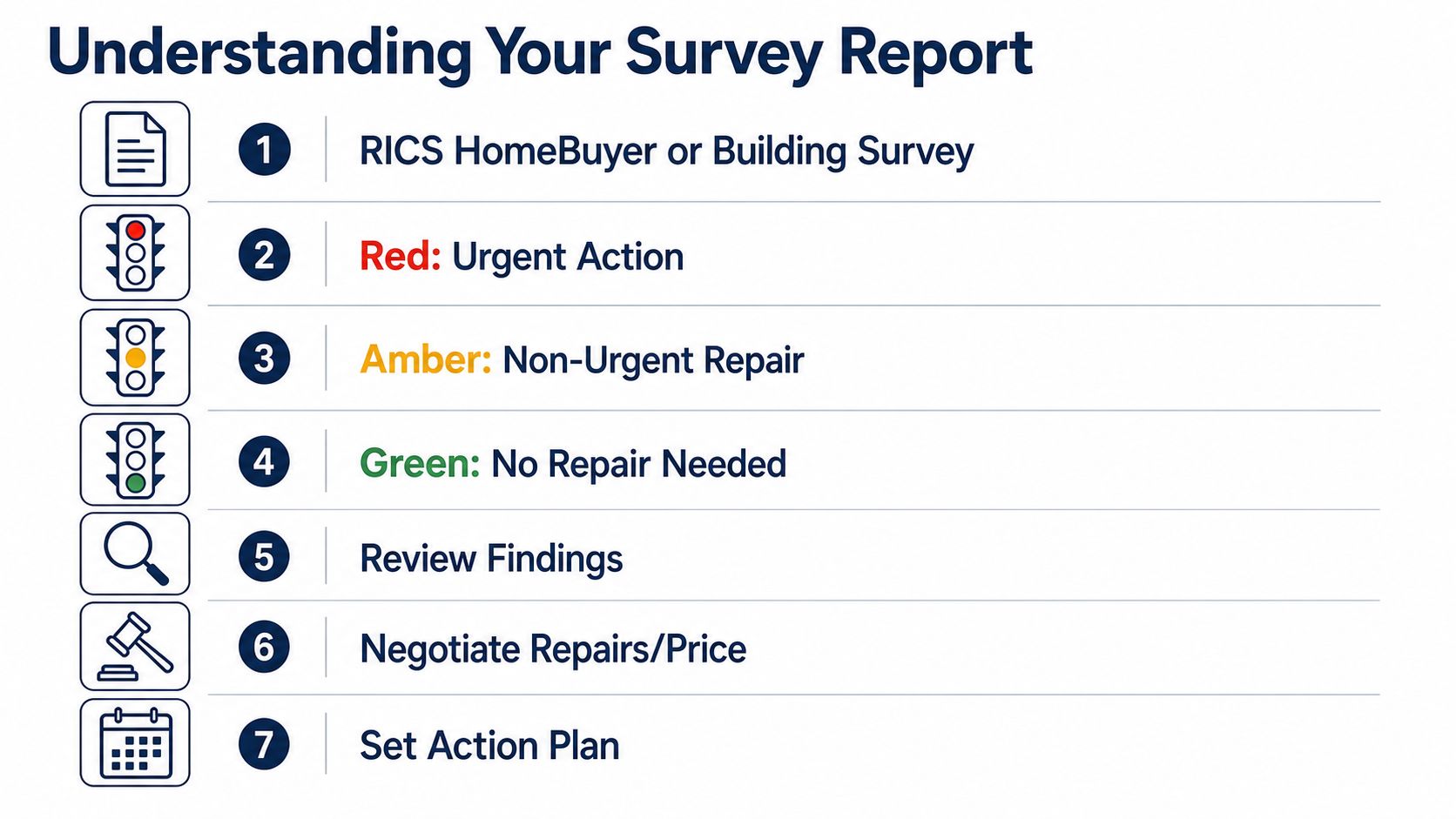
Start with the headline issues, not the filler. A surveyor will usually separate defects that need immediate attention from matters that should be checked by a specialist and the ordinary maintenance items every owner eventually faces. That order matters because buyers waste time on minor cosmetic issues and miss the expensive stuff.
What to do with the findings
- Red items: Get quotes quickly and use them to renegotiate, or walk away if the defect is structural or too costly.
- Amber items: Ask whether a further inspection is needed, especially for roof, timber, drainage or movement concerns.
- Green items: Note them, budget for routine maintenance and stop worrying about them.
A price reduction is justified when the defect is real, specific and expensive enough to matter. A loose tile is not the same as failing roof coverings. A patch of staining is not the same as active damp caused by a leak or poor construction. That's the level of judgement the report should give you.
If you're unsure how hard to push on price, the right approach is to separate evidence from noise. A surveyor can help you frame the issue in a way a seller will understand, which is why buyers often use a follow-up valuation or a negotiation-focused report. This guide on negotiating after a survey is useful if you want to keep the discussion grounded in facts rather than guesswork.
Leasehold Costs and Service Charges in London
Leasehold often poses challenges for many London first-time buyers. They concentrate on securing the mortgage and overlook that ownership is only part of the equation. For a flat, the ongoing charges can alter the true cost of living there more significantly than the initial purchase price ever will.
A freehold house and a leasehold flat are not the same animal. Leasehold brings service charges, ground rent clauses, management company decisions, reserve fund questions and, in some blocks, building safety issues that can linger long after completion. A flat in Bermondsey or Woolwich can look affordable on paper and still become expensive to keep because the management pack, lease terms and annual charges were not reviewed properly.
What to check before exchange
Do not rely on a fresh coat of paint or a neat communal hallway. Ask for the lease, service charge accounts, reserve fund position and any notice of major works before you exchange.
You also need to look at lease length. Once a lease starts running down, remortgaging becomes harder and resale gets less comfortable. Your solicitor should explain the lease position clearly, but the surveyor should still flag clues that the building itself may have related risks, such as poor maintenance, fire-safety concerns or evidence that repairs have been deferred.
A building survey can earn its keep on a flat. It won't rewrite the lease, but it can highlight issues a glossy sales listing won't mention. That is especially important in converted houses and larger blocks in boroughs such as Southwark, Lambeth and Greenwich, where the building fabric and the legal structure both affect affordability.
SDLT, First Homes and the Real Cost of Buying
Stamp Duty Land Tax is one of those costs people underestimate until the figures land on the solicitor's desk. HMRC's first-time buyer relief gives 0% SDLT on the first £300,000 of a qualifying residential purchase, then 5% only on the portion from £300,001 to £500,000. Above £500,000, the first-time buyer relief does not apply. HMRC's definition is strict, too, because prior ownership anywhere in the world can disqualify you, including inherited or gifted interests.
That makes the purchase price a tax-sensitive decision. The difference between £300,000 and £300,001 is not academic, because the extra pound triggers tax on the excess. For buyers stretching into the upper end of the relief band, that needs to be factored into the offer price before enthusiasm gets ahead of arithmetic.
The First Homes scheme can help, but only if the numbers fit. Government guidance says the home must be sold at at least 30% below market value, the post-discount first sale price must be no more than £250,000 or £420,000 in Greater London, and in London the household income must be no more than £90,000. Buyers also have to secure a mortgage for at least half the discounted price, so the discount helps with affordability but does not remove lender scrutiny.
Read more about local property values in London if you are trying to judge whether a place is sensibly priced before you make an offer.
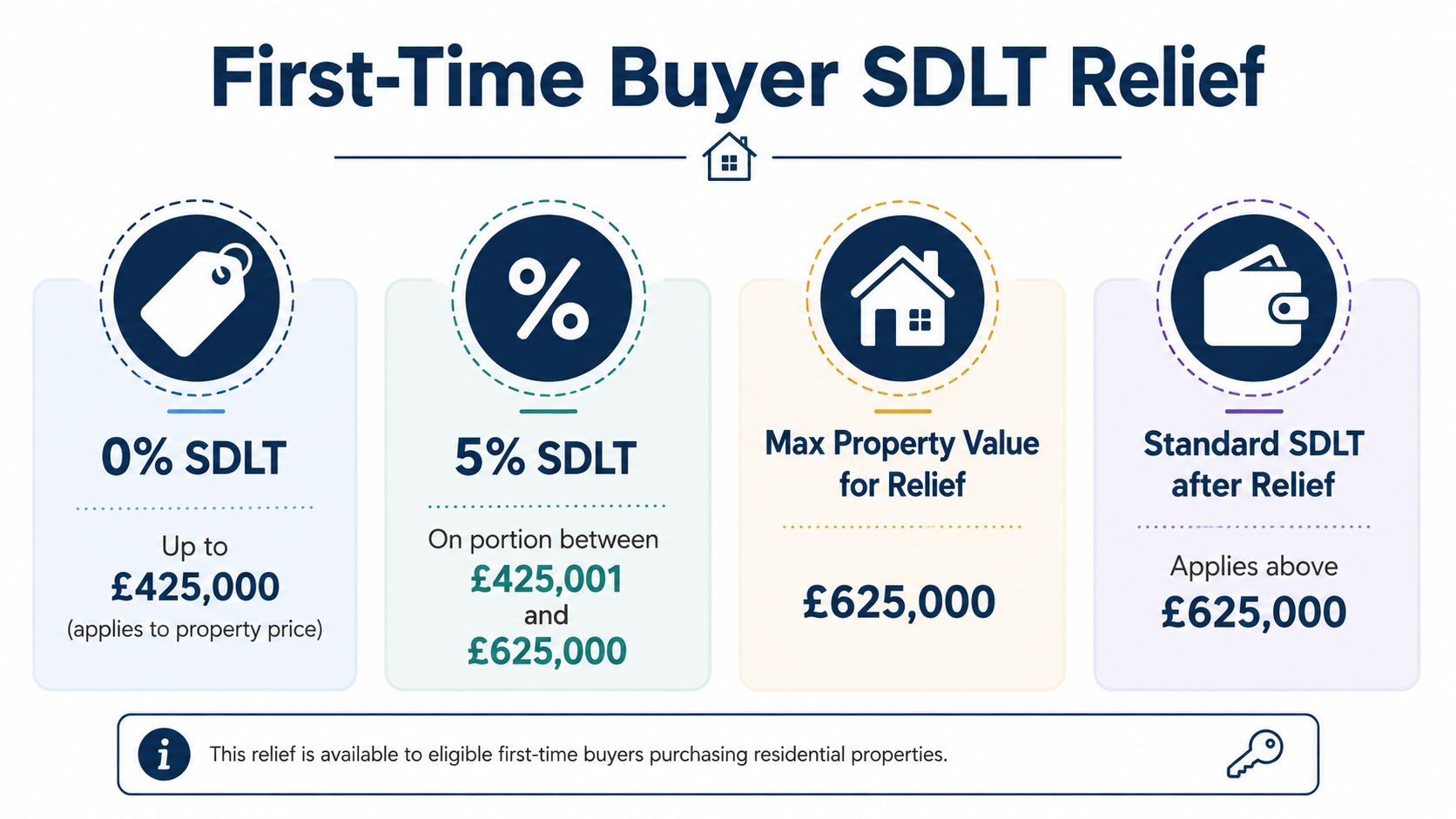
The practical point is this. Don't negotiate the offer price in isolation. Consider the tax band, the scheme rules, and the mortgage you need to secure, then decide whether the property still stacks up.
The Offer to Completion Timeline for London
Once the offer is accepted, the clock starts in earnest. The solicitor opens the file, the lender processes the mortgage application, the survey gets booked and the searches go out. If the flat is leasehold, the managing agent also becomes part of the story, and that often slows things down more than buyers expect.
The London delay points are predictable. Local authority searches can take time, management packs can be slow to arrive and chains can stall when one buyer is waiting on another buyer's sale. None of that is unusual. It just means you need to stay responsive and keep documents, ID and deposit evidence ready.
A sensible sequence
- Instruct your solicitor. They need to start the legal work and request the contract pack.
- Book the survey. Do this early enough that you can act on the findings before exchange.
- Push the mortgage file. Your lender and broker need everything they ask for, quickly.
- Chase the searches and leasehold papers. Delay here is normal, so track it rather than panic.
- Review the report and replies. Deal-breaking defects and future costs surface at this stage.
- Sign and exchange only when ready. Once you exchange, you're committed.
- Complete and move in. Only then do the legal and financial risks drop away.
A lot of first-time buyers try to hurry exchange because they're tired of waiting. That's a mistake if the survey has shown unresolved issues, or if the leasehold paperwork is thin. A few extra days spent on due diligence is cheap compared with inheriting a problem.
Choosing an Independent Surveyor in London
Independence matters. A lender-appointed panel surveyor works for the lender's process. An independent surveyor works for you. That difference affects how blunt the advice is, and blunt advice is what first-time buyers need.
Look for RICS and, where relevant, CABE qualifications. If the surveyor is also on the RICS Valuers Registration Scheme, that tells you they're working within a recognised professional framework. For London property, local knowledge is just as important as the badge on the letterhead, because a converted flat in Deptford throws up different questions from a 1930s house in Beckenham.
Ask three things before you instruct anyone, what survey level they recommend, how quickly they can report and whether they're genuinely independent of lenders, agents and developers.
Red flags are easy to spot. Avoid anyone who dodges questions about conflicts of interest or pushes a one-size-fits-all survey. You want someone who will tell you, plainly, if the property needs a Level 2 or a Level 3, and who won't dress up uncertainty as confidence.
Corinthian Surveyors London LTD is one of the independent options buyers can use for residential work across London and the Home Counties. The practice is based in Forest Hill, is run by Clive Thompson and offers services including RICS HomeBuyer Surveys and building surveys, which is the sort of straight, buyer-focused approach that suits first-time purchasers.
First Time Buyer FAQ
Is a mortgage valuation enough on its own? No. It protects the lender, not you. If you want to understand defects, leasehold risk and future repair costs, you need an independent RICS survey.
What if the survey finds problems? Get quotes, decide whether the issue is urgent or routine and renegotiate if the defect is real and material. If the building looks structurally awkward or the leasehold position is messy, walk away if needed.
How long does a Level 2 survey take? Usually not long to arrange, but the important bit is the written report and whether it gives you enough to act on. The survey itself is only part of the process.
Do new builds need a survey if they have an NHBC warranty? Yes, they still can. A warranty is not a substitute for an independent inspection of what's been built.
Corinthian Surveyors London LTD handles residential surveys and valuations across London, including the problems first-time buyers miss until it's too late, leasehold traps, hidden maintenance liabilities and the wrong survey level for the building. If you want clear advice before you exchange, visit Corinthian Surveyors London LTD and use a proper RICS survey to make the next decision on facts, not guesswork.