
How to Check Property Value UK: A Practical Guide for 2026
You've typed your postcode into three valuation tools and got three different answers. One says your flat in Forest Hill is worth one figure, another nudges it up, and the third lands miles away. That's normal. It's also why a quick check property value UK search can leave you more confused than informed.
Blunt. Online tools are a starting point, not a final figure. If you want a value you can trust for a sale, probate, separation or staircasing, you need sold evidence, not guesswork.
Table of Contents
- Why Online Valuation Tools Give You Different Numbers
- Using Land Registry Sold Prices as Your Evidence Base
- Selecting and Adjusting Comparable Sold Properties
- Understanding the Limits of Instant Online Estimates
- When to Get a Formal RICS Valuation
- Your Next Steps for an Accurate Property Value Check
Why Online Valuation Tools Give You Different Numbers
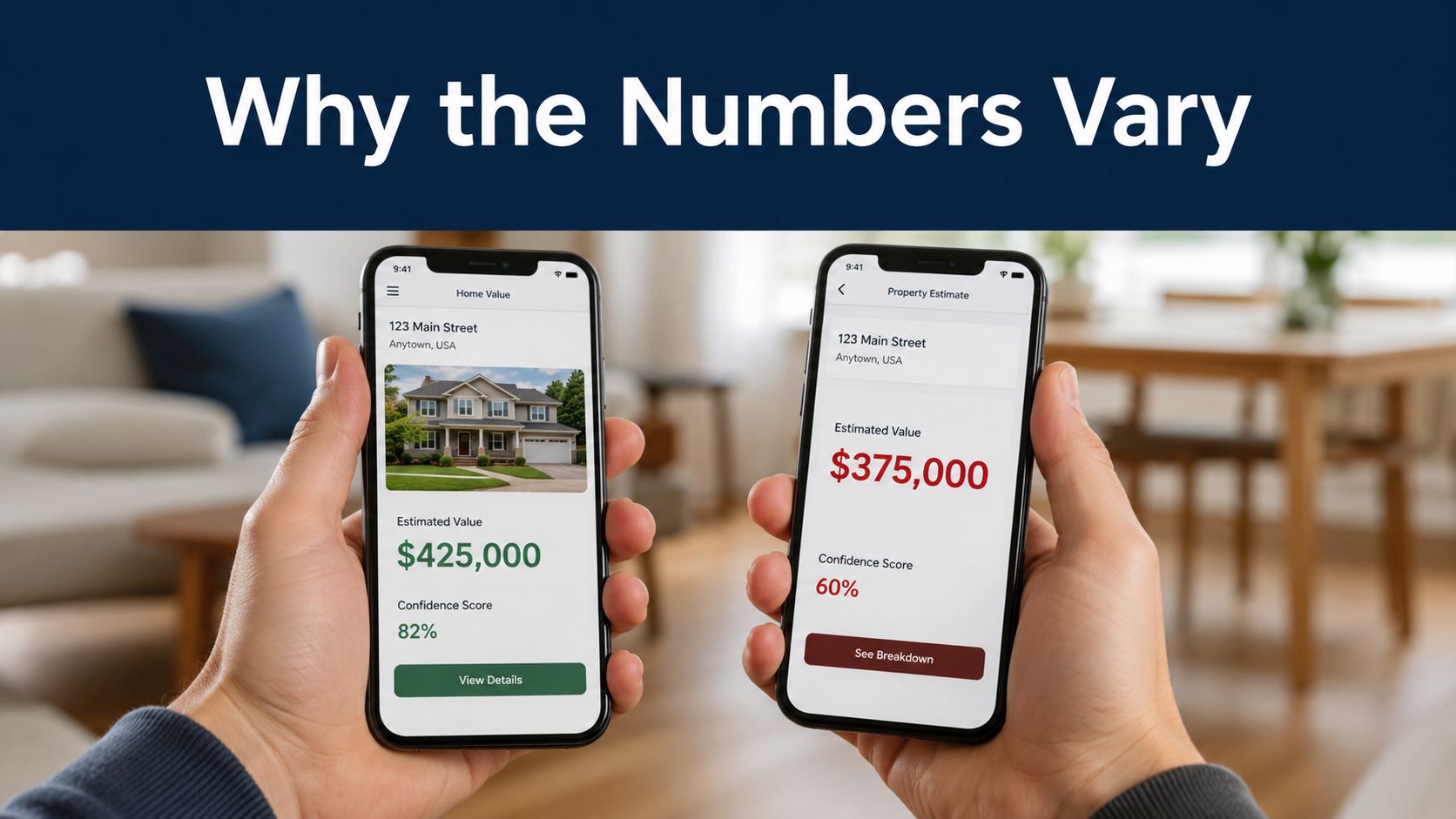
A client in Peckham once rang me after checking the same house on three free tools. One figure was flattering, one was cautious and one looked pulled out of thin air. That sort of spread happens because these systems are built on rough inputs, not a proper inspection.
Most online estimators lean on postcode averages, nearby sold prices and asking prices. They cannot see that your Victorian terrace in Lewisham has a new kitchen, a tired roof, original sash windows or a short lease. They also can't know whether the place next door sold at a discount because the vendor was under pressure.
What the algorithm can and cannot see
That is the core problem. The software can see patterns in data, but it cannot walk through the front door. It does not know about damp in the cellar, a loft conversion done well, or a wall removed without the right steel.
Practical rule: treat an online estimate as a rough signpost, not a valuation.
If you want to see how mortgage-focused valuation checks differ from proper surveying, this guide on mortgage surveyors and valuation work is worth reading. It shows the gap between a lender's figure and a real assessment of condition and market position.
The best way to think about these tools is this. They are useful for a first look, especially if you just want to know if a price is wildly off. They are not good enough for a decision that involves real money, legal exposure or a negotiation with another party.
Using Land Registry Sold Prices as Your Evidence Base
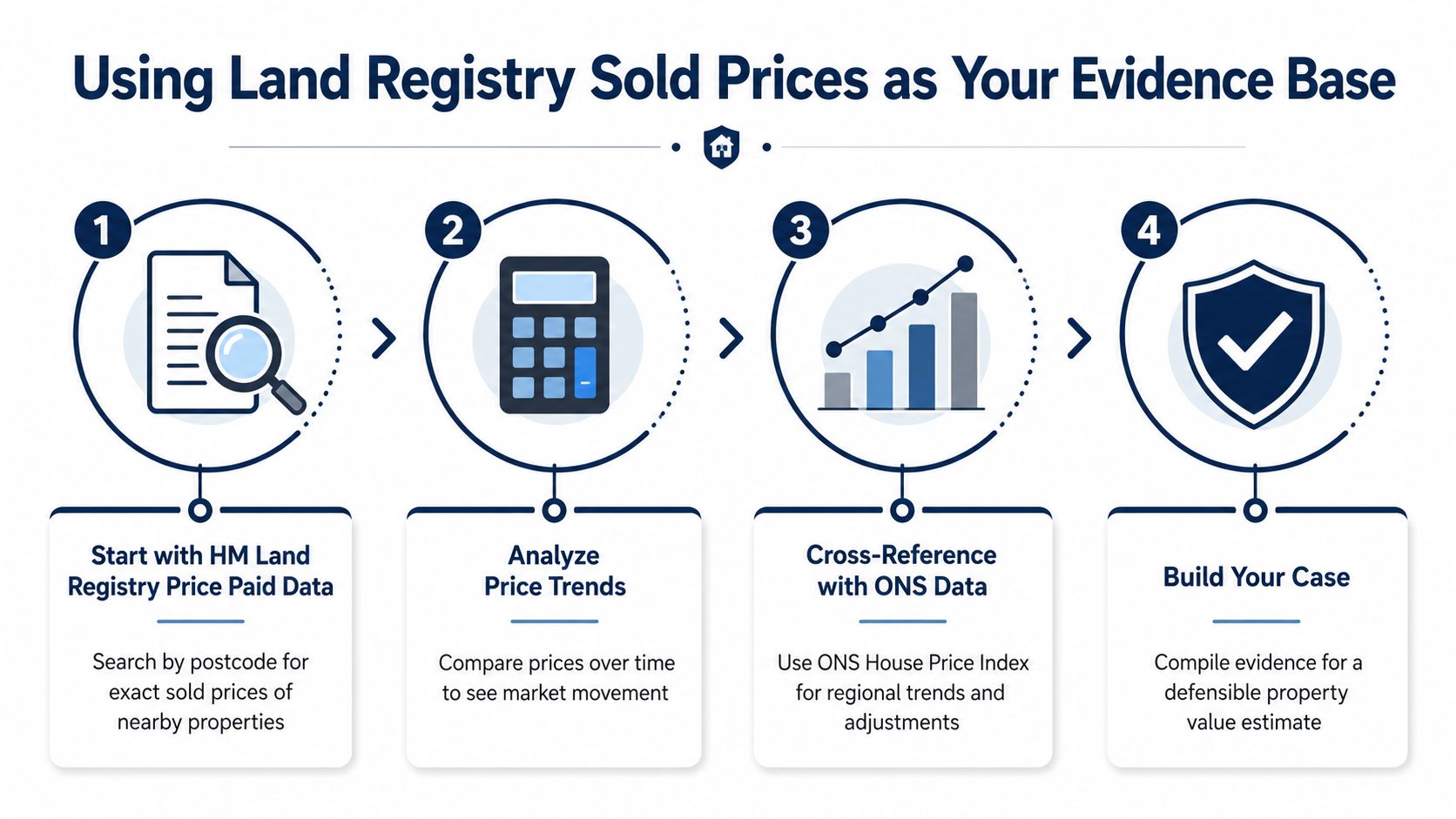
Start with the actual sold price, not the asking price. HM Land Registry's Price Paid Data lets you search how much a property sold for in England or Wales, and GOV.UK points users to the same service for that purpose. That is the right foundation when you want a rough but defensible market view. Use the HM Land Registry price search service as your first stop.
Work from the latest sold evidence
Pick nearby sales of the same type, then narrow them down. A three-bed Victorian house in Brockley is not the same as a flat in Bermondsey, even if the bedrooms look similar on paper. Which? says Price Paid Data is the best starting point for a rough estimate, and guidance also says older evidence goes stale, so sold comparables from the last 6 to 12 months deserve the most weight Which? guidance on house values.
The national backdrop matters too. In April 2026, the HM Land Registry UK House Price Index put the average UK house price at £270,080, with the index at 103.5, prices 0.7% higher than the previous month and 3.8% higher than a year earlier HM Land Registry UK House Price Index. That gives you a standard government benchmark, which is better than trusting a random portal number.
The Office for National Statistics also publishes local area housing price datasets so you can see how values vary across regions and local authorities ONS housing price datasets. That matters in London because values can change sharply from one borough to the next, and even from one street to another.
A simple way to build the evidence
Use these checks in order:
- Find the exact local sale: Search nearby properties on Price Paid Data and match on type, size and date.
- Check the market direction: Use the UK House Price Index to see whether the wider market is moving up or down.
- Cross-check local context: Use ONS local area data to understand borough or authority-level differences.
- Ignore stale evidence: If the sale is old, treat it with caution.
Useful habit: if the best comparables are all older than a year, you need to be more conservative about the final figure.
If you want to see how estate agent appraisals can diverge from sold evidence, read this note on estate agent valuations. It is the kind of gap that catches sellers out in places like Blackheath, Catford and Crystal Palace.
Selecting and Adjusting Comparable Sold Properties
Once you have sold data, don't stop at the headline price. The work is comparing like with like. That means 3 to 5 adjusted comparables, not one cherry-picked sale that flatters your preferred number.
A good comparable is the same property type, close in size, near in location and sold recently. For a house in Forest Hill, I would rather see three sensible nearby sales than one perfect-looking sale from a different part of Southwark. A bit of distance, a different street layout or a different tenure can skew the result.
What to adjust for
Many DIY checks go wrong. People see two houses that look similar from the pavement and assume they are worth the same. They rarely are.
| Comparable Adjustment Factors | What to Check | Typical Impact |
|---|---|---|
| Condition | Decor, damp, roof state, electrics, bathroom and kitchen quality | A tired interior usually drags value down |
| Size | Floor area, bedroom count, loft space, extensions | Bigger usable space usually lifts value |
| Tenure | Leasehold or freehold, lease length, service charges | Lease issues can reduce value materially |
| Garden and outside space | Garden size, access, outbuildings, parking | Better outside space often helps in London |
| Location detail | Street, conservation area, school catchment, station access | Small location differences can matter a lot |
| Fittings and finish | Windows, heating, kitchen spec, general presentation | Refurbishment quality changes buyer appetite |
A Victorian terrace in Lewisham that has been fully modernised is not the same asset as one with original wiring and a roof that wants attention. The same applies in Greenwich or Dulwich, where two apparently similar homes can end up in different bands because of condition, layout or tenure. If you want a wider market sense, market analysis tips from RealEstateCRM are useful background, but you still need local sold evidence before you trust a figure.
My rule: use asking prices only as a secondary check. Sellers ask what they want. Buyers pay what the market accepts.
For rental property, a yield check can help as a sanity test. UK guidance often uses rough local yields of 4 to 5% as a secondary cross-check rather than a standalone valuation method Goodmove property valuation guidance. That is not a magic formula. It is just another way to see whether the number you have built is in the right neighbourhood.
The other point is simple. If your comparables need a lot of adjustment, the final figure should be a range, not a single neat number. That is how a professional thinks, and it is how you avoid fooling yourself.
Understanding the Limits of Instant Online Estimates
Instant tools are attractive because they feel decisive. They are not. They are automated valuation models, or AVMs, and their whole job is to estimate from data inputs rather than inspect the property itself AVM definition in real estate.
That limitation bites hard in London. Two homes on the same street in Forest Hill can look similar from the outside and still be miles apart in value. One may have a short lease, tired decoration and a poor layout. The other may have a new roof, a better kitchen and a freehold title.
Why the figures drift so much
AVMs rely on proxies. They lean on nearby sales, asking prices and postcode-level data. They do not know whether an extension was done properly, whether the flat is on a noisy road or whether the seller accepted a low offer because they needed to move fast.
This is why online figures can clash so badly when the market has shifted. A stale comparable can drag the estimate in the wrong direction, especially if mortgage rates, buyer sentiment or stock levels have moved since the last sale. In London, that can distort a quick check more than people expect.
The sensible approach is to treat the online number as one data point. Then compare it with sold evidence and, where it matters, a proper inspection. MoneySavingExpert says free online tools are only a guide and recommends using Land Registry sold prices alongside a property survey for a more realistic valuation MoneySavingExpert house prices guide.
What a surveyor will catch that software misses
An inspection can pick up things that never appear in a postcode lookup. Poor loft conversion detail. Damp staining. Movement around openings. A chimney breast that has been removed badly. Those are not small details. They affect value.
If you are looking at a flat in Bermondsey or a conversion in Peckham, the lease, the layout and the internal condition matter more than the automated estimate suggests. Online tools are blunt instruments. Useful, yes. Trustworthy on their own, no.
When to Get a Formal RICS Valuation
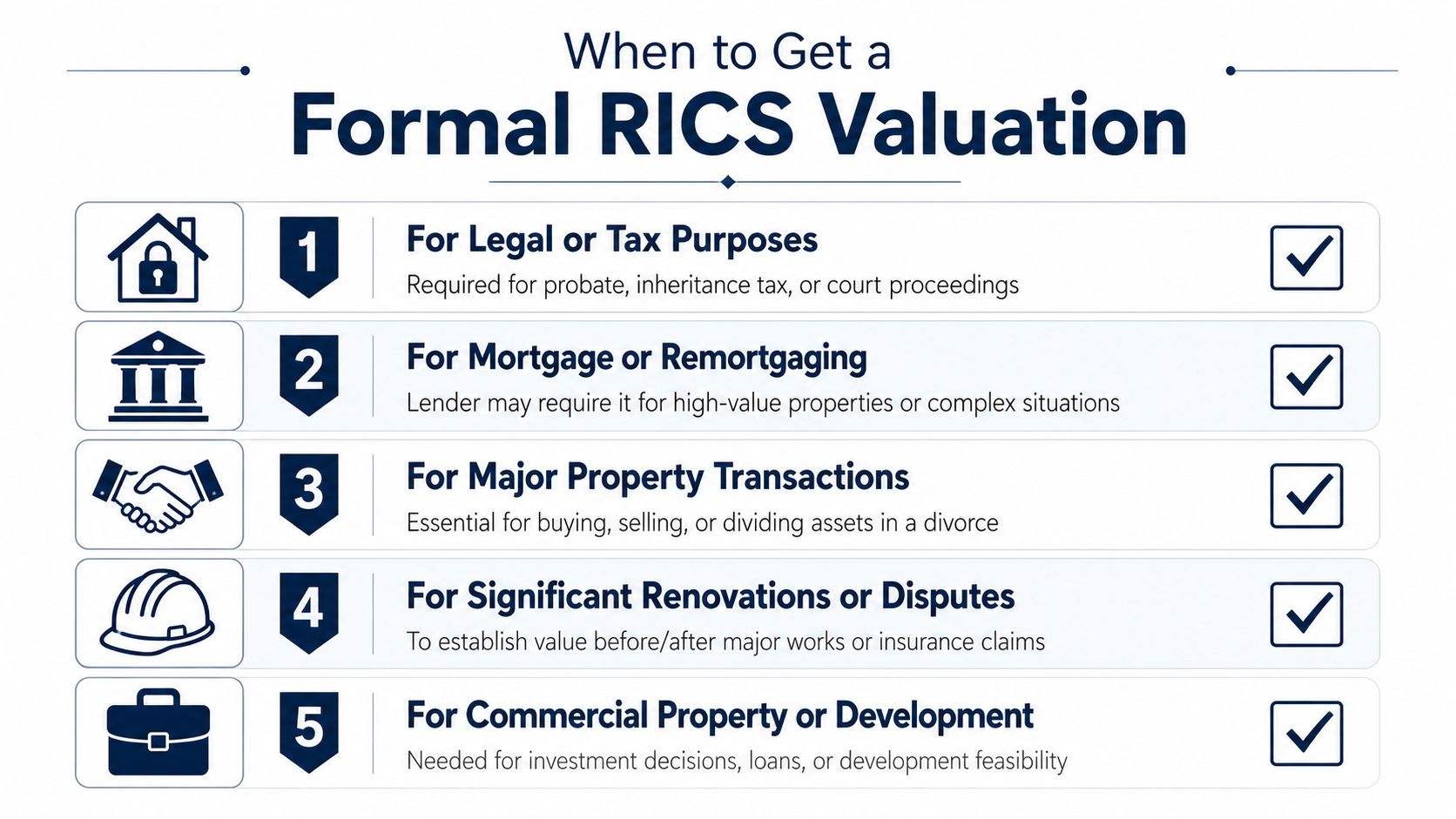
If you need a figure that has to stand up, stop relying on a free tool. Probate, matrimonial separation, capital gains tax and shared ownership staircasing all call for a proper, independent valuation. A lender's mortgage valuation is not enough, and an estate agent's appraisal is not the same thing either.
A formal RICS valuation is an independent assessment. It is backed by professional standards and professional indemnity cover. That is very different from an agent's number, which is often shaped to win your instruction.
The situations that justify the extra step
- Probate and inheritance tax: You need a defensible figure for HMRC and the estate.
- Separation and divorce: Solicitors and courts want something independent, not sales patter.
- Capital gains tax: You may need a retrospective value at a specific date.
- Shared ownership staircasing: The premium has to be based on current market value.
- Complex property issues: Listed buildings, unusual leases and mixed-use complications need judgment, not a portal estimate.
For this kind of work, look for RICS and CABE qualifications and membership of the RICS Valuers Registration Scheme. Corinthian Surveyors London LTD is independent, based in Forest Hill and not tied to lenders, estate agents or developers. That independence matters when the number needs to be trusted by somebody other than the person selling the property.
For a deeper look at formal valuation work, see RICS property valuations. It is the right route when the figure has legal or financial consequences.
Straight answer: if the valuation affects tax, a dispute or a legal process, pay for a proper one.
That applies across London. A probate valuation in Bromley is not the same job as a quick sale estimate in Brixton. The title, condition and local market all need checking properly, and that is what a surveyor is for.
Your Next Steps for an Accurate Property Value Check
Start with the online tools if you want a rough number. Then move to sold prices, comparable adjustment and local market context. If the figure matters for probate, separation, tax or a sale negotiation, do not stop at software. Use it as a prompt, not a conclusion.
A decent workflow is simple:
- Check the automated estimate to see the broad range.
- Pull local sold prices from HM Land Registry.
- Compare 3 to 5 proper comparables and adjust for condition, size and tenure.
- Test the number against the market using the UK House Price Index and local area data.
- Bring in a formal RICS valuation when the stakes are real.
If you want to use AI to help sort documents or property notes before a valuation, PDF AI's real estate property analyser is a practical aid. It won't replace a surveyor, but it can help you organise the paperwork before someone like Corinthian looks at the property.
Corinthian Surveyors London LTD is based in Forest Hill, covers all London boroughs and the Home Counties, and is run by Clive Thompson, who holds RICS and CABE qualifications with over 30 years' experience. The firm is regulated by the RICS, sits on the RICS Valuers Registration Scheme and is insured by Royal Sun Alliance. If you need a straight answer on value, that is the sort of set-up that gives you one.
If you want a proper, independent view of your property's value, Corinthian Surveyors London LTD can help with market valuations, probate valuations, separation valuations and related residential work across London. Visit Corinthian Surveyors London LTD or call 0800 00 16 422 to talk through the property, the purpose of the valuation and the right next step.