
Reinstatement Cost Assessment: A London Homeowner’s Guide
Your insurance renewal lands in your inbox. It asks for the sum insured. A typical response involves one of three actions. Individuals accept last year's figure, they guess, or they type in the market value and hope for the best.
That's how underinsurance starts.
I'm Clive Thompson. I run Corinthian Surveyors London LTD in Forest Hill, and I spend a lot of time explaining that the rebuild figure on a buildings insurance policy is not a finger-in-the-air number. For a London homeowner, especially in places like Lewisham, Bromley, Greenwich or Southwark, getting this wrong can leave you badly exposed after a serious fire, flood or structural collapse. If you're already reviewing broader policy wording, this guide to water damage coverage for homeowners is useful for understanding what insurers may and may not pay for when damage happens.
A reinstatement cost assessment is the proper answer. It's the professional calculation of what it would cost to rebuild your property for insurance purposes. Not what it would sell for. Not what your neighbour says it's worth. Not what an online calculator spits out after two minutes.
Table of Contents
- That Annual Home Insurance Guessing Game
- What a Reinstatement Cost Assessment Is
- Why an Accurate Figure Is Vital for London Property
- The RICS Methodology What We Include and Exclude
- How to Commission an Assessment and What It Costs
- Common Mistakes and a Simple Checklist
- Frequently Asked Questions
- How often should I get a new reinstatement cost assessment
- Can I use the council tax band to estimate rebuild cost
- Does the assessment include garages, boundary walls and outbuildings
- Does VAT matter in a reinstatement cost assessment
- Do flats and leasehold homes need a reinstatement cost assessment
- Who should carry out the assessment
That Annual Home Insurance Guessing Game
The dangerous part is how ordinary it feels. You're not making a dramatic decision. You're just renewing a policy.
A homeowner in Catford with a Victorian terrace often assumes the insurer already knows the right figure. A homeowner in Bromley with a 1930s semi often thinks the sale price is close enough. Both assumptions can be expensive.
Practical rule: If you can't explain how your buildings sum insured was calculated, it's probably a guess.
The issue isn't just the main brick and tile cost. A proper reinstatement cost assessment deals with the full rebuild scenario after a major insured event. That means looking beyond the obvious and arriving at a figure that reflects the full cost of putting the building back.
Here's the straightforward way to understand it:
- Your insurer asks for a rebuild figure, not a sale price.
- That figure needs evidence behind it, especially for London property.
- A qualified surveyor calculates it properly using recognised methodology, measurements and judgement.
That matters even more if your home has awkward access, period detailing, unusual roof forms or a history of alterations. A loft conversion in Sydenham, a rear extension in Beckenham or a flat conversion in Peckham can all affect the true rebuild cost.
Homeowners often spend more time comparing premiums than checking the figure the premium is based on. That's the wrong priority. A cheap policy with the wrong sum insured is not a saving. It's a problem deferred.
What a Reinstatement Cost Assessment Is
A reinstatement cost assessment is a professional calculation of what it would cost to rebuild your property from scratch for insurance purposes. It is not a valuation for sale, probate or matrimonial work. It serves a different job entirely.
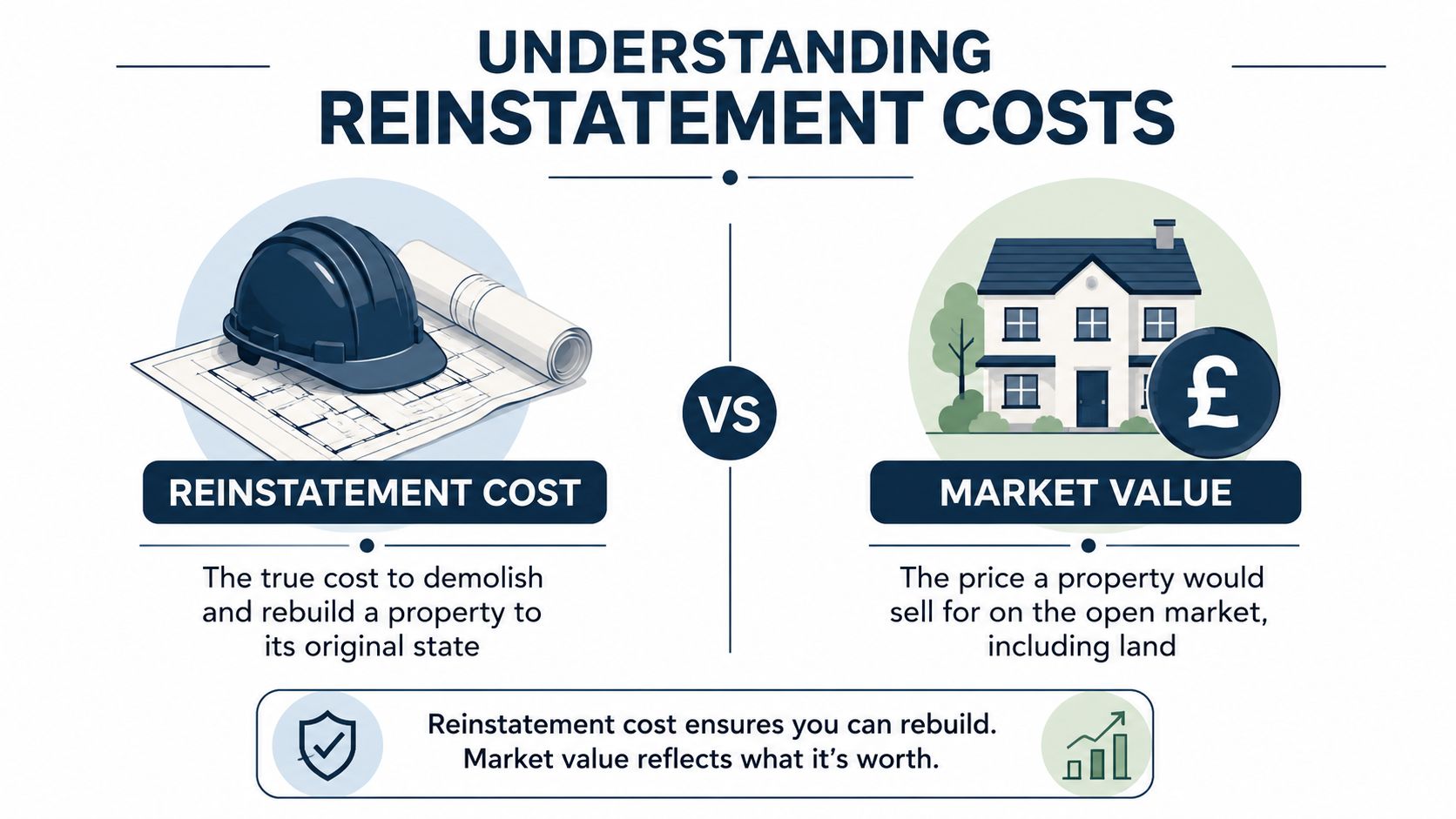
Market value and rebuild cost are not the same thing
Many owners often misunderstand this distinction. Market value is what someone might pay for your home on the open market. That price includes the land, the postcode, transport links, school catchments and buyer demand. Reinstatement cost is the cost of demolishing what remains and rebuilding the structure.
Those two figures can be very different.
According to Carter Jonas on the growing problem of underinsurance, 60% of UK homeowners mistakenly use their property's market valuation as their insurance sum, even though rebuilding costs have surged 25–30% since 2021. That confusion is one of the main reasons people end up underinsured.
If you want the distinction explained from the valuation side as well, I've covered it separately in this piece on RICS property valuations.
What the figure is actually for
The declared value in a reinstatement cost assessment is there for one purpose. It helps set the right buildings insurance cover.
It should reflect the likely cost of reconstruction after a major loss. That includes the building itself and the associated costs tied to rebuilding. It does not track what an estate agent would list your house for in Forest Hill or what a buyer might offer in Blackheath.
A house in Lewisham can have a strong market value because of location. Its reinstatement cost is driven by construction, demolition and rebuild realities, not by the Overground or a good coffee shop nearby.
That's why a proper assessment is technical work. A surveyor looks at the form, size and characteristics of the building and applies professional judgement. For a standard modern house that may be relatively straightforward. For a Victorian terrace with chimney breasts altered, lath and plaster, ornate cornicing or non-standard extensions, it needs more care.
In plain English, the reinstatement cost assessment answers one very specific question: if this building had to be rebuilt, what should the insurance figure be?
Why an Accurate Figure Is Vital for London Property
London is unforgiving when the insurance figure is wrong. Labour costs are higher. Access is tighter. Site logistics are more awkward. If you own a terrace in Lambeth, a flat in Hackney or a period house in Greenwich, rebuilding is rarely simple.
London costs more to rebuild
The numbers make the point clearly. In London, the average reinstatement cost for rebuilding a standard property is approximately £2,800 per square metre, compared with a national average of £2,300 per square metre, according to Checkatrade's guide to reinstatement cost. The same source notes that a 100m² London flat would require roughly £280,000 in rebuild coverage, while the same size property outside London might need £230,000.
That gap isn't academic. It's the difference between being properly covered and finding out, too late, that your policy figure was too low.
A Victorian terrace in Brockley may look ordinary from the pavement. Rebuilding it after a major fire can involve restricted access, party wall issues, detailed brick matching and more expensive labour. A detached house in Bromley may seem simpler, but if the roof structure is complex or the specification is higher than average, the cost moves quickly.
Here's the point most owners miss:
- London labour costs bite harder
- Tight sites slow work down
- Material handling in dense streets adds cost
- Older housing stock often hides complexity
Later cost inflation makes stale figures worse. The same Checkatrade source states that, as of January 2025, rebuild costs for houses and flats across the UK saw an average uplift of 3.8% compared with the previous year.
Why lenders and insurers care
Insurers care because they don't want a policy based on a weak number. Lenders care because the building secures the loan. If a serious insured event damages the property, they want to know the cover reflects the likely rebuild exposure.
That doesn't mean every lender asks for a separate document on every routine case, but once the property is unusual, high value or clearly altered, a proper reinstatement cost assessment carries weight.
This short video gives a useful overview of the rebuild cost issue in practice:
If your current sum insured came from an old policy schedule, a mortgage valuation or guesswork, treat it as unverified until someone qualified has checked it.
That's especially true in South East London, where I regularly see a mix of period terraces, interwar semis and converted flats, all with very different rebuild profiles despite being only a few miles apart.
The RICS Methodology What We Include and Exclude
A proper RICS assessment starts with the building itself. I measure what is there, then price the cost of putting it back after a serious insured loss under current standards, not last year's guess and not the insurer's quick online estimate.
How the measurement works
RICS methodology uses measured floor areas, usually Gross Internal Area or Gross External Area, then applies suitable rebuild rates and specific adjustments for the property in front of us, as set out in this RICS reinstatement cost assessment guidance summary. Ceiling height, roof form, bay windows, chimneys, dormers, basements and unusual layouts all affect the figure.
That matters in London because two houses with the same square metre area can carry very different rebuild exposure. A plain post-war semi in Bromley is one job. A Victorian terrace in Lewisham with a side return, custom sash windows and a slate roof is another. If you use a generic rate across both, you will get one of them wrong.
I also look at features that push costs up during a real claim, not just on paper. Access restrictions, party wall context, conservation constraints, specialist materials and the practical difficulty of strip-out and rebuild in a tight London street all need judgement. You can see the service context for this on Corinthian's page about building reinstatement costs using BCIS indices.
Roofs are a good example. Homeowners often focus on the visible covering and miss the cost of the full roof structure, insulation, flashings, scaffolding and labour. If you want a practical sense of how roofing quotes are broken down, this guide on what to expect getting a roof quote is useful background.
What goes into the declared value
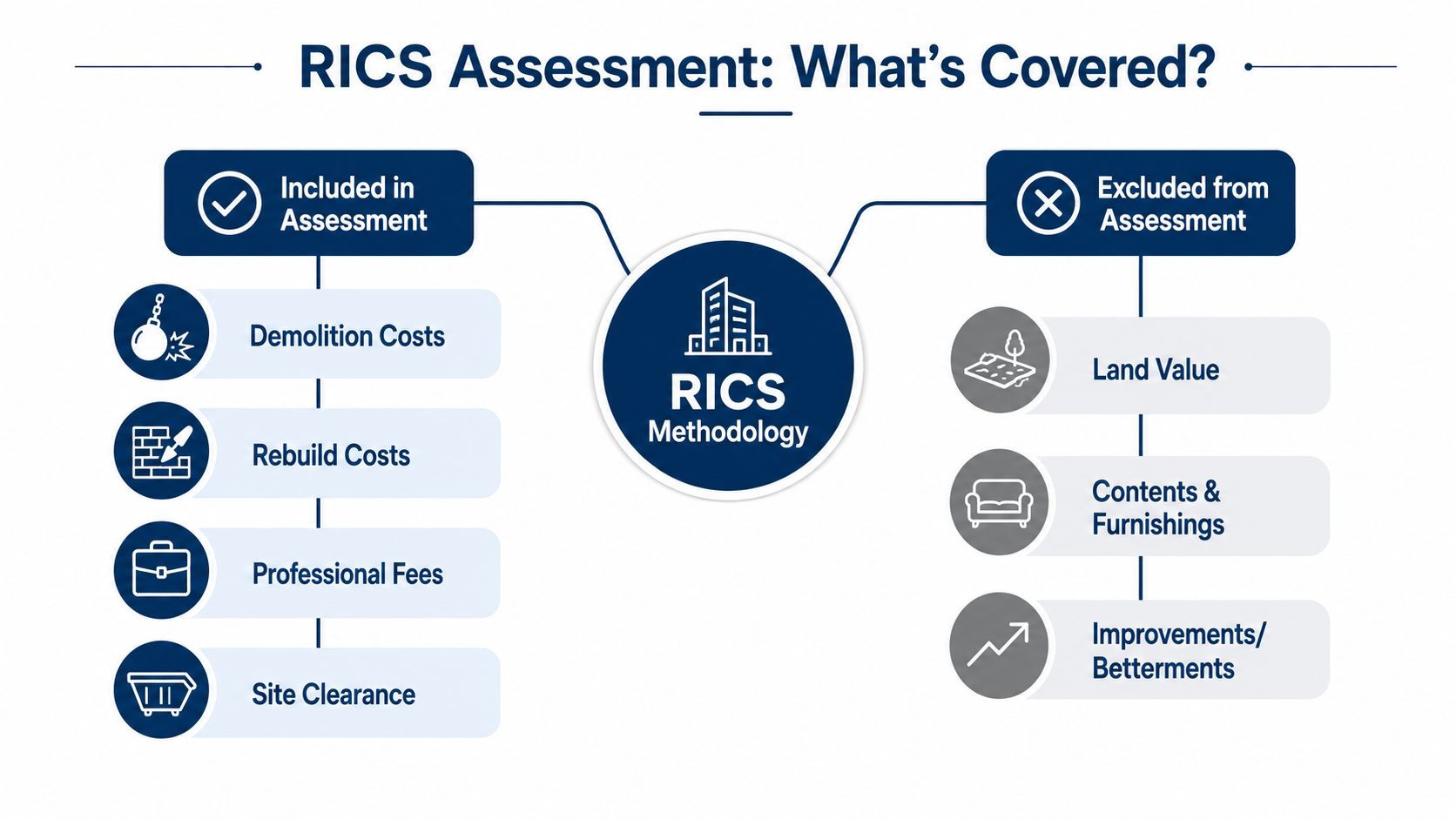
The declared value is the rebuilding cost of the structure plus the related costs that come with a real reinstatement claim. That includes demolition, debris clearance, professional fees and VAT where it applies.
RICS guidance also requires surveyors to allow for current building regulations, asbestos risk, waste disposal and other compliance costs that appear the moment a damaged building has to be rebuilt lawfully, as explained in the RICS standard form and guidance note. In London, those items are where underinsurance often starts. Owners insure the shell and forget the cost of clearing the site, instructing consultants, upgrading parts of the build to current standards and dealing with awkward disposal requirements.
A converted flat in Southwark or a period house in Dulwich can bring extra complications. Shared structures, older fabric, prior alterations and limited access all affect the amount you should declare to the insurer.
Some things are excluded, and homeowners need to be clear about that. Land value is excluded. Market value is excluded. The price a buyer might pay because the house sits near a good station or school is excluded. A reinstatement cost assessment is an insurance document, not a resale valuation.
Use it for the sum insured. Do not use it to judge what your home would sell for.
How to Commission an Assessment and What It Costs
A London homeowner usually asks for a reinstatement cost assessment after a renewal notice lands, the insurer asks awkward questions, or building works have changed the house. That is later than I'd like. Commission it before renewal is due, while you still have time to challenge an old figure and give your insurer a proper declared value.
Use a RICS Chartered Surveyor who deals with London homes regularly. I would not hand this job to a generic calculator, a call-centre valuer, or anyone who cannot explain how they reached the number. In Lewisham, Bromley, Blackheath or Dulwich, small differences in construction and access can shift the figure more than homeowners expect.
Who should carry it out
Choose an independent surveyor with experience of residential stock like yours. A 1930s semi in Bromley, a converted flat in Lewisham and a stucco-fronted house in South East London do not carry the same rebuild risk, and they should not be assessed as if they do.
Ask a few direct questions before you instruct them. Will they inspect the property or rely on a desktop exercise? Have they assessed period homes, conversions or altered properties in London? Will the report state the reinstatement figure clearly enough for insurance purposes and explain any assumptions?
Plain English matters. If your surveyor hides behind jargon, you are the one left exposed when an insurer queries the number after a claim.
For context on pricing for survey and valuation work more broadly, this guide on how much a house valuation costs gives a useful benchmark for what affects professional fees.
What you will usually pay
For a straightforward house or flat, expect a few hundred pounds for a standalone assessment. If the property is large, heavily altered, listed, split into flats, or awkward to inspect, the fee rises because the work rises.
That is money well spent.
I have seen homeowners in South London spend years paying premiums on the wrong sum insured to save a modest survey fee. Then a serious fire or escape of water exposes the shortfall. The cost of the assessment is minor compared with the cost of underinsurance in a London rebuild market.
A surveyor's fee usually moves for four clear reasons:
- Size: More floor area means more measuring, more checking and more calculation.
- Complexity: Basements, loft conversions, mixed construction and unusual layouts take longer.
- Age and character: Older homes often need closer inspection because original features and later alterations affect rebuild cost.
- Available information: Good plans and clear records make the job quicker. Missing drawings and unclear alterations do the opposite.
You should also ask what service you are buying. A site inspection is usually the right choice for a London home with character, age, extensions or any uncertainty over the existing layout. Desktop assessments have their place, but they are a weaker option where the property is anything other than simple and standard.
If major repair work is already on your radar, read this piece on what to expect getting a roof quote. It gives a practical sense of how contractors price complexity, access and specification, all of which can feed into reinstatement thinking.
Corinthian Surveyors London LTD is one independent option for this work. We are a RICS regulated practice based in Forest Hill, with RICS and CABE qualifications, focused on residential property across London. If you are unsure whether your home needs a desktop review or a site-based assessment, call 0800 00 16 422 before you renew on an old figure and hope for the best.
Common Mistakes and a Simple Checklist
Most costly insurance mistakes don't start with negligence. They start with convenience.
A homeowner in Bromley uses a generic calculator because the insurer's form suggests it. Another in Deptford sticks with an old figure from years ago, despite an extension and rising construction costs. A leaseholder in a converted Lewisham house assumes the freeholder has sorted everything correctly without checking the basis of the number.
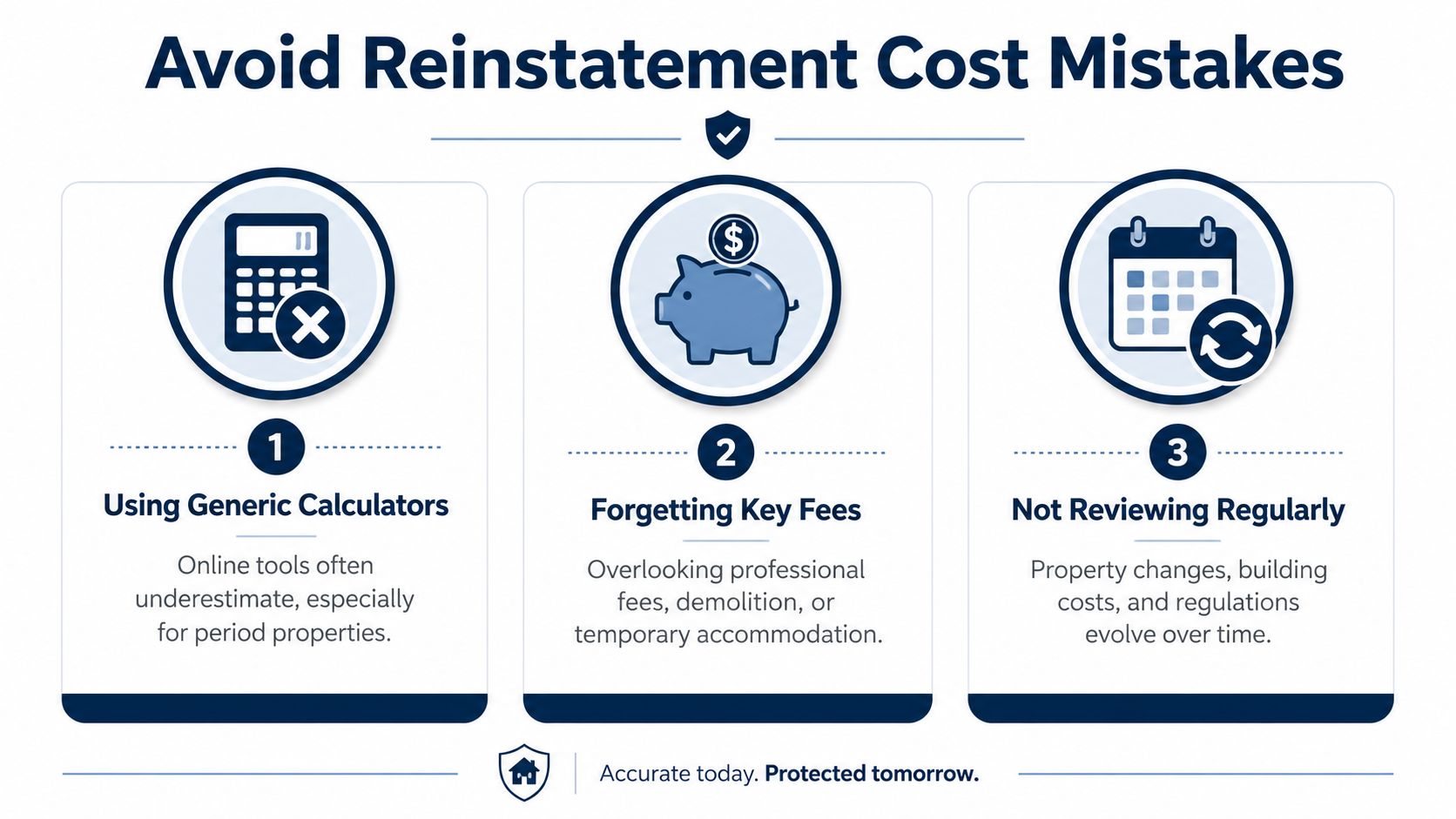
Three mistakes I see all the time
The first is relying on a broad online estimate for a property that plainly isn't standard. Victorian and Edwardian homes often have quirks that matter. Chimney alterations, ornate detailing, suspended timber floors and odd extensions all affect rebuild cost.
The second is forgetting the non-build elements. People focus on bricks, roof tiles and labour, but the actual insurance figure has to reflect the wider rebuild picture. Leave those parts out and the number looks neat but wrong.
A figure can feel sensible and still be completely inadequate.
The third mistake is failing to review the assessment. Building costs move. Regulations change. Homes get altered. An old figure can gradually drift out of date even if nothing dramatic has happened.
A simple checklist
Use this before your next renewal:
- Check the current policy figure: If you don't know where it came from, treat it as unverified.
- Look at the property itself: Has it been extended, refurbished or materially altered since the last assessment.
- Choose the right surveyor: Use a RICS Chartered Surveyor, and for older or unusual London homes, use one with local residential experience.
- Gather useful documents: Plans, prior surveys, lease papers for flats and details of major works all help.
- Ask what's included: You want clarity on demolition, fees and other necessary allowances.
- Set a review reminder: Revisit the figure periodically rather than letting it roll forward endlessly.
That checklist is simple because it needs to be. Insurance admin gets put off when it feels technical. It doesn't need to be.
Frequently Asked Questions
How often should I get a new reinstatement cost assessment
Get it reviewed every few years, and sooner if you have changed the property in any meaningful way. A loft conversion in Bromley, a rear extension in Lewisham, or a major refurbishment can make an old figure useless for insurance purposes.
Do not let the insurer's renewal figure roll on unchecked. In London, build costs and contractor rates can move quickly, and policy numbers often drift away from reality.
Can I use the council tax band to estimate rebuild cost
No. Council tax banding tells you nothing useful about the cost of demolishing and rebuilding your home.
I still see London homeowners rely on market value, asking price, mortgage valuation, or council tax band as if they point to the right insurance sum insured. They do not. A Victorian terrace in Forest Hill might have a modest footprint but expensive detailing, access constraints, and higher professional fees. None of that shows up in the tax band.
Does the assessment include garages, boundary walls and outbuildings
Only if they form part of the insured property and the instruction covers them. You need that confirmed at the start.
This catches people out constantly. A detached garage, brick boundary wall, garden studio, or shared structure can carry a real rebuild cost. If it matters to your policy, tell the surveyor and ask for the report scope in writing.
Does VAT matter in a reinstatement cost assessment
Yes. It can affect the final figure more than homeowners expect.
The right assessment should reflect the full cost of putting the property back after a major loss. That can include demolition, debris clearance, professional fees and VAT where it applies. The exact treatment depends on the type of property, the nature of the work, and whether any elements qualify for relief or exemption. This is one reason online calculators and rough broker estimates are risky. They often miss the parts that turn an apparently sensible figure into an underinsured one.
Do flats and leasehold homes need a reinstatement cost assessment
Often, yes, but you need to check who is responsible for insuring the building. In many London flats, the freeholder or managing agent arranges the block policy. That does not mean you should assume the sum insured is right.
Ask for evidence of how the building figure was set and when it was last reviewed. If you own a share of freehold or sit on a residents' management company, this matters even more because the responsibility can land back on the leaseholders.
Who should carry out the assessment
Use a RICS Chartered Surveyor with residential experience in London. Local knowledge matters because rebuild cost is not just about floor area. Access, party wall issues, conservation constraints, and the character of the building all affect the number.
If you want a clear answer instead of another guess, Corinthian Surveyors London LTD is an independent RICS regulated residential practice based in Forest Hill, serving London homeowners who need proper rebuild figures for insurance. You can read more at Corinthian Surveyors London LTD, or call 0800 00 16 422 if you need help deciding what sort of assessment your property needs.