
RICS Property Valuations in London: A Complete Guide
You're usually looking up RICS property valuations when someone has put you on the spot. A solicitor wants a probate figure. A lender has queried the price. An estate agent says your surveyor is “too low”. Or you're trying to sort out a separation and need a number that will stand up, not a guess dressed up as confidence.
That's where people get muddled. A proper valuation isn't the same as an agent's opinion and it isn't the same as a survey. In London, that difference matters more than people realise, because one street in Forest Hill can behave differently from the next, a flat in Bermondsey can be affected by cladding, and a short lease in Greenwich can throw the whole picture off.
Table of Contents
- What is a RICS Property Valuation
- The Red Book The Standard for Accuracy and Trust
- When You Might Need a Formal RICS Valuation
- The Valuation Process Cost and Timeframes
- Valuations vs Appraisals vs Surveys
- Why Local Knowledge Matters in London
- RICS Valuation FAQs and Next Steps
What is a RICS Property Valuation
If a solicitor, HMRC or a court has asked for a valuation, they're not asking for a rough idea. They want a formal professional opinion of value prepared by a qualified valuer who follows RICS rules.
That's what a RICS property valuation is. It's an evidence-based assessment of market value prepared by an RICS Registered Valuer. It isn't a sales pitch. It isn't there to flatter the owner. It's there to produce a figure that can be defended.
An estate agent's market appraisal serves a different purpose. It helps win instructions and guide asking prices. Sometimes that's useful. But if you need a report for probate, tax planning, matrimonial work or a legal dispute, you need something more formal than a marketing opinion.
A proper valuation also has a method behind it. The valuer inspects the property, considers the legal interest, looks at comparable evidence and explains the basis of the figure reached. If you want a clearer breakdown of what ends up in the paperwork, this guide to property valuation reports is a sensible place to start.
A good valuation should answer two questions clearly: what is the property worth, and how did the valuer get there.
In plain terms, RICS property valuations are the reports you use when the number has to carry weight. If the figure will affect tax, settlement, borrowing or a legal position, don't cut corners.
The Red Book The Standard for Accuracy and Trust
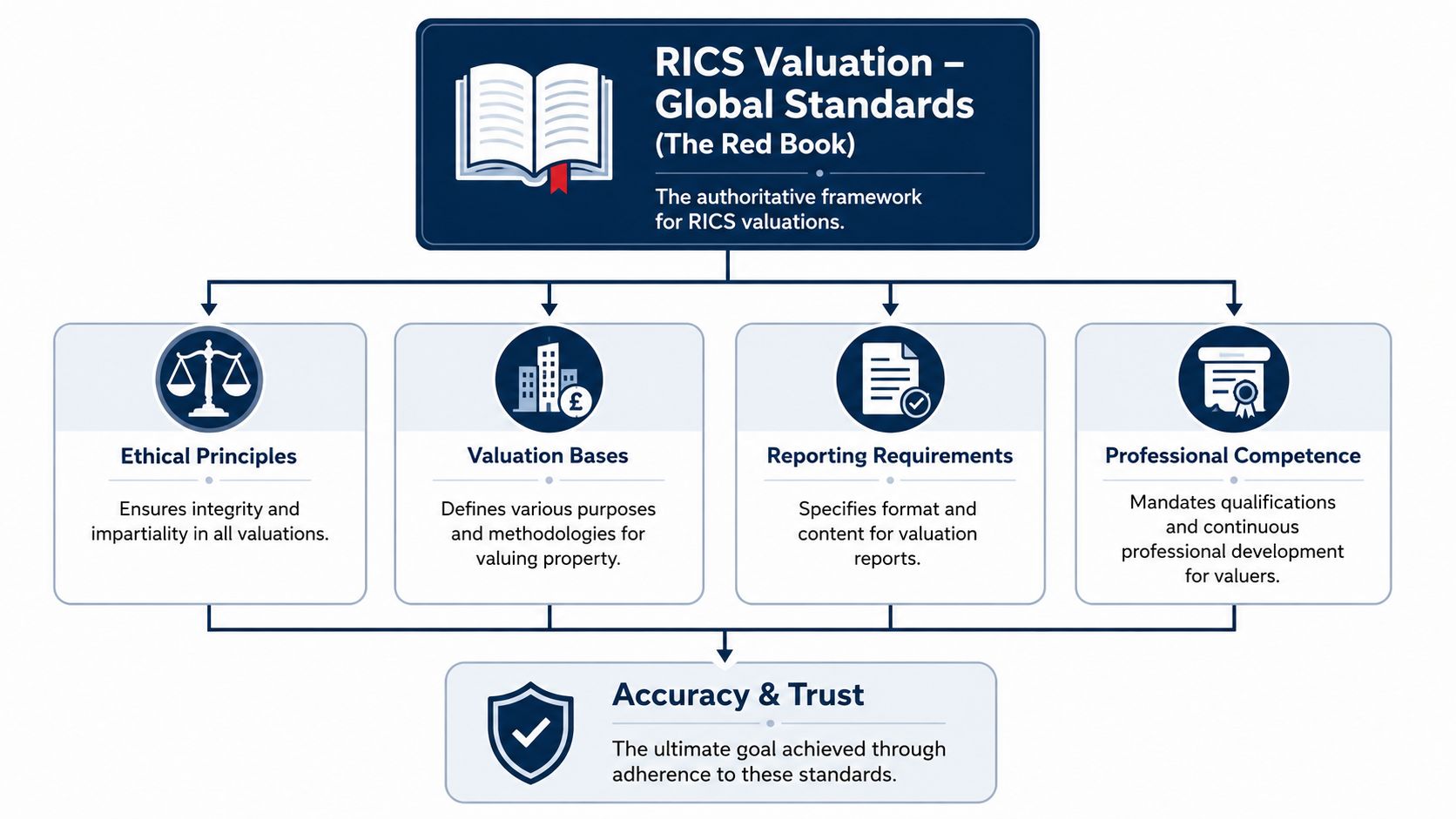
The reason a RICS valuation carries weight is simple. The valuer has to follow the Red Book. That's the rulebook behind the process.
In the UK, RICS valuations must comply with the RICS Valuation – Global Standards: UK National Supplement. That requires valuations to be carried out by an RICS-registered valuer and requires the report to identify the legal interest, the basis of value and the purpose of the valuation for consistency and transparency, as set out in RICS professional standards and guidance.
What that means in practice
The Red Book is not just paperwork. It forces discipline into the valuation.
The valuer has to pin down exactly what is being valued. Freehold is not the same as leasehold. A flat with a short lease is not the same as one with a healthy term. A probate valuation is not the same exercise as a valuation for shared ownership staircasing. If the purpose is wrong, the report can become useless.
It also keeps the valuer honest. The market value basis under the standards is tied to the actual market at the valuation date. It is not a hopeful price. It is not a forced sale figure either. It is a reasoned opinion based on evidence and proper inspection.
Why courts, HMRC and solicitors take it seriously
A Red Book valuation has legal standing because it is produced within a regulated framework. The surveyor is expected to inspect properly, research the market and disclose assumptions. If something unusual affects the property, that needs to be identified rather than brushed aside.
For London homes, that matters. Values can swing on tenure, condition, layout, alterations, cladding, rights of way or lease terms. A valuer who follows the rules has to deal with those points head on.
Practical rule: If the number is going to be challenged, use the report that shows its workings.
Corinthian Surveyors London LTD is one example of the type of firm you should look for here: independent, residential focused, RICS regulated, with Clive Thompson holding both RICS and CABE qualifications. Independence matters because ties to lenders, agents or developers can muddy the water.
The real value of the standard
People sometimes call the Red Book “too strict”. Good. That's the point.
If an estate agent, family member or other party doesn't like the figure, the answer isn't to bin the valuation and chase a friendlier number. The answer is to test the evidence. A proper valuation should stand or fall on the inspection, the comparables and the assumptions used.
When You Might Need a Formal RICS Valuation
Some jobs need a proper Red Book valuation from the start. Trying to use an informal opinion in its place usually wastes time and creates an argument later.
For residential homes in London, the Red Book requires valuers to document the inspection method and cross-reference at least three comparable recent transactions per property type, so the valuation is grounded in evidence rather than guesswork, as stated in the Red Book Global Standards incorporating IVS.
Probate and inheritance tax
If you're dealing with probate, the valuation has to reflect the property's market value for the estate. This is not the moment for a loose estimate based on what a neighbour thinks the house might fetch.
Executors need a figure they can support if it's questioned. That means proper inspection, proper comparables and a report that explains the basis used. If the house is in Catford, Blackheath or Dulwich and has odd features, deferred maintenance or an unusual title, those points need to be weighed properly.
Matrimonial separation
Separation work often becomes difficult because one side wants the highest possible figure and the other wants the lowest. That gets nowhere.
A formal valuation gives both parties a neutral starting point. The point is not to please either side. The point is to produce a supportable market figure that solicitors and, where needed, the court can rely on.
In family disputes, certainty is worth more than optimism.
Capital gains tax
Capital gains tax work can involve a retrospective valuation. That means the valuer has to look back to a relevant date and justify the opinion properly.
That's technical work. It needs care with evidence, assumptions and the legal interest being valued. If you own a former rental flat in Southwark or a long-held house in Bromley, the paperwork and market context matter just as much as the bricks and mortar.
Shared ownership staircasing
Shared ownership valuations are another area where owners often get caught out. The housing association usually needs a formal valuation, not an asking price from an agent.
People can become frustrated, especially if the figure doesn't match what they hoped. But the process only works if the valuation is independent and tied to market evidence. Otherwise the calculation behind staircasing becomes shaky.
If you're also reviewing funding before increasing your share, it helps to understand the wider borrowing picture. A plain-English guide to mortgage refinance options can help you think through the finance side before you commit.
The Valuation Process Cost and Timeframes
Individuals typically seek three answers. What happens. How long does it take. What's it likely to cost.
The bones of the process are straightforward, but it needs to be done properly. If someone claims they can produce a formal valuation without proper inspection and market analysis, be careful.
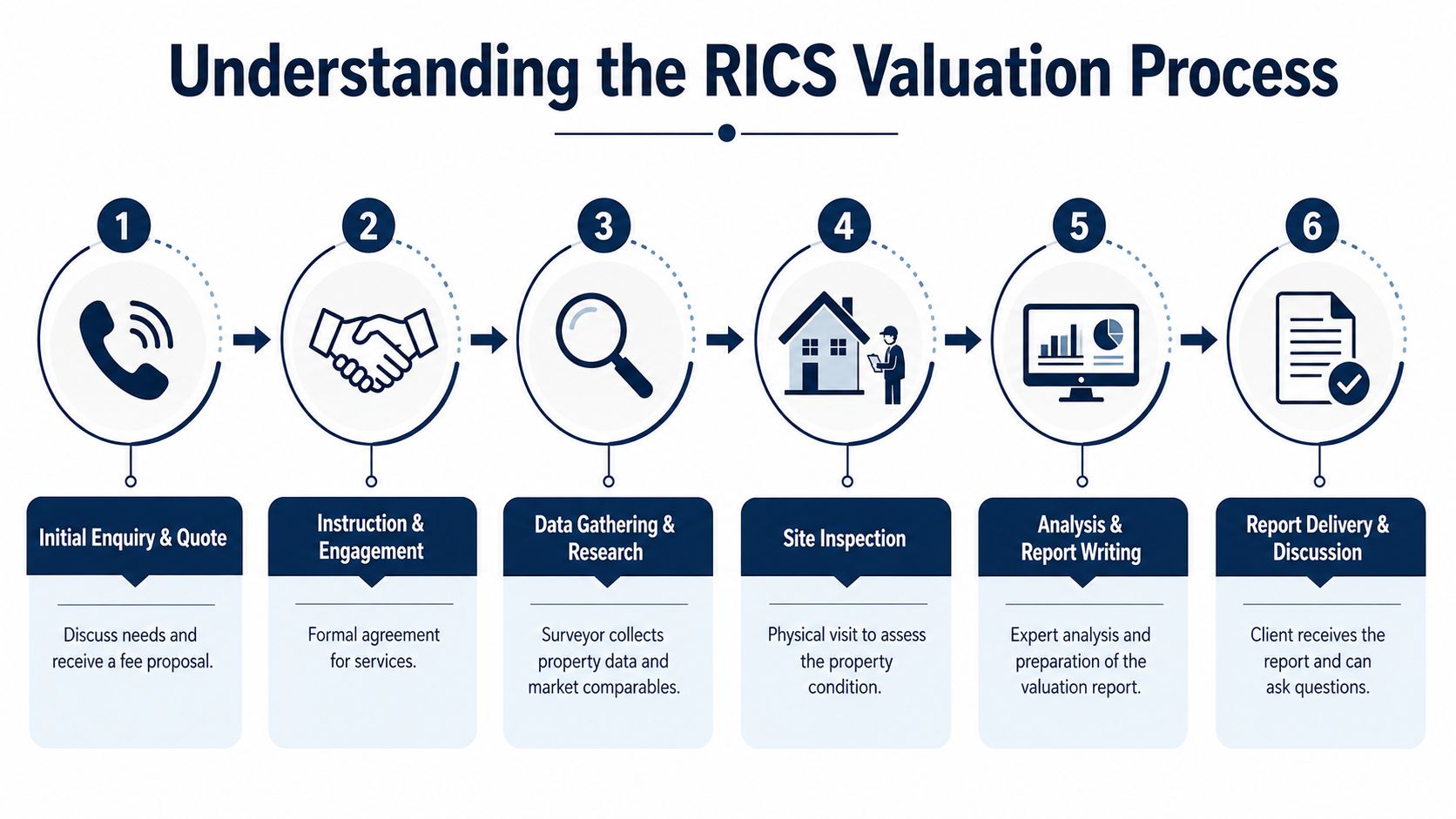
What happens from first call to final report
First, the valuer needs to know the purpose. Probate is different from matrimonial work. Shared ownership is different again. If the reason is wrong at the start, the report may not suit the job.
Then comes the inspection. For a formal residential valuation, the valuer physically inspects every room and outdoor space, measures the property and analyses comparable market evidence before settling on a figure, according to Harding Surveyors' explanation of the RICS valuation process.
After that, the report is written. It should be clear enough for a client to follow and solid enough for a solicitor, lender or tax authority to understand how the figure was reached.
What you can expect on cost and timing
In London and the South East, the market fee for a formal residential valuation by an RICS Registered Valuer typically starts at £450, with cost increasing depending on value, size and location. The final written report is typically issued within 5–7 working days, and the valuation is valid for only three months due to changing market conditions, as noted by Harding Surveyors on RICS valuation fees and timescales.
That three-month validity catches people out. Leave matters too long and the report may need updating or replacing. If you want a fuller look at fees, this article on how much a house valuation costs covers the practical side.
A short checklist helps:
- Confirm the purpose early: probate, tax, sale, separation and staircasing each need the right basis.
- Make the whole property accessible: locked lofts, outbuildings and side return areas can slow things down.
- Move promptly once the report arrives: if the matter drifts, the valuation date can become the problem.
Valuations vs Appraisals vs Surveys
Most confusion starts when people use the same word for three different things, then wonder why they get the wrong report.
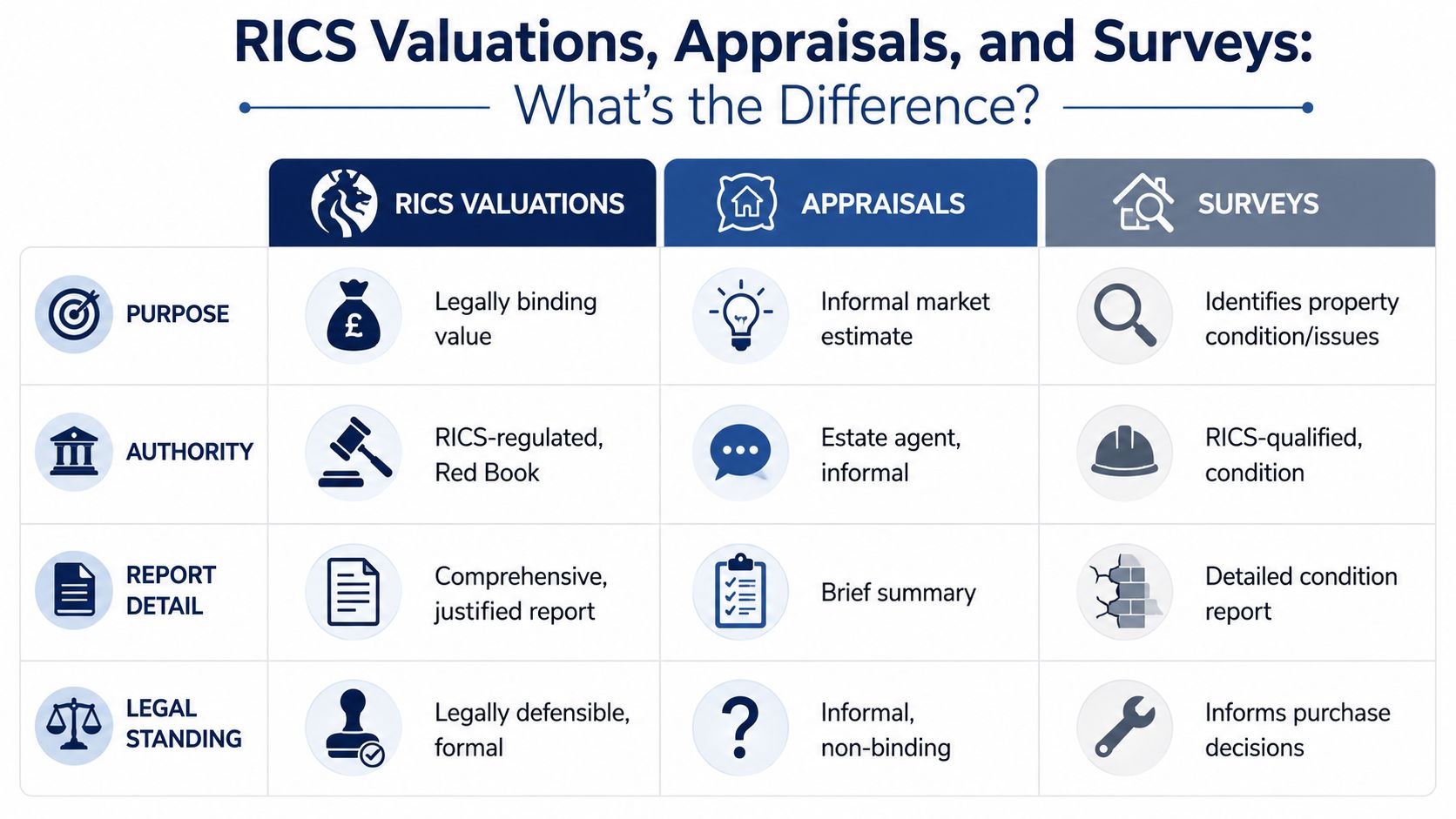
A valuation is not an estate agent appraisal
An estate agent's appraisal is usually aimed at marketing. A RICS valuation is aimed at evidence. Those are not the same job.
There's a real conflict here in practice. A Reddit discussion among UK homeowners shows agents actively rejecting RICS valuations and pushing for bank valuations instead, leaving owners unsure how to defend the independent figure. You can see that tension in this HousingUK thread about agents dismissing a RICS valuation.
If an agent says the valuation is too low, ask a simple question. Which comparables are they relying on that the valuer has missed, and are those properties comparable in tenure, condition, size and location. If they can't answer that clearly, it's opinion, not evidence.
For a wider plain-English look at how appraisals are commonly handled, Bounti Labs' appraisal process guide is useful background reading. Just remember that your formal RICS valuation carries a different level of rigour.
If someone dislikes the number, they need better evidence, not louder confidence.
A mortgage valuation is for the lender, not for you
This catches buyers out all the time. A lender's mortgage valuation is there to protect the bank's lending position. It is not a condition report for the buyer and it is not a substitute for proper advice on defects.
So if you're buying a flat in Peckham or a Victorian terrace in Brockley, don't assume the bank's valuer is looking after your interests. They aren't. For more on that distinction, this piece on the mortgage surveyor's valuation explains the gap.
A survey deals with condition, not just price
A valuation answers, “What is it worth on the valuation date?” A survey answers, “What's wrong with it, and how serious is it?”
That's why a Level 2 or Level 3 survey can be the better choice when you're buying and need to understand damp, movement, roof defects, timber decay or poor alterations. An RICS Level 2 survey is a visual, non-invasive inspection for conventional properties built from common materials, usually those under 100 years old and in reasonable condition, and it uses the Condition Rating 1–3 traffic light system, as described by Cosey Homes on the RICS Homebuyers Survey.
A short comparison keeps it simple:
| Report type | Main purpose | Best used for |
|---|---|---|
| RICS valuation | Formal opinion of value | Probate, tax, separation, staircasing, legal matters |
| Estate agent appraisal | Marketing estimate | Setting an asking price |
| RICS survey | Condition advice | Buying decisions, defect identification, repair planning |
Why Local Knowledge Matters in London
A valuer who treats London as one market will get caught out. It isn't one market. It's a patchwork of micro-markets, stock types and recurring defects.

One city, very different valuation problems
A Victorian terrace in Lewisham raises different questions from a 1930s semi in Bromley. In Lewisham, I'd want to think carefully about altered layouts, chimney breast removals, ageing roofs, damp and the quality of past refurbishment. In Bromley, the conversation may shift towards extensions, ground movement, garage conversions and whether the house has been modernised sensibly or cheaply.
Then look at Bermondsey or Rotherhithe. Converted flats and warehouse buildings can bring a different set of issues altogether, such as lease terms, service charges, unusual layouts and block-specific factors that affect marketability.
That's why local comparables need judgement. Two flats may be half a mile apart and still not be proper comparables if one block has a cleaner title, better management or a very different buyer profile.
London valuations are often won or lost on detail, not postcode alone.
Flats, cladding and fast moving risk
Generic advice often falls flat. Sources often say a valuation is valid for three months, but that doesn't tell the whole story for London flats.
According to Allcott Associates on RICS valuations explained, London's cladding crisis has led lenders to re-value some unsafe-cladding properties at significantly depressed levels, with effective validity shortened to weeks in some cases. If you own or are buying in a modern block in Greenwich, Woolwich, Stratford or Croydon, that issue can override wider market patterns.
A short video gives a bit more context on valuation thinking in practice:
Lease length matters too. So does block management. So do fire safety concerns. None of those points are handled well by a generic national estimate.
Using an independent local firm is important. Corinthian Surveyors London LTD is based in Forest Hill, serves London boroughs across the capital and the Home Counties, and operates independently with no ties to lenders, estate agents or developers. For London homeowners, that independence is not a slogan. It's what helps keep the valuation grounded when outside pressure starts.
RICS Valuation FAQs and Next Steps
Can I use a RICS valuation to negotiate a house price
Yes, if the report is relevant to the transaction and the evidence is sound. It gives you a defensible position. It won't force a seller or agent to agree, but it gives you something much stronger than “I think it's worth less”.
How do I check if a surveyor is a Registered Valuer
Check that the surveyor is regulated by RICS and is an RICS Registered Valuer for formal valuation work. If you're dealing with a firm, look for clear mention of RICS regulation and valuation registration, not just general surveying services.
What happens if my property is down-valued
First, don't panic. Read the report properly. Check whether the issue is condition, comparables, tenure, lease length, cladding, market evidence or something legal. If you want to challenge it, challenge the evidence. Broad statements from an agent won't do the job.
Is a Level 2 survey the same as a valuation
No. The Level 2 service can include a survey and valuation option, and when that option is chosen the surveyor gives an opinion on market value and insurance reinstatement cost at the time of inspection, as explained in the RICS guide to house surveys, costs, types and benefits. But that sits inside a survey product aimed at purchase decisions, not every formal valuation purpose.
A proper RICS valuation gives you certainty where it matters. Probate, separation, tax, sale strategy and disputes all need a figure that is impartial and properly reasoned. If the number matters, the standard matters too.
If you need to talk through a flat in Greenwich, a terrace in Sydenham, a probate house in Bromley or a valuation issue anywhere across London and the Home Counties, speak to an experienced independent surveyor and get the purpose right at the outset. You can discuss the property and the report you need by calling 0800 00 16 422.
If you need an independent residential valuation, survey or related advice in London, Corinthian Surveyors London LTD covers market valuations, probate, matrimonial separation, capital gains tax, shared ownership, Level 2 HomeBuyer Surveys and Level 3 Building Surveys. The firm is based in Forest Hill, regulated by RICS, part of the RICS Valuers Registration Scheme and led by Clive Thompson, who holds RICS and CABE qualifications.